I did my best to advocate for the entire community food system in the comments.
How Should Local Food Get From Farm to Plate? | Health on GOOD.
I did my best to advocate for the entire community food system in the comments.
How Should Local Food Get From Farm to Plate? | Health on GOOD.
Increasingly,suburbia must be considered when food system organizers consider locations for projects: Not only are we seeing an increase in the diversity of those living there but unfortunately also an increase in levels of poverty in suburbia:
From 2000 to 2012 Kneebone says, “The number of poor residents living in suburban communities in major metros grew by 65 percent. That was more than twice the pace of growth in the major cities that anchor those regions, and with that rapid change we actually passed a tipping point for the first time. There are now more poor residents in suburbs than in cities.”
The possibilities for markets to bring healthy food to more people increase if we pay attention to this shift and utilize not only our cities and rural communities for markets but suburbs too.
Face Of Poverty In New Orleans Increasingly Suburban | WWNO.

Take a look at the pic on the left-see the red square? Within that square, the 18-year old Crescent City Farmers Market sets up every Saturday from 8-12, rain or shine. I can personally attest to the traffic snarl this morning before 10 am on the streets around there, with most people unaware that their usual leisurely drive to this mostly Monday-Friday neighborhood would be upended by another superimposed civic activity, namely this race which has been run for only the last five years. No up-to-date information is shared with the market organization more than a day or two prior to this race being run (and that is only found through media sites posting it), which limits the market’s ability to tell its vendors or shoppers ahead of time about what to expect. Yet interestingly, the race supports an extremely worthy cause- The Children’s Hospital in New Orleans.
Since this race begins at 7 am (with fast runners, then slower runners and finally walkers) it’s over mostly by 10:30 am. Therefore, it might be sensible to move the start time of the market for just this week. The market does change its hours for the last Saturday of the Carnival Season, as much of that day’s activities are centered a few blocks away and so the market closes early to allow its vendors to make it out before the nearby streets are closed for hours of parades.
Or, it might be sensible for the race organizers to simply move the beginning of the race from the long street along the top of the course map that is Poydras and instead run it along the river over there on the right. Or maybe run it on Sundays. There may be other answers to this annual conundrum that should be discussed since there are other events that often impede traffic to this 4-hour market.
The main issue is that the race organizers, the city and the business district do nothing to accommodate the market at this point and ignore its very long and important economic, social and civic role. Why?
Why indeed. Certainly this market organization is adept at working with its city and neighborhoods; MarketUmbrella is a recognized leader in making the case for why farmers and markets are important. So why the cold shoulder when it comes to events?
The issue may very well be in its actual history. This market sits in this area partly because when the founders searched for the best location, this area was not yet a defined neighborhood. The founders have often shared the fact that they chose it for the first of their four (post Katrina, 3) weekly markets partly to not have neighborhood opposition back in those early days of the mid 1990s, when markets were much less understood and so they expected some pushback on a weekly event from other potential areas.
It may also be within the way that the organization has worked with its city-very cordially and with some transparency-but since all of the markets have always operated on private property, with some distance between them.
It may have nothing to do at all with the market’s willingness to work with the civic leaders, but an inability in the city to understand the importance of this weekly activity and to see its role as encouraging it to grow and to sustain itself.
My gut tells me it is a bit of all of these, but maybe a lot of the last. Well maybe its more than just my gut, since I served this market as Deputy Director for a number of years and then as its Marketshare Director. Here’s what I know.
Making the case for your market is a full time job and will be on the to-do list for as long as your market exists. New events will pop up in previously barren areas, new mayors and other leaders will decide to ask for parking fees on Saturdays, developers will build grocery stores and restaurants next to your market and assume that using your empty lot for parking is their right. How markets become “beloved institutions” in their community has something to do with how well they play with others. How they deal with external pressures also says a great deal about market organizations’ resilience and professionalism. The way that you can accomplish that goal is varied. You may create a feedback loop so as to activate your shopping base to be constantly making your case for you, or you may begin to work more closely with your elected officials over time to help them understand why they need you or you might simply move to another location that needs your market to anchor that area’s renaissance. In all these and more possible scenarios, the main actor should be the entity that runs the market since its the one that must handle situations like these in a way that allows sales to continue and mitigates the uncertainty for its community. By the way, I have written about markets and municipalities before here.
Check out the “Big Easy Peel” event, a satsuma-peeling event starting at 11:30am on Oct. 24th at the Washington Artillery Park across from Jackson Square! Dr. DeSalvo, the health commissioner of New Orleans, will be there to speak and endorse Food Day. There’s more information about the event here: We’re looking to invite as many people as possible, so please spread the word!
Updated:
CHANGED to Thursday October 17th at at 1 pm Eastern (12 pm Central, 11 am Pacific)
FMC is hosting a FREE webinar at 4:00pm ET on October 15 to explain how the proposed rules will affect farmers markets and direct marketing farmers, as well as how to submit comments to make your voice heard. Market managers, farmers, and customers are encouraged to attend! Register today!
Additionally, NSAC will host a webinar on October 10th for all audiences. They’ll go over the rules more broadly, and provide instruction on how to submit comments. All FMC members are welcome to join either or both webinars. Register for NSAC’s here.
Help us spread the word and #fixFSMA!
FDA is proposing standards that undermine sustainable and organic production practices, subject many farms to regulations designed for industrial facilities, and may well prove too costly for farmers to implement and stay in business. The top ten major issues with the rules are found here:
This market is one of my favorites as, while it was being renovated, I was a poor community organizer in the 1980s in Columbus and I would walk from my office to the market to get healthy food and to soak in the lovely vibe. The renovated site also hosts an outdoor farmers market on Saturdays and sits within a revitalized area that encourages visits to this previously barren area. The value of being able to sit in a sunny, bustling place for a leisurely lunch and recharge one’s batteries is something market halls especially can offer their neighbors and they should be celebrated for that.


The National Center for Appropriate Technology (NCAT) is seeking a full-time Midwest Regional Director to direct work in their Des Moines, Iowa, office. The right candidate will serve as a sustainable agriculture or agriculture marketing specialist and will direct program work in their Midwest Regional office.
To see the full position description, qualifications and application process visit: https://www.ncat.org/midwest-regional-director/
Hurry – deadline to apply is October 13th!
NCAT is a private non-profit organization that works to foster and promote sustainable technologies and systems, especially for the benefit of economically disadvantaged individuals and communities.
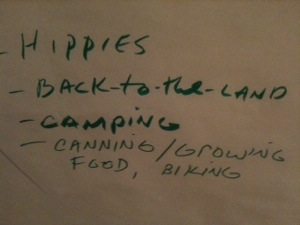
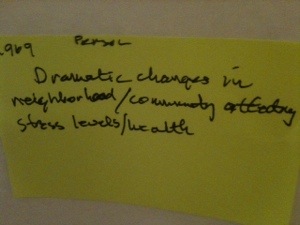
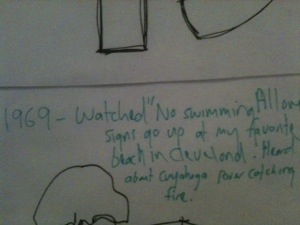
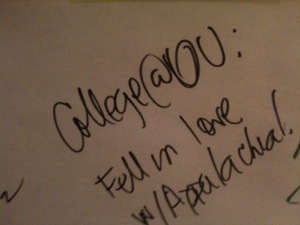
One of the activities that the group has done at the Sustainability Conference in Cleveland is to tell the story of both personal and municipal transformation through moments lived and remembered. This is the earliest time period (1969-1989) on the personal transformation wall. This is another idea that food organizers may want to use when working with communities. How wonderful to ask them to think about how and and when healthy regional food became important to them.




Show some support to Farmers Market Coalition and this necessary project:
America’s 8,000 farmers markets are bringing huge health benefits to their communities, often with little cost, structure, or support. Collecting accurate data on these grassroots organizations is imperative if we’re to maximize their impacts.
Here is an interesting link that came to me through the smart people at Food Tank.
An online site to help farmers sell the produce at “come and get it” prices that is not sold through their marketing outlets.
Authored by Michigan State University Center for Regional Food Systems & The Wallace Center at Winrock International
From the Executive Summary:
Findings from the survey showed that food hubs across the country are growing to broaden the distribution infrastructure for local food. From the survey, 62% of food hubs began operations within the last five years, 31% of food hubs had $1,000,000 or more in annual revenue and the majority of food hubs were supporting their businesses with little or no grant assistance—including food hubs that identified as nonprofits. Financially, the most successful food hubs tended to be for-profit and cooperative in structure, in operation for more than 10 years and working with a relatively large number of producers. The values-based nature of food hubs makes it hard to judge many of them solely on their level of financial success.
The survey also revealed a number of persistent challenges and barriers to growth that even the most financially successful food hubs faced.
For example, many food hubs indicated their needs for assistance in managing growth and identifying appropriate staffing levels for their hubs. They also often pointed to their need for capital and other resources to increase their trucking and warehousing capacity.
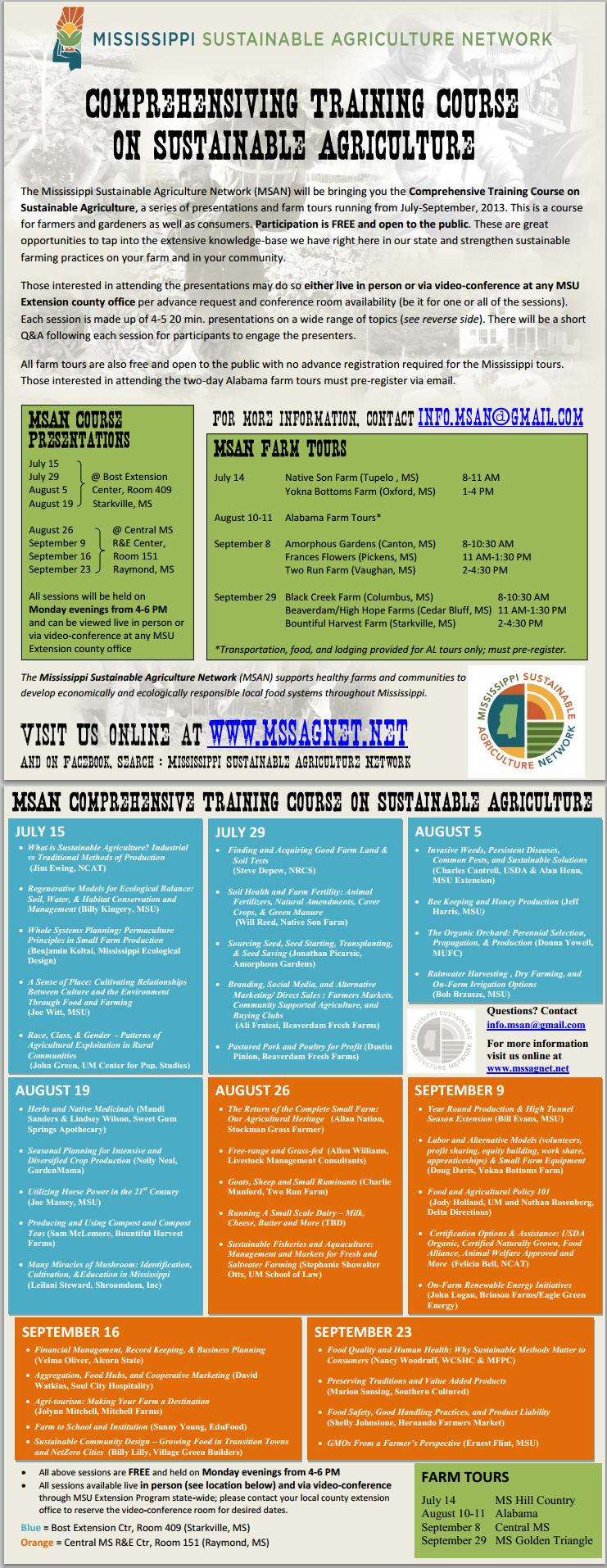
Mississippi Sustainable Agriculture Network’s trainings-2013
 Full disclosure: Poppy is my pal. She is someone who calls me up and then shows up, with a gift, thoughtful questions and always hilarious stories.
What made me a fan of hers early on was her razor-sharp take on people and situations, sometimes devastatingly so. Yet she is enormously kind and open to those people who ring true. No one that receives her wrath is ever underserving. If they get it, they usually have made one of two unforgivable sins: either they underestimated HER or they underestimated her city, her state or her people.
Another disclosure: I believe Poppy deserves as much credit as anyone in my region for rebuilding the New Orleans food system after the federal levee breaks in 2005. Too many stories to tell here, but come on over and if you care, I’ll tell you some of them over a drink. Or two. There are a lot of them to tell. Some of them are funny, some are sweet, some even a bit crazy.
These two points are linked since her life’s work is to actively promote entrepreneurs and real ideas that will build (or rebuild when necessary) the culture of her place, Louisiana. In doing that work, she extended her range to all authentic food systems across the globe through her Slow Food International connection that meant that New Orleans gained the Slow Food vibe from the mid 1990s on.
Let me also say that most of the SFUSA folks understand her range, giving her much early credit for shaping the U.S. work that she built with others-that is, until she had to unleash her wrath on previous Slow Food leadership over the (mis) direction of a crucial program that she had helped shepherd. Luckily, she and SF made up.
Remember, I warned you that she is a fierce opponent when she feels it’s necessary.
When she started the Louisiana Eats show, she had already done a great deal of writing and television. Her talents really came to light when she began this show; her intense enjoyment and knowledge of the people and history of food and culture through one-on-one conversations on our local NPR station and now in this book. I remember a glorious Saturday morning on Louisiana Eats when she and Rien Fertel talked about praline sellers and another when she talked with Miss Linda Green, The Yakamein lady, and another when she talked with French bread baker John Gendusa among many others. Each time, I would stop what I was doing and literally stand there and listen intently to her intricate questions and always learn something. And her interaction with the dean of New Orleans Creole food, Leah Chase which is always touching and amazing since you get to hear two chefs with great respect for each other just banter and share stories. And when she has on young activists or farmers (like Nick Usner who is in the book), you can hear the hope in her voice for the new energy coming along…
So this book is a reminder of many lovely Saturdays and is indicative of the tone that I myself have adopted for much of my food activism: wild enthusiasm, critical assessment and a deep appreciation of the stories and background of those unique people that tell of our culture and food. Because of her, I know to seek them out, and maybe I’ll find some new folks from those Poppy has brought to us on her show and in this book. The book itself (lovely photos and recipes) is informative and a great companion to her show and I know that it will stand the test of time as a true record of some of the people that we have in our world. And of my pal who contributes so much to our place.
<a href=”http://www.goodreads.com/review/list/635646-blue-collar-mind”>View all my reviews</a>
I think most if not all managers of markets understand that other markets have different rules than theirs, but do your shoppers know? And have you ever updated them, in cooperation with your vendors?
Nearby markets should share rules so that they do not make their farmers follow different sets of rules for little reason. It’s amazing how many markets don’t even attempt to compare rules which makes it quite hard for vendors to remember which of their markets has rules against packing up early or who allows foraged items and who doesn’t. One of the main areas of contention among farmers is the amount of liability insurance that they are required to carry (when a market requires it); a farmer told me about three different levels of insurance that he was asked to carry, all of the markets within a few miles of each other.
http://www.twincities.com/stpaul/ci_24036424/farmers-markets-not-all-follow-same-rules
 Helping Farmers Markets Grow