Farmigo’s CEO on the shuttering of the online retail platform

Thanks to FMC’s Research Director Alex Canepa for sharing this article about Farmigo’s online market demise.

Here are some quotes from the article, most from Farmigo CEO Benzi Ronen, that I think should be discussed, challenged or simply noted, depending on how you see the scaling up or technological solution conversation in regards to family farming.

Silicon Valley is sometimes guilty of hubris, thinking we can disrupt an industry overnight and do it better,” he says.

He’s confident Farmigo will be just fine, because it still has its CSA software business, which has 300 to 400 customers, depending upon the season, and revenue.

Is there a need for what we’ve been working on? There is definitely a need for it – you can debate, I think, the magnitude of the need. How many customers are willing to pay a premium for a better product?

We are currently looking for partners that can service our customers once the Summer ends. We have also sent all our customers in each region a list of the producers they love so that they can purchase directly from them – Seattle-Tacoma, Greater New York and Bay Areas.

We’re looking at it broader than a CSA platform. Right now we’re servicing CSAs very effectively, but we now we have experience working with a lot broader array of farms than just CSAs. We were working with all kinds of farms, fishermen, bakers and food artisans that wanted to get their food to market. Some of them were CSAs, and some of them were even using our software, but the majority weren’t. We feel that we now know better what software tools we can give all of them, so they can sell direct to consumer if they want, to food hubs if they want, to wholesalers and distributors, to retailers, to farm stands, farmer’s market.

The industry as a whole has grown significantly, but it’s still incredibly inefficient to source this stuff — and those are the kinds of problems I know we can fix. As a software guy, as a guy who’s been building business to business software applications with SAP that connects businesses and allows them to trade more effectively together, to trust one another and to have transparency, to me that’s a massive opportunity

Source: Why Farmigo’s Shutting Down Its Online Farmers Market


Other posts on food hubs.
NYT: When Will Food Issues Be on Politicians’ Plates?

The place where food and family intersect is ripe for developing a strong block of food voters, especially in swing states, pollsters said. The organic-milk mom could be the new bipartisan soccer mom. With Walmart selling organic produce, farmers’ markets in nearly every community and McDonald’s promoting a new less-is-more ingredient philosophy the line is growing faint between what were once considered latte-drinking liberals and red-state beer buyers.


”Millennial voters are more articulate about food issues than any generation before, and less apt to be loyal to any one political party. And food is one of the few issues in which lawmakers from different parties can find common ground,” Mr. Massie said.

I might suggest the level of success we see in getting food and farming issues into electoral politics will be directly linked to how organizations and producers use their bully pulpit to get elected officials (including candidates) to their markets, gardens and farms.

To assist with that, Farmers Market Coalition is offering an updated Advocacy Kit this summer which already contains excellent tips on how to bond with one’s legislators, including how to invite your legislators to your site.

So what are YOU doing for National Farmers Market Week?

NYT article

From field to fork: the six stages of wasting food 

I foresee “Ugly Food” events at farmers markets or even “Ugly Food” sections of vendors tables with people crowding around them. It will certainly be great for markets to lead the way by showing how much food we are wasting or by teaching folks how and when to use bruised or less pretty fruit and veggies.

“Americans chuck out two tons of food per second – be it at the farm for being ‘ugly’ or at the table because we’re too finicky.”

Source: The Guardian story

Update your market

Hopefully, all market leaders know that the USDA directory is the go-to list for farmers markets for those within the department, for market advocates and for researchers and funders. Most media stories about markets use this link to direct shoppers to us. Additionally, all of the evaluation about markets is calculated from this directory and so if your market is not listed, the true impacts of your producers hard work and of your organizational projects cannot be measured.

Do yourself and all of us a favor: take a breather from outside for a few minutes this week and sit down with a cup of coffee or a glass of tea to update the directory for your market. Market vendors: ask your market manager or lead volunteer if they have updated the list recently.


Dear Farmers Market Colleagues, 

Get ready, get listed! National Farmers Market week is coming (Aug 7-13) and you want people to find your market! USDA’s Local Food Directories can help you promote your farmers market. This tool will allow shoppers to quickly identify you as a supplier of the local food. It takes less than 10 minutes to add or update your listing.


USDA will share the number of farmers markets listed in the directory with media and stakeholders across the country during National Farmers Market Week. We want you to be counted! Time is running out!  New listings or updated information must be entered by July 15, 2016, to be included in the national numbers, so don’t delay.


It’s easier than ever to register!  If this is your first time listing your market in the Directory, go towww.usdadirectoryupdate.com to add your market. In less than 10 minutes you’re done.  That’s all it takes.


If you do not know if your farmers market is listed, then you can search the National Farmers Market Directory database to find out. If your market was in the Directory last year, we sent an e-mail during the week of June 27th that has a direct link to update your market listing.


Even if you listed your market last year, you should check the directory again to make sure all your information is still correct.


Here is how the Directory can help you

The USDA National Farmers Market Directory helps you tell customers what they want to know about your market:

  • Where and when your market opens
  • Second and third market locations that you operate
  • What products your market sells
  • If your market  accepts:
    • Supplemental Nutrition Assistance Program (SNAP)
    • Women, Infants and Children Farmers Market Nutrition Program (WIC-FMNP)
    • Women, Infant and Children, Cash Value Vouchers (WIC-CVV)
    • Senior Farmers Market Nutrition Program (SFMNP)
  • Whether or not the market acceptances debit/credit cards
  • Consumers can even get:
    • Driving directions to the market they choose to visit
    • Map markets within a radius of their current location
    • Get a state or national map of farmers markets


The USDA National Farmers Market Directory used by mobile application developers to help consumers find you or other markets across the nation.


The Directory attracted over 400,000 page views from users last year.  It’s the “go-to” resource for consumers, researchers, community planners and more to better understand the size of farmers markets across the nation.


Don’t delay, please be counted by including your market by July 15.


Thank you.

USDA’s National Farmers Market Directory Team

“…That everyone will believe they are worth that.”


“It is a ridiculous business model,” Jennifer admits. “But we have pride in doing this accurately. No corners cut.”

The women are doing something right. At their last farm dinner, guests were shamelessly smuggling the handmade butter off the table into their purses. This budding success fills the trio with hard-won satisfaction. At the Mister Canteen truck, Anna gives impromptu baking tutorials about spelt to curious doughnut buyers. Misty breaks down the myths about lard. Jennifer shares tips for pasture-raised eggs and chickens.

“We talk all the time about how we are broke and poor, but we are rich in ways most people aren’t,” Anna says. “We have six gallons of milk every day. Four dozen eggs every morning. And we have purpose.”

Source: Back to the Land

Farmer Veteran Fellowship Fund Announces $320,000 in New Awards

The Farmer Veteran Fellowship Fund announced a record $320,000 in new awards this week. The awards, ranging from $1,000 to $5,000 went to 140 veterans who have already launched, but are still developing, their farm businesses. The grants are paid to third-party vendors on behalf of the veterans for things such as livestock, bee supplies.

Source: FARMER VETERAN COALITION

A Pissed-Off Tampa Chef Explains The “Farm To Fable” Controversy

Greg Baker, chef-owner of the Refinery in Tampa, Florida, is a 20-year kitchen veteran, having worked in Portland, Oregon, and Austin before opening his James Beard–nominated restaurant in 2010.

So does local matter? Yes, but that begs clarification. I buy produce from a variety of local farms, some certified organic, some with organic practices but not certified and some that are conventional but utilize best management practices. As different as they all are, I know that I am buying produce that is fresh and nutrient-dense because of the short trip from farm to my cooler, and grown in a manner that doesn’t harm the environment. This is where “sustainably grown” comes into play. Organic doesn’t mean a damn thing to me if it refers to a lemon that was organically grown in Israel and traveled halfway around the world to get to me. Nor do I give a rat’s ass if something is labeled organic but grown in a monoculture. I’ve toured Big Ag tomato farms a couple of hours south of me while visiting with the Coalition of Imokkalee Workers; the type that Barry Estabrook wrote about in Tomatoland. I found myself in what was essentially a desert of tomatoes — no border land, no birds in the sky to be seen. I asked the meaning of a segregated tomato desert and was told “that’s our organic section.” So local doesn’t necessarily imply sustainability. That doesn’t mean that sustainability doesn’t exist locally to you, but you’re probably not going to find it in Big Ag growing operations.

…So for anyone who is still with me, you’re probably wondering why I’m so fucking angry. It’s because there are real-world economic consequences to lying about sourcing. Not for the liars of course, who got caught lying and have lied more to cover their own asses. I’ve been scratching by for six years on very narrow margins, living up to what I claim, while others have rolled it in by lying to their customers. That’s one thing. But people saying that they’re okay with being lied to?

Source: A Pissed-Off Tampa Chef Explains The “Farm To Fable” Controversy – Food Republic

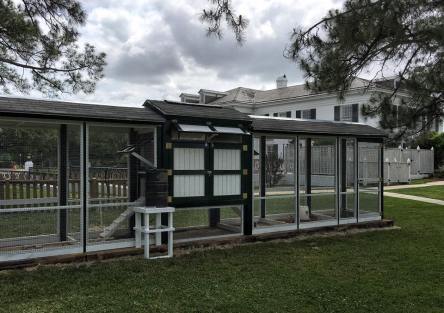
New Louisiana governor installs chicken coop at mansion

Edwards said he installed the coop to “get back to a sense of normalcy.”
“It’s extremely nice,” Edwards said of the new coop, which was built by professionals (paid for entirely out of the Governor’s pocket, according to WWLTV reporter Eric Paulsen) and matches the color scheme of the Governor’s Mansion. Upon returning home from a day’s work, he said, he makes sure to check in on his chickens. .

(Paulsen FB post): Governor John Bel Edwards said he wanted chickens at the Governors Mansion and he now has them. This is his chicken coop behind the Mansion. He has 16 chicks that he hopes will soon be supplying fresh eggs for his family and friends. I guess these are Louisiana’s “first chickens”.

12985587_1020208721388544_5990847717357139272_n

Source: Gov. Edwards’ chicken coop sparks ‘firestorm’ on Facebook

Impact of climate change on agriculture may be underestimated — ScienceDaily

“The changes in cropping that we quantified with remotely sensed data were stunning,” Mustard said. “We can use those satellite data to better understand what’s happening from a climate, economic, and sociological standpoint.”

The study showed that temperature increases of 1 degree Celsius were associated with substantial decreases in both total crop area and double cropping. In fact, those decreases accounted for 70 percent of the overall loss in production found in the study. Only the remaining 30 percent was attributable to crop yield.

“Had we looked at yield alone, as most studies do, we would have missed the production losses associated with these other variables,” VanWey said.

Taken together, the results suggest that traditional studies “may be underestimating the magnitude of the link between climate and agricultural production,” Cohn said.

That’s especially true in places like Brazil, where agricultural subsidies are scarce compared with places like the U.S.

“This is an agricultural frontier in the tropics in a middle-income country,” VanWey said. “This is where the vast majority of agricultural development is going to happen in the next 30 to 50 years. So understanding how people respond in this kind of environment is going to be really important.”

VanWey said a next step for this line of research might be to repeat it in the U.S. to see if increased subsidies or insurance help to guard against these kinds of shocks. If so, it might inform policy decisions in emerging agricultural regions like Mato Grosso.

Source: Impact of climate change on agriculture may be underestimated — ScienceDaily

The Seasons on Henry’s Farm

The first full morning back in town after my trip to the IFMA conference was satisfyingly spent on actual labor: helping my pals at Crescent City Books get the store moved to the new location by shelving their cooking and gardening sections. Afterwards, I came back to the Quarter to make a pizza with as many farmers market ingredients as could be crammed on, sided by local ale and all to be enjoyed in the sunny and warm courtyard. As background music from the drums and horns of the pickup band always working for tourists dollars in Jackson Square wafted over the wall, I continued to read a wonderful farming book authored by Terra Brockman, founder of The Land Connection, Illinois family farmhand, and clearly, top-notch writer.

safe_image

I met Terra a few years back at the first IFMA-led Illinois farmers market conference and found her to be one of those doers who think with absolute clarity about the ecological and human impacts of the industrial agricultural age. That type of intellect,  paired with that determined pioneer spirit for building logical new systems, is always encouraging to find in one’s colleagues. I knew that since that conference she had put TLC in other capable hands (as I saw through their presentations and available materials at this year’s conference) and had herself gone back to working with her family farm and written this highly regarded book. So, I was pleased to see it available for purchase at the TLC table this year.

If you want to know what it it means for a direct-marketing family farm in a commodity state to live and work in service to their land and its seasons, as well as to their ancestors and their present community, I suggest you pick up her book, “The Seasons on Henry’s Farm.” It is absorbing, beautifully written and organized to give you a snapshot of the life of a farm, season by season, plant by plant, decision by decision. Like any good farmer, any talk of the food being grown also includes recipes and the ones in the book are so good that I dogeared almost every page with one. I think it should be required reading for every grower, marketgoer, market manager and every municipal and regional leader. In other words, everyone interested in food sovereignty and those influencing its future.

http://www.brockmanfamilyfarming.com/terras-writings

Securing or Expanding Your State Cottage Food Law 

BY far, the most visited posts on this blog over the last two years have been those on cottage food laws. As someone who ran markets in a city/state with byzantine rules and a total lack of clarity for producers, I was gratified when a cottage producer took it upon herself to push for such a law in Louisiana, following recent adoption of one in neighboring Mississippi. That law had been championed by a task force headed ( I believe) by a researcher from Harvard.

Markets can help this process even when not leading it by maintaining and sharing their internal process for inspections, permits and on-site pricing/labeling rules with those advocates working to begin or expand their cottage food laws.

In addition, markets can collect qualitative data through Marker Surveys (allowing them to write a quote on the sheet) from shoppers about how they feel about the short chain system that relies on the deep and regular relationship they have in their markets and then to share those stories with those advocates.

In addition, I’d be happy to share the template of the mystery chef project that I employed at my markets which encouraged selected market community members to purchase products already at market and gave a written  assessment on the taste, display and labeling of that product. That assessment was sent via postcard to the vendor via mail and a copy was put into their file. The most common result was a positive assessment and so we also encouraged them to display the postcard at their table if they wished. Send me an email to dar wolnik at gmail if you want me to send you that template-that is if I can find it. Additionally, the other piece of that system was the mystery shopper surveys that we also created; one of the templates is available on the http://www.marketumbrella.org site on their Marketshare page. All it requires is the creation of a free log in and password to see all of the resources they offer on their page.

Here are the results from my posts about cottage food laws; and the link below leads to a very good framework for those states (or cities or counties) to plan or expand their own systems: Securing or Expanding Your State Cottage Food Law – Real Food – MOTHER EARTH NEWS

Lucky’s Market looking for niche in Lexington grocery market by demystifying good food

For those about to head to the SSAWG conference this week, you might want to check out this store…

Source: Lucky’s Market looking for niche in Lexington grocery market by demystifying good food | Lexington Herald-Leader

Sweeping study of US farm data shows loss of crop diversity the past 34 years

U.S. farmers are growing fewer types of crops than they were 34 years ago, which could have implications for how farms fare as changes to the climate evolve, according to a large-scale study by Kansas State University, North Dakota State University and the U.S. Department of Agriculture. Less crop diversity may also be impacting the general ecosystem.
“At the national level, crop diversity declined over the period we analyzed,” said Jonathan Aguilar, K-State water resources engineer and lead researcher on the study.
The scientists used data from the USDA’s U.S. Census of Agriculture, which is published every five years from information provided by U.S. farmers. The team studied data from 1978 through 2012 across the country’s contiguous states.

Source: Sweeping study of US farm data shows loss of crop diversity the past 34 years