Healthy Food Retail Act-Louisiana

For the second year in a row, the Governor and legislators included $1 million in the budget to fund the Healthy Food Retail Act, bringing the total allocated to date for the state’s fresh food financing initiative to $2 million. The funding is state-allocated Community Development Block Grant funds.

From the 2016 statute:

D. (1)  To the extent funds are available, the Louisiana Department of Agriculture and Forestry, in cooperation with public and private sector partners, shall establish a financing program that provides grants and loans to healthy food retailers that increase access to fresh fruits and vegetables and other affordable healthy food in underserved communities.

(2)  The department may contract with one or more qualified nonprofit organizations or community development financial institutions to administer the program described in this Section through a public-private partnership, to raise matching funds, market the program statewide, evaluate applicants, make award decisions, underwrite loans, and monitor compliance and impact.  The department and its partners shall coordinate with complementary nutrition assistance and education programs.

(3)  The program shall provide funding on a competitive, one-time basis as appropriate for the eligible project.

(4)(a)  The program may provide funding for projects such as:

(i)  New construction of supermarkets and grocery stores.

(ii)  Store renovations, expansion, and infrastructure upgrades that improve the availability and quality of fresh produce.

(iii)  Farmers’ markets and public markets, food cooperatives, mobile markets and delivery projects, and distribution projects that enable food retailers in underserved communities to regularly obtain fresh produce.

(iv)  Other projects that create or improve healthy food retail outlets that meet the intent of this Chapter as determined by the department.

(b)  Funding made available for projects included in Subparagraph (a) of this Paragraph may be used for the following purposes:

(i)  Site acquisition and preparation.

(ii)  Construction costs.

(iii)  Equipment and furnishings.

(iv)  Workforce training.

(v)  Security.

(vi)  Certain pre-development costs such as market studies and appraisals.

(vii)  Working capital for first-time inventory and start-up costs.

(c)  A restaurant is not eligible for funding under this Chapter.

(5)  An applicant for funding may be a for-profit or a not-for-profit entity, including but not limited to a sole proprietorship, partnership, limited liability company, corporation, cooperative, a nonprofit organization, nonprofit community development entity, university, or governmental entity.

Click to access Healthier_Food_Retail.pdf

Click to access Healthy%20Food%20Retail%20Study%20Group%20Booklet.pdf

Louisiana Revised Statutes 3:296 – Healthy Food Retail Act; definitions; purpose

The Blue Zones Solution: Secrets of the World’s Healthiest People

Dan Buettner quotes:

While working in the “Blue Zones” areas, I found that having a strong sense of purpose, a circle of healthy friends and living in walkable neighborhoods are all as important as a good diet. But I also realized that food is the entrance ramp for better living. So, I started this book by distilling all of the diets of longest-lived people into one über diet of sorts.


…But I can tell you that the longest-lived are getting 95% of their calories from plants and only 5% from animal products.

No matter where you go, the snack of choice is nuts.  People who eat nuts live 2-3 years longer than non-nut eaters.  But remember, they are moving all the time, not sitting at desks, in cars or watching TV.


The Blue Zones Solution: Secrets of the World’s Healthiest People – 9 Questions for Dan Buettner

Certified Naturally Grown Turns 15

In 2002, when the National Organic Program took effect, farmers in New York’s Hudson River Valley laid the groundwork for their own grassroots certification. What started as a regional program appealed to farmers across the country, so it quickly grew. The organization was completely managed by farmers for the first five years.

Learn more here

Fun Facts from their site:
• Georgia has more Certified Naturally Grown producers than any other state, and 15% of CNG’s membership. For years, Georgia growers have been enthusiastic leaders in our movement. Several farmer’s markets and grocery co-ops prefer or even require their producers are either CNG or organic, such as the Peachtree Road Farmer’s Market, Grant Park Farmer’s Market, and the Daily Grocery Co-op, (check out our Market Directory to find out if there are any such markets near you).  Our strength in Georgia is partly due to early adopters like Rashid Nuri, the figurehead of urban agriculture in Atlanta at Truly Living Well, and Lynn Pugh, educator of many new farmers, at Cane Creek Farm. Let’s see if Pennsylvania – the state with the next-most CNG farms – can catch up to Georgia in 2017!
• Last year we launched the nation’s first certification for all-natural aquaponics systems, and we added a certification for mushroom growers too.  Know any mushroom or aquaponics producers? Please help spread the word. We’re eager to grow our membership in these areas.

The Wrong Kind of Entrepreneurs Flourish in America – Bloomberg

Crony capitalism is an extremely important topic for the community food system to ponder. This is how I define what has happened a few times when online aggregators or other techies spend all of their money building fancy software and no money or time investing in distribution systems or training staff and then throw up their hands when the farmers  don’t immediately flock to their door to sell their items below retail or the weekly market shopper doesn’t become enamored of their online tool. This may also best describe the situation when new, poorly-planned farmers markets open without adequate time to plan or to talk to the community it wants to serve or build relationships with producers a season or two before opening day. (Sometimes these folks call me a few weeks before they plan to open a new market and are dumbfounded when I tell them they should have begun planning 18-24 month before!)

I want to be clear that I am NOT talking about the majority of markets, but those thrown together (often by a developer or another outside interest) that simply see the market as visual dressing to sell their apartments or product without any effort made to whether there is a need and if the vendors will make any money.

This is why I believe farmers market managers roles should be financially supported by other food system initiatives, and experienced market managers should be brought in as consultants or facilitators to use their expertise in curating other relationships between buyers and sellers for new market ideas, for intermediate sales (specialty stores and restaurants), and even when building value chains for institutional buying.


But Robert Litan and Ian Hathaway, writing in Harvard Business Review, have a more dire hypothesis. They surmised that many American entrepreneurs are no longer looking for ways to produce more useful stuff, and are instead looking for new techniques for extracting money from each other and from the government. In other words, crony capitalism may be slowly cannibalizing productive capitalism.

The Wrong Kind of Entrepreneurs Flourish in America – Bloomberg

Help tell the organic story

Evolution of Organic is a new film from Mark Kitchell, maker of Berkeley in the Sixties, which was nominated for an Academy Award and A Fierce Green Fire, a big-picture exploration of environmental activism that aired on American Masters on Earth Day 2014. Veronica Selver edited the rough-cut; she is best known for Word Is Out, the pioneering film about gays in America. Legendary editor Robert Dalva is slated for the fine-cut; his credits include The Black Stallion, Jumanji, Captain America, Jurassic Park III and docs including the amazing television cut down of A Fierce Green Fire.

Evolution of Organic made it to rough-cut in May. At 77 minutes it’s taut, feeling far along and getting good reviews. Some 500 people have seen it and what stands out is how much people like the film. We’ve had a good run. Six former funders gave $54K to shoot interviews last fall. Then a $40K grant from Gaia Fund enabled the rough-cut phase — four months of scripting, editing and gathering archival material. By now $170K has been raised. An estimated $160K is needed to finish.

Source: Fiscal sponsor page: International Documentary Association

Citizens should lead

A link to my reviews of 3 new books that may inspire some to get thee to city hall or at least remind us of the possibilities of better design of urban places.

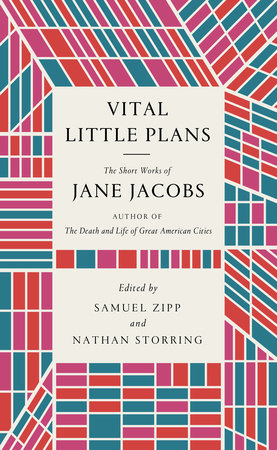
On a related note, I think every food system organizer (really, every organizer) needs to know Jane Jacobs.  One new book that I am still working my way through may help those of you not interested in reading about her life story or diving into her classic The Death and Life of Great American Cities. Vital Little Plans is a collection of many of her shorter pieces and her talks, including some of what she wrote on her way to publishing Death and Life. One of the editors (Storring) works at Projects For Public Spaces (PPS),  a consulting firm well known for its market technical assistance, Placemaking tools, and workshops. (Exciting news: They should be announcing their 2018 Public Market Conference location very soon too.)

9780399589607.jpg

Readers will find classics here, including Jacobs’s breakout article “Downtown Is for People,” as well as lesser-known gems like her speech at the inaugural Earth Day and a host of other rare or previously unavailable essays, articles, speeches, interviews, and lectures. Some pieces shed light on the development of her most famous insights, while others explore topics rarely dissected in her major works, from globalization to feminism to universal health care.

Buy it near you at an independent bookstore.

10 Random, but Interesting Stats About Online Donors Worldwide

1. The top three causes supported by liberal-leaning online donors are human and civil rights, animals, and children and youth.

2. The top three causes supported by conservative-leaning online donors are religious services and faith, children and youth, and human services.

3. Online donors are predominately inspired to give by social media and email.

4. Of those inspired to give by social media, Facebook triggers 4X as many online donations as Twitter and 7X as many online donations as Instagram.

5. 60% of online donors donate more money during religious holidays.

6. 47% of online donors donate to nonprofits, charities, and NGOs based outside of their country of origin.

7. 62% of online donors have also volunteered at a nonprofit, charity, or NGO within the last 12 months.

8. Online donors are primarily motivated to give by empathy and altruism. Fear and anxiety have the least impact on online donors.

9. The .org, .edu, and .ngo domains are the most trusted by online donors. The .net and .com domains are the least trusted domains.

10. 73% are of online donors worldwide are female.

The inaugural edition of the Global Trends in Giving Report will be released on September 4, 2017. The report is the only annual research project dedicated to studying how and why donors worldwide give to their favorite causes and charitable organizations.

https://www.nten.org/

After gastric bypass surgery, many experience eating difficulties

About 71 percent of the gastric bypass group, compared with 17 percent of the others, could not tolerate certain items, including red meat and foods high in fat or sugar. Water was not tolerated by about 7 percent of those who had had gastric bypass, vs. none of the others. The researchers found no link between the amount of weight people had lost and the digestive problems. Link to story

Markets could put small lists of available products together for different users of their market, including those who have digestive problems. It’s important to remember that many of these folks are just beginning to understand their problems, learning what works and doesn’t. I remember how, after my gallbladder surgery in 2007, I had to figure out what needed to come off my shopping list. It was through trial and error and asking a lot of questions and reading a lot of information that I was able to understand what worked best for me, but in the meantime, I had to give away or throw away some items I bought at first which used to be fine for me but were no longer. Another reason why vendors offering small “sample” amounts of different items can be a great way to invite new visitors (or newly fragile shoppers)  to become regular, return shoppers.

I know of at least one market outreach program that focused on these patients – the wonderful North Union Farmers Markets in my original hometown of Cleveland Oh.

Their frittata project is one of my favorite programs to pull out of my sleeve when markets ask me about ideas for working with obese or recently obese populations. (These programs make me seem smart even though what I really am is well-traveled.) Their project is shared with many other types of healthy food clients too, but I was really taken by the idea they had of working with bariatric patients through the Cleveland Clinic system.


More on their project:

The Frittata Project teaches young mothers (and fathers!) how to cook a nutritious meal on a budget to feed their family. The food used in the recipes we teach can be bought at our markets for around $10 (the amount we match in produce perks for EBT-SNAP/Ohio Direction Card). Workshops and demonstrations bring families together to learn how to sustain a nutritious diet while staying within their economic constraints. Our aim is to foster relationships in the community by empowering individuals to make informed decisions about the food they purchase while having the skills to prepare it. In addition to those on EBT-SNAP (Electronic Benefits Transfer- Supplemental Nutrition Assistant Program) and WIC (Women and Infant Children), the program is also open to senior citizens who participate in the Senior Farmers Market Nutrition Program by the Western Reserve Area Agency on Aging.

Our signature frittatas include farm fresh eggs, local grated cheese, a dash of grass-fed cow’s milk, and sautéed spinach seasoned with salt and pepper.

Students go home with not only new skills in the kitchen, but with cooking supplies (pan and spatula) and gift certificates for fresh and local produce from the farmers markets.

‘More on the history of this flagship market organization can be found here.


Farmer Veteran Coalition competes in the American Heroes Charity Challenge

Farmer Veteran Coalition was recently invited by the Craig Newmark Philanthropic Fund to compete in the American Heroes Charity Challenge from May 23 to July 6. In this competition, we’ll be going head-to-head against other nonprofit organizations that support veterans and first responders for a chance to win the $15,000 top prize.

While a little friendly competition among nonprofits is fun, more important are the funds we’re in need of raising so we can assist more farmer veterans around the country and provide them with critical items, such as livestock, used tractors and greenhouses, as they launch their farming operations.

We’ve set our goal high–$40,000—and we will be fortunate for every dollar we raise, but we believe that you, our member and supporter, are the greatest hope we have to reach our goal. Either by making a small donation or sharing this email with others who support veterans, you can help us raise crucial funds that will make a direct impact on beginning farmer veterans and the future of American agriculture.

The competition is fierce, as you can see on the challenge page here. You can visit the FVC team page here to make a donation, or you can join the team and help spread the word to those who support veterans. After all, a little friendly competition never hurt anyone.

Emerging City Champions to lead innovative food projects – Knight Foundation

I highlight the food choices, but really all 20 of them should be approached to have a partnership with their farmers markets. Here is the list so you can see what else is being proposed.

Macon, Georgia
Morgan Wright: A new community garden planted on an abandoned lot will serve community members and feature weekly farmers markets.

Miami
Danielle Bender: Public Hives will provide beehives in public places, with a protective fence surrounded by native wildflowers and fruiting trees, to ensure residents can remain a safe distance away. Programming will encourage discussions about pollinators.

Tallahassee, Florida
Jacqueline Porter: “Thrive Tallahassee” will be a series of neighborhood meals hosted in underused, historically significant spaces.

Source: <a href=”https://knightfoundation.org/articles/20-emerging-city-champions-chosen-to-lead-innovative-urban-projects”Knight Foundation

What’s new at the grocery store?

Nielsen, a research and consulting firm, said last month that for the first time in a decade, shoppers were making more trips to stores, but coming out with less in their baskets. “They’re not stockpiling their pantries as much,” said Jordan Rost, the company’s vice president for consumer insights. “They’re really buying more fresh produce and prepared meals.”


Mr. Ruhlman predicts that much of what is sold in the center of the store — the cereal, canned soups, detergents and Ziploc bags — will be largely bought online in the not-too-distant future as food shoppers become more accustomed to e-commerce.

The Circular Economy | The UnSchool

Closing the loop on production, consumption, design, and the economy

The circular economy is a smarter and more effective way of producing high-need things with high-value in the economy and with much less waste, pollution, exploitation, and other negative impacts.

By taking this class you will get a 360 degree perspective of what the circular economy is, how it applies to different levels of decision making, and theories and practices that have gone into making it work today — biomimicry, cradle-to-cradle & sustainable design strategies, and product service system models.

Source: Enroll in Course for $45

Maximizing satisfaction

17796425_1425720247492384_3756245392789017168_n.png