Helping Farmers Markets Grow

Skip to content
  • About

civic engagement

Collaborating on Food: An Interview with Wayne Roberts

I find that our Canadian colleague Wayne Roberts can say it so well:

The local food discussion needs more content and edge. It can’t just be the distance between the farm and the supermarket. What if the used plastic has to go to China to be recycled, or if the pesticides have to be imported from Alberta?
…All of these factors mean that we need a space to continue discussing and developing pilot policies. As with many things in food, we don’t need a quick and forceful decision; we need discussion, pilots, and learning, and then good decisions that can grow with fairly widespread support.

I easily could have pulled out more quotes from this short interview, but I’ll let the writer get credit on the site. Needless to say, I heartily recommend that you buy Wayne’s book and follow his feeds such as on LinkedIn and look for him on all of the many social media and websites that he is found. I have my copy annotated already.

Food for City Building: A Field Guide for Planners, Actionists & Entrepreneurs  by Wayne Roberts

Food for City Building

Share this:

  • Click to email a link to a friend (Opens in new window) Email
  • Click to print (Opens in new window) Print
  • Click to share on Reddit (Opens in new window) Reddit
  • Click to share on Facebook (Opens in new window) Facebook
  • Click to share on X (Opens in new window) X
  • Click to share on Pinterest (Opens in new window) Pinterest
  • Click to share on LinkedIn (Opens in new window) LinkedIn
  • Click to share on Pocket (Opens in new window) Pocket
  • Click to share on Tumblr (Opens in new window) Tumblr
Like Loading...
0 CommentsLeave a comment
11/03/2014
DW
books, civic engagement, community gardens, economic development issues, environmental issues, farmers markets, farmers/farming information, food policy
alternative food systems, Canada, Wayne Roberts

See what’s up, up there.

This is an excellent snapshot of some of Canada’s work to deal with food insecurity as well as a short list of some great actions being taken to expand past emergency food to assert food sovereignty and skills such as seed-saving, foraging and many others. Glad to see Food Share and The Stop in here- two Ontario groups that I admire greatly and watch closely for ideas to bring to the U.S.

Eight stories that will give you food for thought

Food insecurity, which has only been measured specifically and consistently on the Canadian Community Health Survey since 2005, can mean a sliding scale from worrying about next week’s grocery budget, to buying mostly canned goods instead of pricier milk and vegetables, to skipping meals entirely. All three scenarios are a problem; the latter two have significant health consequences.

Breaking bread in a hungry world – The United Church Observer.

Share this:

  • Click to email a link to a friend (Opens in new window) Email
  • Click to print (Opens in new window) Print
  • Click to share on Reddit (Opens in new window) Reddit
  • Click to share on Facebook (Opens in new window) Facebook
  • Click to share on X (Opens in new window) X
  • Click to share on Pinterest (Opens in new window) Pinterest
  • Click to share on LinkedIn (Opens in new window) LinkedIn
  • Click to share on Pocket (Opens in new window) Pocket
  • Click to share on Tumblr (Opens in new window) Tumblr
Like Loading...
0 CommentsLeave a comment
10/09/2014
DW
Canada, civic engagement, community gardens, diversity/racial justice, environmental issues, farmers markets, farmers/farming information, food deserts, food insecurity, food policy, food sovereignty, global organizing, industrial food system, philanthropy, public health, school food
Canada, Food Share, The Stop, Toronto

FMPP awards for 2014

Scrolling down through the list of FMPP successful proposals shows the ingenious and unique approaches that farmers markets and farmer advocates are employing across the U.S. to further community food systems.

Congratulations to everyone.
list of 2014 FMPP awardees

Share this:

  • Click to email a link to a friend (Opens in new window) Email
  • Click to print (Opens in new window) Print
  • Click to share on Reddit (Opens in new window) Reddit
  • Click to share on Facebook (Opens in new window) Facebook
  • Click to share on X (Opens in new window) X
  • Click to share on Pinterest (Opens in new window) Pinterest
  • Click to share on LinkedIn (Opens in new window) LinkedIn
  • Click to share on Pocket (Opens in new window) Pocket
  • Click to share on Tumblr (Opens in new window) Tumblr
Like Loading...
0 CommentsLeave a comment
09/29/2014
DW
chefs, children, civic engagement, diversity/racial justice, economic development issues, environmental issues, evaluation, farmers markets, farmers/farming information, FMC, food safety/rules and regs at markets, food stamps (SNAP), local food, Main Street, manuals, market vendors, national food system work, outreach/marketing, Polls/Surveys, public health, public markets, regional food, retail anthropology/science of shopping, SNAP, state associations, taste education, technology, USDA, useful websites

The “metrification” of urban life

As some may have noticed in comments on any index that I share on here, I am usually more interested in how the makers of that index collected the information and how the metrics were defined, than in the final ranking system. One of my online discussion groups “The Future of Cities” had a recent post on the fallibility of the happiness and livable indexes you see on many sites. The original post by Sam Jacob was so thoughtful, I thought I’d link it here and also send a link to the discussion. I have also added my own comment here.

His final conclusion was succinct:
We can draw on big data, on communication technologies but we shouldn’t be in thrall to it. We need to recognise the sheer difficulty of comprehending the complexity of cities and the difficulty of making them. We need a fuller understanding of the texture and depth of what life – and “liveability” – might be. We should openly acknowledge the intrinsic political dimension of the city and its fundamentally democratic nature.

My comment:

As someone who offers support to those between the formal and informal economies (in regional food systems), I appreciate the thoughtful comments above on the subjective nature of metrics in terms of indexing livability and happiness levels. I also agree that using these in terms of ranking cities or any endeavor is a marketing ploy and without real value to those in that place. However, as a food system organizer, I can assert that we are in need of well-developed and shared metrics that reflect the values that we forward, such as small business economic activity (success is not always about pure job creation in other words), social cohesion (trust between parts of the community unknown to one another before that activity like farmers and family table shoppers), ecological values (building a closed loop of sustainability) and human capital (transferring knowledge and building skills). I am working on a project that will forward a set of metrics that WILL have context as to the individual place that is being measured and not be designed to be used for ranking one place against another. We hope that this will allow for success measures that derive from the work at the grassroots level of organizers and users of that community and yet can explain the transformative nature of the community food system to policy makers as well and is therefore in agreement to Mr. Jacob’s original idea. Feel free to check out the early days of this work, done through a partnership of the Farmers Market Coalition and University of Wisconsin at FMC’s FMM page

"metrification" of urban life | LinkedIn.

Share this:

  • Click to email a link to a friend (Opens in new window) Email
  • Click to print (Opens in new window) Print
  • Click to share on Reddit (Opens in new window) Reddit
  • Click to share on Facebook (Opens in new window) Facebook
  • Click to share on X (Opens in new window) X
  • Click to share on Pinterest (Opens in new window) Pinterest
  • Click to share on LinkedIn (Opens in new window) LinkedIn
  • Click to share on Pocket (Opens in new window) Pocket
  • Click to share on Tumblr (Opens in new window) Tumblr
Like Loading...
0 CommentsLeave a comment
09/08/2014
D.W.
civic engagement, evaluation, FMC
evaluation, Farmers Market Metrics, measurement, metrics, The Future of Cities

How Can a City Measure Its Happiness?

This is a good article about how municipalities are using well-being indexes to measure intangibles such as levels of happiness among citizens. That alone makes this article useful to markets (to compare to their shoppers happiness levels or to find metrics that markets could also use perhaps?) but also interesting is that the article details how responses were collected. Ensuring that the proper methodology and sample size is crucial to anyone collecting qualitative data.
Food system organizers in these cities could learn from the conclusions and even work with these municipal leaders to also survey farmers market shoppers, possibly adding a question or two about their use of local foods and markets. Additionally, knowing about these data collection projects could also allow markets to easily locate experienced survey teams and tested methodology for their own survey work.
“Despite this caveat, Hadley stresses that the undertaking is eminently worthwhile, given the relative ease of conducting the surveys. “It’s not as hard as it seems to do a good, simple survey of your residents,” he says. “We did it all in-house and we did it all for under $4,000. It’s totally doable.” And the more cities that begin to do the surveys, the better, because they can compare results and learn from each other. For example, Somerville’s average rate of satisfaction was 7.5, but this number is hard to interpret without the context of responses from other cities.”

How Can a City Measure Its Happiness? – Next City.

Share this:

  • Click to email a link to a friend (Opens in new window) Email
  • Click to print (Opens in new window) Print
  • Click to share on Reddit (Opens in new window) Reddit
  • Click to share on Facebook (Opens in new window) Facebook
  • Click to share on X (Opens in new window) X
  • Click to share on Pinterest (Opens in new window) Pinterest
  • Click to share on LinkedIn (Opens in new window) LinkedIn
  • Click to share on Pocket (Opens in new window) Pocket
  • Click to share on Tumblr (Opens in new window) Tumblr
Like Loading...
1 CommentLeave a comment
09/01/2014
D.W.
civic engagement, evaluation
evaluation, Farmers Market Metrics, happiness index

Cuyahoga County’s Sustainable Food Cluster Roadmap

As some may know, I am originally from Cleveland, Ohio and follow the food systems and community organizing work there with great interest. I grew up in one of the inner ring west side suburbs, often visiting the West Side Market and various small butchers and bakeries but the only “farms” I saw were the historical sites around Akron or when spotting an Amish farmer as we headed south on vacation at 65 mph. Farming was clearly the past for most modern Buckeyes, and we thought huge factories and transportation hubs were our only possible future. Or so it seemed for most of my early life since, like many Cleveland children, any trip through the Flats would include open car windows allowing in the soot and smoke of the factories and a proclamation: “smell that, kids? That smell is JOBS.”

However, the decline of manufacturing along Lake Erie in my lifetime has sent its great cities in search of other answers, and I am very proud of Cleveland’s new dedication to sustainable infrastructure and value-based employment for its citizens. A powerful example is the city’s Sustainability 2019 plan that was born from one of our most shameful moments-the fire on the Cuyahoga River in 1969, caused by the chemicals and pollution we allowed to be dumped into it.

1969-Cuyahoga River on fire, Cleveland Ohio

1969-Cuyahoga River on fire, Cleveland Ohio

Since the global media descends on Cleveland every decade or so to revisit that fire, it is likely they will come at the half century anniversary with renewed gusto. In preparation, the Sustainability 2019 initiative was born to reply with evidence of Cleveland as “one of the greenest cities in North America” as the city’s Director of Sustainability put it at one of their conferences. Because of that focus, I believe that Cleveland is moving faster to a hybrid model of creating post-industrial sectors that can thrive with the vestiges of whatever manufacturing that it claims (wind power anyone?).

I found this out on one of my trips home when noticing that the food system there had a slightly different hue than many others that I regularly visit. Often, when I dig to find the beginnings of citywide or regional food work, I find that it stems primarily from the cultural sector as seen in my other home town of New Orleans, or from a deep need for a new entrepreneurial answer, a la Detroit, or from a public health crisis of lack of healthy food access as in the Bed-Stuy area of NYC, or all of those needs at once, such as many First Nations and too many others. It seemed to me that Cleveland’s food work came from the deep awareness of the destruction heaped upon it from that industrial framework that had now mostly fled to warmer and less regulated places. That strong environmental underpinning was also present because of the first-rate organizing done by many 1960s-present activists including the Ohio Public Interest Campaign, where I was trained as a community organizer and worked for almost a decade.
Maybe because of that industrial vacuum, the need for jobs there seems tempered by the caution for real answers that allow workers stability and skills and not just a paycheck handed to them by a new corporate overlord. The cooperative movement afoot there seems to rise from this and from the professionally run, long-standing community development organizations embedded deep in the neighborhoods, east and west. And of course, credit must also be given to other areas in the region that started cooperative development such as Athens Ohio.

So, because of the hard work done by generations before, the development of the food work seems relatively balanced and quite ambitious. It seems to still lack regional cohesion but it is not ignoring that need either. I found a deeper awareness of the inequities and the need to work with existing both the corporate and informal sectors than in many other places that I visit and work. There is much to do there and mistakes will be made on the road to this new face for my old city, as I mentioned in a piece for Belt Magazine. Still, I am proud of the work being done there and hope you find time to read their new Roadmap and to visit too.
The City of Cleveland Mayor’s Office of Sustainability, Ohio State University Extension, Cuyahoga County,and the Cleveland-Cuyahoga County Food Policy Coalition have developed a sustainable food cluster roadmap in Cuyahoga County, with a core objective to increase regional jobs, revenue and sustainability by supporting local food and beverage businesses.

Share this:

  • Click to email a link to a friend (Opens in new window) Email
  • Click to print (Opens in new window) Print
  • Click to share on Reddit (Opens in new window) Reddit
  • Click to share on Facebook (Opens in new window) Facebook
  • Click to share on X (Opens in new window) X
  • Click to share on Pinterest (Opens in new window) Pinterest
  • Click to share on LinkedIn (Opens in new window) LinkedIn
  • Click to share on Pocket (Opens in new window) Pocket
  • Click to share on Tumblr (Opens in new window) Tumblr
Like Loading...
0 CommentsLeave a comment
09/01/2014
D.W.
case studies/research, civic engagement, cooperatives, economic development issues, entrepreneurs, environmental issues, evaluation, farmers markets, farmers/farming information, food deserts, food history, governments, national food system work, public health, public markets
Cleveland Ohio, farming, Ohio, sustainability, Sustainability 2019

Locavore challenge

The NOLA Locavore group was started after Hurricane Katrina and the Gulf Oil Spill when the hardships of the seafood industry were each day on the front page of the news. After reading “Plenty” by Alisa Smith and seeing the reality show based on the book where a community in Vancouver went 100 days on a 100 mile diet, lead organizers Lee Stafford and Dr. Leslie Brown decided this was a good time to begin an Eat Local Challenge in Louisiana.
Nola Locavore

This is for the June Eat Local Challenge in New Orleans

This is for the June Eat Local Challenge in New Orleans

Share this:

  • Click to email a link to a friend (Opens in new window) Email
  • Click to print (Opens in new window) Print
  • Click to share on Reddit (Opens in new window) Reddit
  • Click to share on Facebook (Opens in new window) Facebook
  • Click to share on X (Opens in new window) X
  • Click to share on Pinterest (Opens in new window) Pinterest
  • Click to share on LinkedIn (Opens in new window) LinkedIn
  • Click to share on Pocket (Opens in new window) Pocket
  • Click to share on Tumblr (Opens in new window) Tumblr
Like Loading...
0 CommentsLeave a comment
06/02/2014
D.W.
civic engagement, farmers markets, farmers/farming information, fishers, New Orleans food
community food system, Locavore challenges, New Orleans

The ROI of Farmers’ Markets and Food Hubs

I found a great piece on LinkedIn by Wolfram Alderson, Founding Executive Director at Institute for Responsible Nutrition on the excellent return on investment in farmers markets. His call for infrastructure is spot on, although we need to counsel our stakeholders that their money will not always best used for permanent market structures or cooperative kitchens (see a link below to one story that is about a permanent market structure).
However, when our community food system does need permanent infrastructure, we want to make sure that direct marketing producers are welcomed inside along with their intermediate and wholesale producers brethren and sistren. All sizes of family and community farms will be more profitable if they don’t each need to build processing plants or storage facilities and having those facilities between the farm and the market city (rather than always in it!) would help market, intermediate and wholesale sellers and buyers alike.
This has been one of the issues facing open-air markets seeking lasting financial support; if the investor can’t see a building being built or rehabbed with their money, how can we offer a return on their investment? I suggest that we need to refine and expand our language on the measurable benefits that these markets provide to investors such as investments in new businesses, deepening awareness of the value of regional goods to family table and intermediate buyers, an open laboratory for piloting innovative ideas around food access and other civic ideas.
Let’s start to get smarter about how to ask for strategic investments that allow our organizations and businesses to keep doing the unique and important work of direct sales that lead to these other investments without always adding more projects to our to-do list. That way when those food hubs and kitchens are built when and where needed, we will still have a public place for shoppers and sellers to meet directly.

The ROI of Farmers' Markets and Food Hubs | LinkedIn.

The article also links to a story of an exciting ballot measure in Marin County to support a 20 million dollar permanent market to replace the parking lot market that has been there over 30 years and run by the Agricultural Institute of Marin,a non-profit led by long time Farmers Market Coalition board member Brigitte Moran:

“The building will be funded privately by the Agricultural Institute of Marin, the nonprofit that runs the Civic Center market as well as six other Bay Area farmers’ markets. Taxpayers will pay $2 million to upgrade the vacant lot and make other infrastructure improvements, as part of a broader overhaul of the Civic Center campus.

The Board of Supervisors is solidly supportive of the measure.

“It’s part of our continued commitment to local agriculture,” said Supervisor Steve Kinsey, who represents West Marin. “Plus it’ll help us launch the renaissance of the entire campus.”

Marin County market ballot measure

Share this:

  • Click to email a link to a friend (Opens in new window) Email
  • Click to print (Opens in new window) Print
  • Click to share on Reddit (Opens in new window) Reddit
  • Click to share on Facebook (Opens in new window) Facebook
  • Click to share on X (Opens in new window) X
  • Click to share on Pinterest (Opens in new window) Pinterest
  • Click to share on LinkedIn (Opens in new window) LinkedIn
  • Click to share on Pocket (Opens in new window) Pocket
  • Click to share on Tumblr (Opens in new window) Tumblr
Like Loading...
1 CommentLeave a comment
05/29/2014
D.W.
civic engagement, economic development issues, entrepreneurs, environmental issues, farmers markets, farmers/farming information, market vendors, national food system work
Brigitte Moran, farmers markets, food hubs, Marin County

Wooden tokens can add up to so much more…

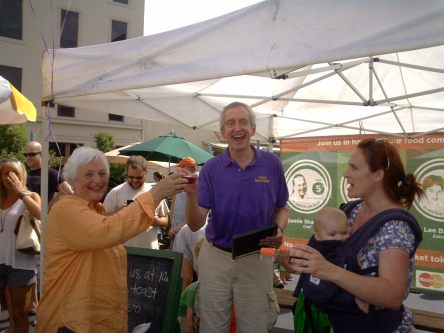
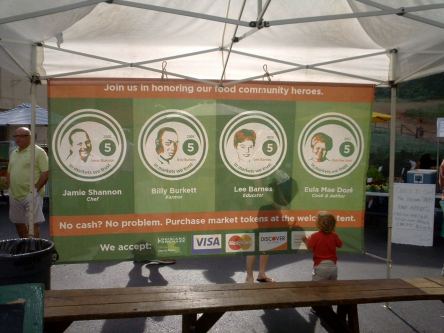
When markets discuss what the centralized card swiping systems add to their market, they often talk of shoppers not needing to stop for cash on an early Saturday morning or about being able to reintroduce markets to their low-income neighbors who want to use their electronic benefit program funds. Both reasons are extremely important but I often share the story of Crescent City Farmers Market’s use of the wooden token systems to highlight community. One of the loveliest examples of their system is the honoring of late local heroes on their tokens: founding CCFM farmer Billy Burkett, chef Jamie Shannon of Commander’s Palace, cultural cooking educator Lee Barnes and Tabasco company cook, farmer Jim Core and author Eula Mae Doré have been remembered this way.
Diana Pinckley, local community force and early CCFM board chairperson joined the others this year; her tragic passing in 2012 was a blow to many across the region who depended on her for advice, support and a pithy comment warmly offered.
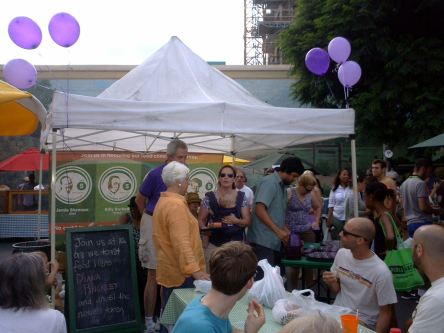
Appropriately, Memorial Day weekend was chosen to offer the newest token and Diana’s husband and close friends toasted her with beet lemonade and proudly used “the Pinckley” to get their strawberries and shrimp.
I am reminded every time a token is unveiled how sweet it is for the honoree’s family and friends to see how the market community remembers them and how local currencies can do many things for a market besides offering a shortcut to sales. I am proud to see our New Orleans market lead in this way.
SV-AS10 ImageData

SV-AS10 ImageData

SV-AS10 ImageData

SV-AS10 ImageData

SV-AS10 ImageData

SV-AS10 ImageData

SV-AS10 ImageData

Share this:

  • Click to email a link to a friend (Opens in new window) Email
  • Click to print (Opens in new window) Print
  • Click to share on Reddit (Opens in new window) Reddit
  • Click to share on Facebook (Opens in new window) Facebook
  • Click to share on X (Opens in new window) X
  • Click to share on Pinterest (Opens in new window) Pinterest
  • Click to share on LinkedIn (Opens in new window) LinkedIn
  • Click to share on Pocket (Opens in new window) Pocket
  • Click to share on Tumblr (Opens in new window) Tumblr
Like Loading...
0 CommentsLeave a comment
05/26/2014
D.W.
civic engagement, economic development issues, farmers markets, local food, New Orleans food, public markets, SNAP
CCFM, Diana Pinckley, New Orleans, wooden token systems

Why Some Communities Foster More Entrepreneurs Than Others – Richard Florida

I remember when some NGOs involved in farmers markets begin to use the term social capital a decade or more back to describe the benefits that markets extend to their community. Some partners raised their eyebrows when we used it, while others enthusiastically agreed and assisted markets in describing it and measuring it. Florida’s work was extremely helpful in that process.
Increasingly, the research shows that understanding and growing social capital is vital for entrepreneurial activity to flourish in lieu of a defined network. For rural and/or new farmers, this may be why the farmers market movement is necessary to their business planning, even with food hubs and other outlets wanting their products.

But new research shows there’s clearly more to the story than just individual skill, pluck, and ambition. The study, by Temple University’s Seok-Woo Kwon, the University of Missouri’s Colleen Heflin, and Duke University’s Martin Ruef, examines the relationship between self-employment levels and community support structures across America’s metro areas. Published in the December issue of the American Sociological Review, the authors argue that the strength of local social networks and trust — using the term “social capital,” popularized by Harvard sociologist Robert Putnam — plays a major role in whether a city is able to foster a culture of self-employment and entrepreneurship.

Why Some Communities Foster More Entrepreneurs Than Others – Richard Florida – The Atlantic Cities.

Share this:

  • Click to email a link to a friend (Opens in new window) Email
  • Click to print (Opens in new window) Print
  • Click to share on Reddit (Opens in new window) Reddit
  • Click to share on Facebook (Opens in new window) Facebook
  • Click to share on X (Opens in new window) X
  • Click to share on Pinterest (Opens in new window) Pinterest
  • Click to share on LinkedIn (Opens in new window) LinkedIn
  • Click to share on Pocket (Opens in new window) Pocket
  • Click to share on Tumblr (Opens in new window) Tumblr
Like Loading...
0 CommentsLeave a comment
04/21/2014
D.W.
civic engagement, entrepreneurs, farmers markets, farmers/farming information, market vendors, social cohesion
entrepreneurs, farmers, farmers markets, Richard Florida, social capital

How the Local Food Economy Is Challenging Big Food

This is a good article, but I wonder why the writers of these feel the need to use that condescending tone towards farmers markets to talk about intermediate sales for growers?
I do feel like this is market organizers issue as well; that we need to embrace the need for the food system to grow past our boundaries and to understand what our markets offer and what they do not: Markets bring family table shoppers and producers interested in direct sales together; that action allows a great deal to begin and to grow and the work to properly manage those efforts is harder than organizers get credit for. That the many benefits of markets should be understood and shared with fellow food system organizers to better replicate and expand models into new arenas. That markets need to work with food hubs, micro-farms and Farm To Institution initiatives to allow some of our growers to supply those chains, and to safeguard the values of health and wealth equity and to keep inviting new people into the system.

There’s no template for food hubs, and every one is different. Some focus on working with retailers, gathering food from local farms, branding it and then selling it to grocers. Others partner with growers. The Agriculture and Land-Based Training Association in California’s Salinas Valley, for instance, began by consolidating produce from growers and coordinating distribution to stores in 2001, later adding farmer services like education and crop planning. By 2011 it had sales in excess of $3 million. Others still are expanding into light processing. Last summer, Eastern Market began buying excess produce from farmers at the end of market day during peak season and freezing it for resale over the winter.

How the Local Food Economy Is Challenging Big Food – Next City.

Share this:

  • Click to email a link to a friend (Opens in new window) Email
  • Click to print (Opens in new window) Print
  • Click to share on Reddit (Opens in new window) Reddit
  • Click to share on Facebook (Opens in new window) Facebook
  • Click to share on X (Opens in new window) X
  • Click to share on Pinterest (Opens in new window) Pinterest
  • Click to share on LinkedIn (Opens in new window) LinkedIn
  • Click to share on Pocket (Opens in new window) Pocket
  • Click to share on Tumblr (Opens in new window) Tumblr
Like Loading...
0 CommentsLeave a comment
04/17/2014
D.W.
civic engagement, farmers markets, farmers/farming information, indirect sales, national food system work, public health, public markets, Restaurants/Food Trucks, retail anthropology/science of shopping
Detroit, Eastern Market, farmers markets, food hubs

TNOC Roundtable: The sky is the limit for urban agriculture. Or is it?

I am honored to be a member of this roundtable, and to be a new contributor to The Nature of Cities site. This topic is a bit difficult for me as I believe in cities and in their need to expand every type of good health and wealth creation – which certainly includes agriculture – but I worry about the obsession with what is called urban agriculture. In my city, talking about the corner garden or the delivery system for food into “food swamps” often takes every bit of the conversation and efforts of many urban food organizations, and so as a result, I find that few of them understand the challenges and successes of farming and harvesting past the city limits.
I believe that farmers markets missions are often about connecting the rural and the urban, and that was certainly true in the founding markets of our city, the Crescent City Farmers Markets. And so the fact that my city has not seen a large increase in the number of markets or in farmer/vendors bringing goods in tells me that this gap is growing, rather than shrinking. Rather, the city advocates for food have focused almost entirely on “demand” solutions that do not spend any time on linking new urban growers with the experienced rural farmer, or in curating any new or ongoing conversations about price, seasonality and sustainability.
And having said all of that, I also see innovation happening in many areas of urban food and believe that those activists can positively influence rural growers delaying a push to resilient, sustainable agriculture. My only question is, who will start the conversation?
The Nature of Cities Roundtable

Share this:

  • Click to email a link to a friend (Opens in new window) Email
  • Click to print (Opens in new window) Print
  • Click to share on Reddit (Opens in new window) Reddit
  • Click to share on Facebook (Opens in new window) Facebook
  • Click to share on X (Opens in new window) X
  • Click to share on Pinterest (Opens in new window) Pinterest
  • Click to share on LinkedIn (Opens in new window) LinkedIn
  • Click to share on Pocket (Opens in new window) Pocket
  • Click to share on Tumblr (Opens in new window) Tumblr
Like Loading...
0 CommentsLeave a comment
04/08/2014
D.W.
articles, civic engagement, market vendors, New Orleans food, regional food, Where's Dar now?, zoning for food and farming
The Nature of Cities, urban agriculture

DIGGING DEEPER: Food System Governance

I found as good description as any of governance in the column linked below:
“.. “managing, steering and guiding of public affairs by governing procedures and institutions in a democratic manner’…

And it shows partly why, within markets, the tension between the entrepreneurial activity and the public good role of markets is exactly why collaborative processes are necessary (italics added):

“These include the diverse goals, priorities, and values of the members of the chain, networks across sectors and scales, power relationships among many different players in the chains, and other factors. There also must be flexibility in order to negotiate accommodations to different priorities. In order to enhance their viability, new and established food supply chains need to think about utilizing open governance processes as they start up and scale up.
These are also called reflexive processes, in which people engage to discuss tensions regarding group objectives, recognize contradictions, and deal with differences in a respectful way (see DuPuis &Goodman, 2005; Hassanein…”

DIGGING DEEPER: Food System Governance.

Share this:

  • Click to email a link to a friend (Opens in new window) Email
  • Click to print (Opens in new window) Print
  • Click to share on Reddit (Opens in new window) Reddit
  • Click to share on Facebook (Opens in new window) Facebook
  • Click to share on X (Opens in new window) X
  • Click to share on Pinterest (Opens in new window) Pinterest
  • Click to share on LinkedIn (Opens in new window) LinkedIn
  • Click to share on Pocket (Opens in new window) Pocket
  • Click to share on Tumblr (Opens in new window) Tumblr
Like Loading...
0 CommentsLeave a comment
04/07/2014
DW
case studies/research, civic engagement, farmers markets, farmers/farming information, food policy

5 Small Town Stories of Lighter, Quicker, Cheaper Community Action | Citizens’ Institute on Rural Design

I might recommend that some of you utilize these suggestions within your market or grassroots food community efforts. Often, these type of collaborative public space efforts can extend the food community vibe into new arenas and into becoming a “beloved institution” beyond the hours of the bell or the garden fence.

5 Small Town Stories of Lighter, Quicker, Cheaper Community Action | Citizens' Institute on Rural Design.

Share this:

  • Click to email a link to a friend (Opens in new window) Email
  • Click to print (Opens in new window) Print
  • Click to share on Reddit (Opens in new window) Reddit
  • Click to share on Facebook (Opens in new window) Facebook
  • Click to share on X (Opens in new window) X
  • Click to share on Pinterest (Opens in new window) Pinterest
  • Click to share on LinkedIn (Opens in new window) LinkedIn
  • Click to share on Pocket (Opens in new window) Pocket
  • Click to share on Tumblr (Opens in new window) Tumblr
Like Loading...
0 CommentsLeave a comment
03/10/2014
DW
civic engagement, community gardens, farmers markets, farmers/farming information, PPS, public health, public markets, social cohesion
food systems, public space

Post navigation

Older posts
Newer posts

Search this blog

Tags

alternative food systems BALLE big data book reviews California Canada CCFM chefs Chicago Cleveland climate change conferences cooperatives cottage food laws Covington Crescent City Farmers Market Detroit EBT evaluation farm bill farmers Farmers market Farmers Market Coalition Farmers Market Metrics farmers markets farming farm to table FMC FMC Farmers Market Metrics FMPP FNS Food food hubs food systems food system work Food Tank healthy food incentives La Via Campesina local food local food systems Los Angeles Louisiana markets Market Umbrella market vendors Mississippi New Orleans NOFA-VT North Carolina NSAC NYT Ohio Oregon oysters Poppy Tooker Power of Produce (POP) PPS Richard McCarthy Slow Food SNAP social capital social media SSAWG St. Joseph's Day Stacy Miller sustainability technology Toronto USDA Vermont Wallace Center webinars wendell berry Wolnik webinars

Enter your email address to subscribe to this blog and receive notifications of new posts by email.

Join 598 other subscribers

Helping Public Markets Grow 2011-2021

Independent Researcher and Analyst list of contracts (In November 2019 began full-time role as FMC’s Program Director)

•AMS TA project: Mentor for national technical assistance project for current FMLFPP grantees led by the Northeast Regional Center for Rural Development at Penn State University.
•Brooklyn NYC: Assisted BDPHO with developing farmers market technical assistance programs.
•Report on BDPHO’s 5-year market capacity project.
•Farmers Market Coalition Senior Research Associate for Farmers Market Metrics project creation (2015-)

• Farmers Market Coalition’s Senior Advisor, focusing on technical assistance for markets and networks (2015-)
•Illinois: Worked with ILFMA on evaluation plan for integration and upgrade of statewide fms and DTC information on integrated platforms.
•Louisiana: Assisted students at Southeastern University in Hammond with food system research and farmers market strategy.
•Louisiana: Assisted ReFresh Market and Garden with evaluation plan (2017)
•Louisiana: Working with Ruston Farmers Market on outreach strategy for new location

• Helping to craft resources and training for 2019 Fresh Central Certified Institute for Central Louisiana markets and producers with CLEDA.

•Louisiana: Organized first statewide farmers market conference for LSU Ag Center archives found at: lafarmersmarkets dot blogspot dot com

•Maine: Researched farmers market job descriptions found at www.helpingpublicmarketsgrow.com

• Mississippi: Providing research and analysis for City of Hernando MS 3-year project to grow flagship market

•Mississippi: Assisted Gulf Coast markets with FMPP project on analyzing access to markets for Gulfport resident and farmers. 2014 Local Food Awareness Report for Gulfport MS, found at www.helpingpublicmarketsgrow.com

•Vermont: Providing analysis and resource development for NOFA-VT’s annual data on farmers markets.

•Supporting markets creating their Legacy Binders
•Vermont: Researched and wrote report on SNAP, FMNP technology and policy answers for VT farmers markets in collaboration with NOFA-VT and VAAFM, 2013 Vermont Market Currency Feasibility Report found at www.helpingpublicmarketsgrow.com
•Vermont: Working with Vermont Law School on legal resources for farmers and market organizations.

•Vermont: Assisting with 3 year project to build capacity for direct marketing farmers and outlets through DIY data collection and use.

Wallace Center: Moderator of FSLN, advisory to the 2020 NGFN Conference to be held in New Orleans in March of 2020

•Why Hunger: Created online toolkit for grassroots communities.

Feel free to contact me at my name at gmail dot com if I might be able to help your market or business.
Thanks
Dar Wolnik

Posts by category

Blog at WordPress.com.
Helping Farmers Markets Grow
Create a free website or blog at WordPress.com.
Privacy & Cookies: This site uses cookies. By continuing to use this website, you agree to their use.
To find out more, including how to control cookies, see here: Cookie Policy
  • Subscribe Subscribed
    • Helping Farmers Markets Grow
    • Join 246 other subscribers
    • Already have a WordPress.com account? Log in now.
    • Helping Farmers Markets Grow
    • Subscribe Subscribed
    • Sign up
    • Log in
    • Report this content
    • View site in Reader
    • Manage subscriptions
    • Collapse this bar
 

Loading Comments...
 

You must be logged in to post a comment.

    %d