FINI report, Year 1

In Year one, FINI supported incentive programs at almost 1,000 farmers markets, representing 4,000 direct marketing farmers in 27 states. These farmers market programs alone generated almost $8 million in SNAP and incentive sales spent on produce. Program evaluation conducted by grantees indicated uniformly high redemption rates, strong support for the program among stakeholders, and a great deal of collaboration from both public agencies and private program partners. These collaborations were particularly important in conducting outreach to SNAP recipients.


FINI_FarmersMarkets_Year1_FMC_170413

Counting public gatherings in 2017-Washington Post article

The point of this post is to show how complex and grassroots public gatherings can be counted and measured. The two main researchers quoted in these Washington Post articles are Erika Chenoweth and Jeremy Pressman, both respected analysts of the details of large-scale civil movements and gatherings. As a data junkie, I have followed this effort with a great deal of interest (and have even counted some of these gatherings in my own town to check others’ counts) and look forward to more of the analysis of both the methodology and the actual count data. The analysis included not just the number who gathered but who and what was being protested or being supported, where these events were held, what symbols were used, how many arrests were made.

For March 2017, we tallied 585 protests, demonstrations, marches, sit-ins and rallies in the United States, with at least one in every state and the District. Our conservative guess is that 79,389 to 89,585 people showed up at these political gatherings, although it is likely that there were far more participants.

Certainly, food and farming systems should note some of the systems used for collection and analysis. For example, the Crowd-Counting Consortium may be something that national entities involved in any grassroots data collection systems like food systems should discuss creating for their own use.

Here is their counting method:

We arrived at these figures by relying on publicly reported estimates of march locations and the number of participants involved in each. We started a spreadsheet and called for crowdsourced information about the location and number of participants in marches. Before long, we had received thousands of reports, allowing us to derive low and high estimates for each event. We carefully validated each estimate by consulting local news sources, law enforcement statements, event pages on social media, and, in some cases, photos of the marchers. When reports were imprecise, we aimed for conservative counts; for example, if observers reported “hundreds” of participants, we reported a value of 200 (“thousands” was 2,000, “tens of thousands” was 20,000, etc).

An example of their public data set.

https://www.washingtonpost.com/news/monkey-cage/wp/2017/04/24/in-trumps-america-whos-protesting-and-why-heres-our-march-report/?utm_term=.ce99baecf0b6

Visit to Hub City

I just returned from a trip across the South, traveling from Louisiana through Mississippi, Alabama,  Georgia to South Carolina. Spartanburg was my destination, allowing me to experience the lovely Hub City Farmers Market community there. I’ll leave most of the detail for those who brung me (my inelegant way of saying I’ll keep it for the report) but a few pics may offer a quick snapshot of its hardworking and dedicated market community supported by the lovely intentions of its stakeholders and everyone’s practical knowledge and patience for how to make it so.

In town after town, I am reminded of how much has actually already been accomplished by the food and farming community and how much more we  hope to accomplish. Kudos Hub City.

IMG_4926

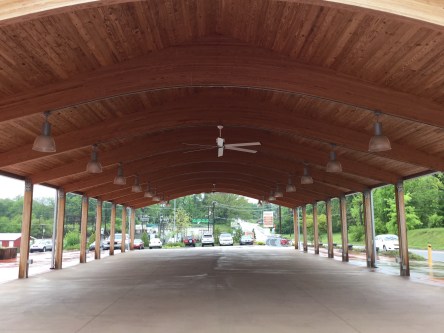
The lovely Harvest Park in the Northside neighborhood of Spartanburg home to the Saturday HCFM, The Urban Farm and the Monarch Cafe and Butterfly Foundation.

IMG_4952

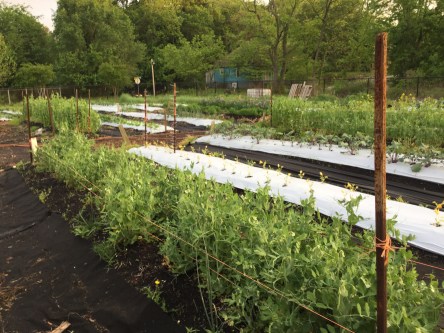
HCFM’s Urban Farm was alive and flourishing with a wide selection of items under HCFM staffer Meg’s care.

IMG_4929

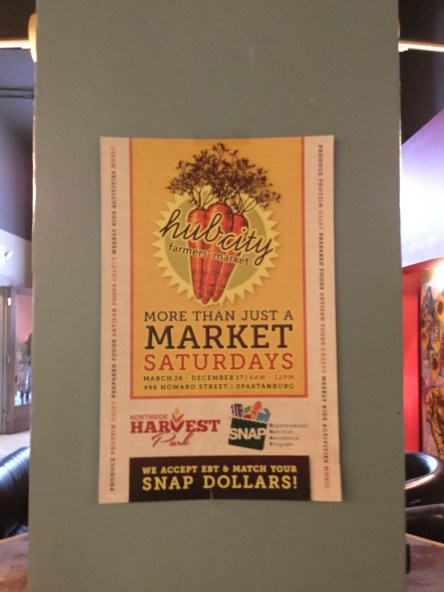
HCFM poster in the Little Coffeeshop next to the non-profit Hub City Bookshop

IMG_4975

The Writers Project at the HCFM is producing an impressive set of titles on the area including an upcoming partnership with the market and Monarch Cafe to benefit all.

IMG_4976

A corner of the Hub City Bookshop, a non-profit space that has accomplished a great deal in just over two decades.

 The Art of Noticing, and Then Creating 

A wonderful interview for anyone interested in community and creativity. So anyone working in markets, food and farming.


MS. TIPPETT: And I want to — I want to bring in the word tribes that you used, because that’s another way, you’re using a word that we associate with something primitive. Right? That we think, that we thought modernity was about outgrowing.

MR. GODIN: Right.

MS. TIPPETT: You are actually really affirming that… We choose who and what we belong to. It’s not just about survival. It’s about connection and flourishing.

MR. GODIN: So, you know, in the desert or the jungle, the tribe was defined by geography alone. That you were in the tribe based on where you were born. And then if we fast-forward to, I don’t know, Mark Twain. Mark Twain would show up in a city and a thousand people would come to hear him speak. And everyone who came was in his tribe. They were in the tribe of, you know, slightly satirical, slightly jaundiced people who were also intellectuals who could engage with him. And he had never met them before, but within minutes, they were part of a congruent group who understood each other. And so if we fast-forward to today — you can take someone who hangs out in the East Village or Manhattan who has 27 tattoos — they go to Amsterdam, they can find someone in Amsterdam who talks their language and acts like them, because they’ve chosen the same set of things that excite them, and that they believe in. And we divide tribes as small a group as we want. But what the Internet has done is meant that we don’t have to get on a plane anymore to meet strangers who like us.

That — the Linux operating system, which is on a billion computers around the world, was written by a group of strangers who have never met, who are part of the same tribe. And so the challenge of our future is to say, are we going to connect and amplify positive tribes that want to make things better for all of us? Or are we going to degrade to warring tribes that are willing to bring other groups down just so they can get ahead?

================================================

So, you know, on the way into the studio today, I passed a 1934 Rolls Royce. And in those days, if you were really rich, you bought a fancy expensive car like that. So we went through this era where you would value something that was physical. But now the things we pay extra for are connection. Right? The things we pay extra for are what are other people using — what networks can we be part of — what conference can we go to — who can we be with? And the people we choose to be with, the products and services we choose to talk about are all interesting and unique and human and real, as opposed to industrial and cheap and polished and normal.

Seth Godin — The Art of Noticing, and Then Creating – | On Being

Visitor count article

Farmers markets across the U.S. use many different methods of counting their visitors. Some of these methods are best used for planning programmatic activities at different points of the day, while others are more reliable ways to estimate an average number per market day. The current methods most researchers accept as accurate use strategically placed staff (paid or volunteer) to count those entering or everyone within the market at a set time. These methods require defining entrances, the time span to count and who should be counted or not, such as children or groups of people. The entry count method may be difficult at those markets that stretch for blocks or have many entrances; for those there are also new methods such as capturing the number of mobile phone “pings” within a market space or using drones to snap overhead photos to count quadrants that may offer accurate data.  In order to satisfy researchers who need credible data while still acknowledging the collection capability of low-capacity markets, Farmers Market Coalition’s materials currently recommend the 20-minute timed entry count offered by the Rapid Market Assessment (RMA) toolkit.


Link to full article in FMC Resource Library

Communicating community

Hopefully, all of you who read this blog are okay with my use of Vermont as one of this blog’s recurring examples of food system work. I will caution my readers to refrain from assuming that the Vermonters think they have it all figured out just because their residents are rightly proud of its glorious revival of small-acreage farming and its rep as an organic stronghold. I’d say the state food and farming leaders are very honest about the issues that they continue to face and their assessment of what remains to do. For example, there are still no full-time market managers at all and the average market manager makes less than 10,000 per year (really, it’s likely much less but I am trying to not overstate it here) and, in a state with only 625,000 residents (the most rural state in the union with 82.6 percent of its population living in either rural areas or small cities, and many of them poor*), the 80 or so markets are always struggling with maintaining attendance and sales amid strong competition from co-ops and other well-regarded outlets. And of course, like everywhere else, the state’s farmers are pulled in so many directions trying to serve every outlet at once while dealing with weather and regulatory woes and the typical small business challenges that many are not profitable.

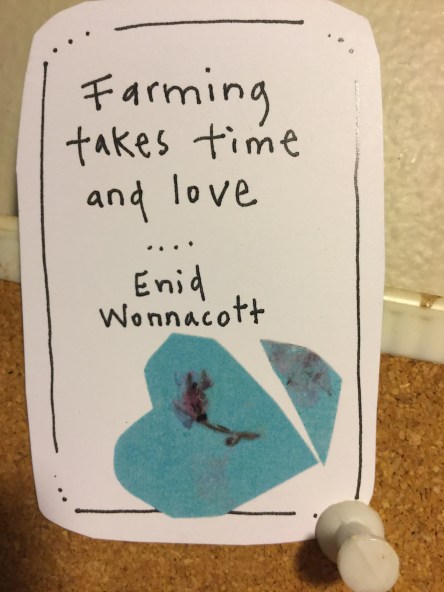
What is exciting is that they all try to work collaboratively at the network level to seek appealing ways to showcase producers and organizers’ hard work. The pictures below are an example of that. My home team there (NOFA-VT) has an artist who does lovely work that hang on their walls and whose art is used by NOFA in many other ways. During my last visit, Erin Buckwalter showed me this bowl in their office of farming “affirmations” from that artist some of which also include actual data. She encouraged me to take a handful and so I have been asking people at markets to reach in to my bag of cutouts and take one. What a simple way to display the difference in our system from the one that reduces everything in a store to a place for purchased advertising. So if you see me, ask to dip in and see what you get…

IMG_4714.JPGIMG_4855.jpg

IMG_4854.jpg

This one, from NOFA-VT’s imaginative and thoughtful Executive Director, will remain on my board to inspire me.


• Income and Poverty in Vermont

iMedian household income (in 2015 dollars), 2011-2015 $55,176 (US $53,889)
iPer capita income in past 12 months (in 2015 dollars), 2011-2015 $29,894 (US $28,930)
iPersons in poverty, percent Warning Sign 10.2% (US 13.5%)
Fifteen states have more than half their populations living in rural areas or in towns under 50,000 population.

Social Profit

25245277.jpg

This is a good primer on how non-profits can up their game by using qualitative assessment “rubrics” to figure out what they do well in terms that non-profits are better off using, rather than just ROI or other limited economic measures. 

Thanks to Erin Buckwalter of NOFA-VT for recommending it (and lending it)  to me.

I’m a big fan of the Whole Measures system that is covered in here and have used it for many years and so was pleased by it being included. I certainly recommend that all food system measurement systems review Whole Measures to see if it can be used by your organization.

As I have covered in other recent posts, I look forward to the day that more non-profits focus on creating leaders and devising better jobs as one of the main measures of success. This book will be helpful to many for thinking through these questions and I’ve already recommended it to two executive directors.  


http://www.socialprofithandbook.com/


How Morale Changes as a Startup Grows

However, this startup cultural utopia invariably hits a rough patch for about 70% of startups in years three to four, regardless of how happy the team was before. We call this the “cultural chasm.”
In fact, the faster the startup grew, the deeper the cultural chasm was that they had to overcome.

Founders who rate the importance of culture lower than a 10 on a 10-point scale are 70% more likely to have higher employee turnover rates compared to founders that rank the importance of culture a 10.

Link to story

Texas – HB 1926: The Homemade Foods Bill

HB 1926 allows home preparation of previously disallowed foods such as tamales, canned vegetables, fermented foods, and perishable (potentially hazardous) baked goods. Sales would be allowed anywhere in the state, including through mail order and internet sales, as long as the producer and consumer are both in Texas.

Source: Texas – HB 1926: The Homemade Foods Bill – Farm-to-Consumer Legal Defense Fund

The four stages of market management

Spoiler alert: The stages correspond exactly to the  four stages of competence learning model:

  • 1. Unconscious incompetence
    The individual does not understand or know how to do something and does not necessarily recognize the deficit. They may deny the usefulness of the skill. The individual must recognize their own incompetence, and the value of the new skill, before moving on to the next stage. The length of time an individual spends in this stage depends on the strength of the stimulus to learn.
  • 2. Conscious incompetence
    Though the individual does not understand or know how to do something, he or she does recognize the deficit, as well as the value of a new skill in addressing the deficit. The making of mistakes can be integral to the learning process at this stage.
  • 3.Conscious competence
    The individual understands or knows how to do something. However, demonstrating the skill or knowledge requires concentration. It may be broken down into steps, and there is heavy conscious involvement in executing the new skill.
  • 4. Unconscious competence
    The individual has had so much practice with a skill that it has become “second nature” and can be performed easily. As a result, the skill can be performed while executing another task. The individual may be able to teach it to others, depending upon how and when it was learned.

I have been thinking about how the role of market manager can be organized to reduce the learning curve, and to encourage managers to have a team around them, rather than to feel they must do everything on their own. If we do those two things, we may very well lessen the numbers who burn out and leave the job just as they reach unconscious competence phase.

My experience (from my corporate training in human resources, my own management of markets, supervising market managers and observing them for the last 15 years) is that the market job takes about 14 months to 30 months to move through these 4 stages. The length of time it takes has a lot to do with the organization’s structure for training and for providing feedback.

Unlike other entry-level jobs, market managers are asked to master the most difficult work right away: to confidently manage dynamic logistics for a group of small businesses working side-by-side with their direct competition. And in far too many cases, there are no manuals, no detailed history recorded, or clear written process when dealing with risks or crisis.  Few managers are offered performance reviews or even clear, written deliverables or goals so they can correct as they learn. (I feel compelled to point out that I find it startling how few nonprofits understand that their success is based almost entirely on the skill and labor of its people and how rare it is to find supervisors spending any time becoming more adept at that part of their job. )

So those months can be quite stressful and without a clear training plan, a negative feedback loop can be created, especially among watchful vendors who are rightfully expecting high productivity.

Often, the most difficult phase is #2 when the community doesn’t view the manager as new any longer and becomes impatient with every mistake- and yet as you can see from this timeline, mistakes are to be expected in the “conscious incompetence” phase. Mistakes are often caused by someone bravely trying something new or testing a varied way to do a task that needs updating. It is a process of learning but one that does need positive correction from the supervisor to okay the adjustment and to acknowledge the validity of it as a learning process.

So markets can do a better job preparing the community for a new manager by allowing the manager to ease into some of the more difficult tasks, “permission” to make little mistakes and even better, time and space to formalize a system for dealing with risks so there won’t be guesswork:
A copy of every market map should be kept, filed and noted with weather, no-shows or risk issues written so new managers can review past years. These are also helpful in cases of slip and falls or property damage suits, as legal proceedings may come much later and the data from that day may very well help your team defend your market and at least remind you what happened and why. Sets of laminated pictures of the market set up, the storage area, the table layout, a FAQ for market day for new managers to know what is desired during set up can also make it easy to have volunteers to take over those duties so the manager can then move on to new tasks.
THAT is also a vital stage of this process: that the manager moves to creating systems for the routine tasks as soon as they can, allowing others to step into support roles.

On the subject of conflicts, is usually a good idea for markets to have an off-site process for any hot button issue, new manager or not:  Disagreement between vendors or about a rule should not be hashed out on market day. Instead,  a temporary solution for that day is all that should be offered.  Have the manager quietly ask those involved if the discussion can happen that next week by phone, in person or via a video conference call if possible. Not only does this allow everyone to simmer down (including the manager) but it also allows some time for the manager to get some input from senior vendors or board members. Most importantly, it sets a tone for future issues.

Other suggestions:

• The new manager should have an hour of weekly reading from the files and by scanning some of the most important articles and magazines on community food while on the clock.

• They should be introduced in ever widening circles to the members of the community – even if they are local – as the manager by board members, anchor vendors and volunteers.

• If a market hires a new seasonal manager annually, have a market business card with a line for the manager to write in their name, and also allow board members to do the same.

• Asking new managers to keep a journal of the day also helps get them through these early stages. I used to ask my new managers to write me an email on their smart phone even if I had been onsite with them all day. Some of them drafted it all day when they had a minute, and then sent it to me as they got in their vehicle to go home, while others sent it from their laptop first thing on the next work day from their scribbled notes. That email was broken down into logistics, vendors, shoppers, other and helped them analyze their day.


Props to a seed carrier

….In the heart of the feminine nature of Seed Carriers lives the instinctual calling to be intentionally aware of the essence and influence of every thought and emotion, of each spoken word and action taken. Our personal and collective future – all that comes to be – grows out of our here and now choice-making.

So what do you want to be seeding…
…in your life?
…on the earth?
…for the generations to come?

Copyright © 2011 JoAnne Dodgson


A friend left us this week. True to her life, the news was quietly passed from friend to friend with everyone wishing they could talk with her just once more and could smile at her, thereby passing joy back to her. We were all flabbergasted that she was the one who was taken, as she was a healer with a very strong life force.  But as sherecently said  in her gentle way:

We’re all going to get something.

I don’t have to be the impervious, always healthy Tai Chi teacher.

I am simply a human being.

That illness should not define her – even her passing –  so I won’t focus on it except to say she handled it with courage and grace and love and used it to share her very personal but teachable moment to us all.

Marilyn Yank. That is her name. I always liked her name. It suited her: a bit formal yet graceful with a strong old-world finish.

Marilyn_Yank_003-dc45c11e.jpeg

Photo by Cheryl Gerber for Gambit

I met Marilyn when she moved to New Orleans with her partner, Anna Maria Signorelli. Anna Maria was a New Orleanian and they moved here partly because all New Orleanians are unhappy when away from here, and partly because Marilyn had taken over the care of her ailing father and the Signorelli family was here to depend on. And the weather was warm and sunny and moist most of the time and the two of them were deeply dedicated to farming the land. Maybe there were other reasons too that I am unaware of that mattered. They had come from Austin where Anna Maria had taken the helm of the Sustainable Food Center after its dynamic founder had moved to policy work. Marilyn was working on the La Cochina Alegre project there and a team was born. I remember Marilyn told me they lived in a tent together while learning sustainable farming in Santa Cruz and once they made it through that, she knew they were partners.

Once back here, Anna Maria was immediately in her element.  I assume that she was like that when they were in Austin too cuz she is a powerhouse especially (as Marilyn always observed) when she has a team around her. Marilyn took it slow, marveling aloud as only she could about the intricacies of life here and her partner’s large Sicilian family’s wonderful togetherness. We met because a mutual friend, the thoughtful Max Elliot for those of you in urban agriculture here, in Austin, or in Shreveport, helped them put together a small group of activists to talk about building a network for food and farming in New Orleans.

We had a few meetings in Marilyn and Anna Maria’s meditation center, AMMA, so named for their combined names and the word for nurse or spiritual mother. We sat cross-legged in a circle and talked about our visions and beliefs and then after a few meetings, a few of us got a little antsy and asked if we could meet in a more active space. I remember Marilyn being fascinated and bemused by the request as her activism was rooted in her quietness and centeredness. Her movement work was also illustrated by a story she told me of the people in an Asian country who had firmly and publicly set the goal that they would become a society totally absent of violence – in 1000 years. The point was that every tiny and personal step they made towards that goal now  was meaningful, and to expect total success in one’s lifetime laughable.

I also remember  when Marilyn asked me to coffee at the fair trade coffeehouse after those first few meetings and said to me with what I came to know was her very direct but gentle way of asking a question: ” I have been wondering about you since we met. Do you mind?”

I did not mind and we bonded. Turns out she was originally from Detroit. I thought I recognized the steel backbone of a fellow rust belter under her beloved Southeastern desert style. Unlike many here, it didn’t really matter where she was from as her presence came from her embrace of the small shared whatever right in front of her – the moment, garden, food item, gesture, idea, linking it easily to the gigantic: her quiet assessment and acceptance of humanity’s and the natural world’s pace.

Her Little Sparrow urban farm was a turning point in the city, both in its description of the vision she had for it right there on the board on front and its urban market box program, the first of its kind around town.  There was an open invitation for people to carefully pluck food from its constant profusion of well-tended food and beauty although she encouraged some wildness to flourish on its edges too. The tropical climate got the best of her at times as a farmer and she was justly impressed by her dear friend Macon’s skill in growing food in this brutal climate, constantly championing  his patience and knowledge as a grower to anyone who would listen. Many growers directly owe their experience to her willingness to share hers as she would always credit her teachers like Macon’s willingness to share theirs.

With a group of around a dozen others (the aforementioned Max as the nucleus), she and Anna Maria built a lasting network of food and farming leaders, myself and Macon included. The work to grow this network of activists took years and could take pages here to recount my personal observations of her and Anna Maria’s resolve to see it happen. Sooner or later, just about everyone else involved in the founding either gave up or moved on to other work, except for Marilyn. She stayed in it as long as she was needed and as long as she thought she had something to offer.  In some form, that entire group owes most of its interconnectedness to Marilyn directly. Most of those founders are still honored colleagues of mine and some are also close friends, but all of us certainly remain fellow travelers who gladly remember those days  when we meet up again. I’d like to thank her again for her dedication to the group and the idea.

Even after I moved away from assisting directly with the work of the New Orleans Food and Farming Network that our little group had realized, she and I reconnected regularly and when we did, her stories were always of a lesson learned or a description of the path of a karmic connection that had been experienced since I had seen her last. Some were very personal and painful. I found that I easily shared more of my deepest thoughts and fears than I did with most others, maybe because of her reciprocity or because of her abilities to see without judgement, or at least to recognize the judgement and to self-correct. Or maybe because she expected kernels of truth and revelation as the unspoken agreement of friendship.

One of the best times I had with her and Anna Maria was recent: during the Louisiana floods of 2016, I wrote them because I knew they had moved to that farming area affected away from the city. She immediately wrote me back, telling me their house and property were indeed in the path of the rising water, so they were in the city until they heard. Would I have dinner with them? I did and we laughed and shared updates and drank glasses of wine and laughed some more. As we parted, the text came from their neighbors that the water had stopped rising only a few inches from the top step of their raised home so they were going to be okay. After sharing their relief, I thought about how they had been totally present and joyful all evening, never seeming to worry about their looming crisis.

As soon as I heard the news this week, I had a strong impulse to go out to a quiet green space and find a dandelion clock to blow its blossoms to the wind.  It struck me as I explored that thought that the dandelion is a flower, but a tough little one, with healing properties carried by the wind to the most unlikely places. Marilyn, you went far and wide and added much nourishment; carry on. I certainly will, using as much empathy and humor as I can muster, in honor of Marilyn.

stock-photo-112240169.jpg

Give em a nudge…

I love when artisanal producers find a way to urge shoppers to become more than shoppers. One of the possible metrics that may  be added someday to the Farmers Market Metrics program at Farmers Market Coalition is measuring how market shoppers influence their friends shopping and also how they share ideas and tips about local items with other retail outlets. How many times do market shoppers ask their produce manager to stop carrying out of state items and instead stock locally available items during the seasonal high point? How many shoppers are the carriers of information about market items availability for their neighbors and friends?

My guess is plenty…

The Matzo Project uses that same energy to expand their reach across the US of their wonderful crackers.

Screen Shot 2017-03-14 at 11.06.42 AMTHE+MATZO+PROJECT+CONSUMER+REQUEST


How great would it be if markets offered blank cards to their shoppers so they could leave a note and share news of a market offering with their friends and even a few select retail outlets?


Basic income isn’t just a nice idea. It’s a birthright 

Interesting piece on agrarian rights and basic income.


But the right of habitation – came under brutal attack beginning in the 15th century, when wealthy nobles began fencing off common lands for their own profit. Over the next few centuries, the enclosure movement, as it came to be known, shifted tens of millions of acres into private hands, displacing much of the country’s population. Excluded from the basic means of survival, most were left with no choice but to sell themselves for wages for the first time.

Thomas Paine was among the first to argue that a basic income should be introduced as a kind of compensation for dispossession. In his brilliant 1797 pamphlet Agrarian Justice, he pointed out that “the earth, in its natural, uncultivated state was, and ever would have continued to be, the common property of the human race”. It was unfair that a few should enclose it for their own benefit, leaving the vast majority without their rightful inheritance. As far as Paine was concerned, this violated the most basic principles of justice.

The beauty of this approach is that it functions as a kind of de-enclosure. It’s like bringing back the ancient Charter of the Forest and the right of access to the commons. It restores the right to livelihood – the right of habitation.

Critics of basic income often get hung up on how to fund it. But once we come to see it as linked to the commons, that problem becomes more tractable. In the US state of Alaska natural resources are considered a commons, owned collectively by the people, so every resident receives an annual dividend from the state’s oil revenues.

The Guardian

Whole Foods Launches ‘Produce Butcher’ Service at New Bryant Park Store 

Too bad this writer thought it was proper to make fun of people who want their veggies prepared for them, which might help to reduce waste and the mistakes that many inexperienced cooks face. It’s that kind of mocking that makes healthy food seem elitist to many… Maybe they are not all lazy; how about those with injuries? or with limited sight? or without tools?

So let’s all keep sharing these ideas about inviting people to eat better food by offering more ways and services.

Whole Foods Launches ‘Produce Butcher’ Service at New Bryant Park Store – Thrillist