Pine pollen powder-newest product at my farmers market

My regular sprout guy Sam has really stepped up his game with more sprouts, coconut chips (amazing snack) and soon, tree pollen. This is pine country and so the amount of pine pollen that can be gathered is tremendous; Sam tells me he bags the branches and shakes away….Pine pollen powder is the most concentrated whole food source of testosterone.. Maybe he’ll soon bring other pine products too.

images.duckduckgo
The opportunity for constant expansion of creative seasonality among local entrepreneurs is one of the reasons farmers markets remain crucial to local food systems. Go tell it on the mountain folks.

Are Farmers Market Sales Peaking? (Cuz NPR likes to say so)

Let me say first that I have only begun to read the report cited and that the authors have done some excellent research. The issue is really that outlets like NPR offer snappy headlines and a sound bite or two rather than the entire story. However, it is important that food system organizers communicate more data than that to their market community.

I’ll begin with one of the conclusions from the report:
• It is difficult to draw conclusions about the local economic impact of local foods systems because the existing literature has narrow geographic and market scope, making comparing studies complicated. Data necessary to conduct economic impact analyses are costly to obtain, and researchers have yet to agree on a standard way of accounting for the opportunity costs involved when local foods are produced and purchased or on a standard set of economic modeling assumptions. Many questions surrounding the economic impact of local foods remain unanswered and could be addressed by future research (e.g., Are local food systems good for the rural economy? Might the economic benefits of expanding local food systems be unevenly distributed?)
(The authors do mention that case studies are helpful in local food system research because of the chance for context, but warn that makes generalities difficult.)

here are some other facts from the report:

Farms selling local food through DTC marketing channels were more likely to remain in business over 2007-12 than all farms not using DTC marketing channels, according to census of agriculture data.


•The significance of local food sales totaling an estimated $6.1 billion in 2012.

For organizers (markets, CSAs, farm stands) the takeaway is clear:

1. We need to collect data and work with those researchers that also want to collect it to paint a more nuanced story of the positive impacts of these channels than were able to be included in the report. Those are not limited to: new product testing, constant cycles of introduction for eaters and producers, the opportunity for attempting small (often risky) pilots for increasing access, educational resources for youth, urban/rural connections and more.

2. That data has to be on the multiple impacts of markets, not just on direct sales. Do farmers meet other buyers (intermediate) at the market? Are other outlets dependent on the market for pick up of their goods? Is it a important way for family members to start working for the farm? What about access to shoppers using benefit program dollars-is this an area of new customer sales that DTC farmers have captured almost entirely (and influenced recent national policy?)

3. A dip in the number of new markets opening or DTC sales flattening for a time (if that is indeed the case) may mean something quite different than the implicit assertion that consumers and farmers are choosing other outlets. Factors may include weather issues, or regulatory pressures (see the fee hike suggested by King County in this story as an example) or farmers unable or unwilling to separate sales outlets when reporting data.

4. An example of how market organizers could help researchers is by gathering anecdotal info for future studies to see if DTC farmers choose autonomy and non-economic benefits over higher incomes as was suggested in the report:

The lower total household income suggests that farmers with direct sales may have had less favorable off-farm income opportunities. If true, this could provide them with an incentive to remain in business even if they have less ability or opportunity to expand production.
Higher survival rates and slower growth for those with direct sales might also be explained by different attitudes toward farm versus nonfarm work. Researchers have found evidence that nonpecuniary benefits from self-employment explain why small business owners remain in business despite earning less income (Hamilton, 2000). There is also evidence that the non-pecuniary benefits to farming (e.g., greater autonomy, independence, and lifestyle factors) are substantial (Key and Roberts, 2009). It is possible that farmers who sell directly to consumers derive greater nonpecuniary benefits from their work—perhaps they enjoy interacting with their customers. This would provide a greater incentive for them to remain in business even with lower business expansion possibilities.

    Positive impacts

•The economic benefits of farmers’ markets may also extend beyond multiplier effects, which measure short-term impacts. Lev et al. (2003), for example, found that businesses near farmers’ markets reported higher sales on market days. Not only were these additional sales found to directly support the businesses themselves, but they also generated extra tax revenue for the communities in which the markets were located. Brown (2002) found some evidence that farmers’ markets increase property values in the market district.

•Additionally, farmers’ markets can function as business incubators by providing the infrastructure necessary to build skills and gain business experience (Feenstra et al., 2003; Gillespie et al., 2007). Regular interactions can “generate and circulate knowledge that vendors might use to develop new products and creative ways of marketing them” (Hinrichs et al., 2004: 32-33). Feenstra et al. (2003), for example, explored New York, Iowa, and California farmers’ market contributions to the development of vendors’ capacity as entrepreneurs and found that 66 percent of vendors expanded an existing product line, 50 percent added a new product category, and 40 percent made new business contacts. Sales income may be less important than the skills and business experience developed through participation in farmers’ markets (Brown et al., 2007).

Direct marketing was also associated with higher survival rates among beginning farmers (columns 3 and 4, table 5). On average, beginning farmers who marketed directly to consumers had a 54.3-percent survival rate, compared to 47.4 percent for those who marketed their goods through traditional channels.
What is it about DTC sales that seem to enhance farmers’ chances of maintaining positive sales? One advantage might stem from the fact that, for a given level of sales, farmers with direct marketing purchased less machinery and land than did those with traditional marketing. According to the 2012 Census of Agriculture data, farmers who marketed directly owned $20.82 worth of machinery per dollar of sales, compared to $31.10 for those who marketed through conventional channels. Farmers selling directly to consumers also owned less land: $240 worth of land per dollar of sales, compared to $309 per dollar of sales for other farmers. Because they did not need to purchase as much machinery and land to achieve a certain level of sales, farmers with direct sales did not need to leverage as much of their wealth to obtain financing. This is confirmed by the census data, which show that farmers with direct sales had annual interest payments of only $7.85 per $1,000 of owned assets, compared to $10.55 for those with no direct sales. A lower debt-to-asset ratio should indicate a better ability to repay loans and has been shown to reduce the risk of small business failure (Tveteras and Eide, 2000; Strotmann, 2007; Fotopoulos and Louri, 2000).


Are Farmers Market Sales Peaking? That Might Be Good For Farmers : The Salt : NPR.

the actual USDA report

Spreading the Gospel of Food Preservation Across the U.S. – NYTimes.com

Hey market folks-why not get this lady to your market in 2015?

It’s the 40-foot mobile office of Tara Whitsitt, 29, a nomadic evangelist for fermented foods who is camping out in Queens for the winter.

A soft-spoken Texas native who refers to her cross-country travels as Fermentation on Wheels, Ms. Whitsitt has spent the past 18 months motoring around the United States in the bus, a former Michigan State Police vehicle outfitted with a kitchen and a wood stove and laden with five-gallon jugs of mint-lemon balm wine, jars of radish-turmeric sauerkraut and plenty of sourdough starter. Ms. Whitsitt earns a living largely by holding workshops in which she teaches old-fashioned methods of food preservation.

Spreading the Gospel of Food Preservation Across the U.S. – NYTimes.com.

The Difference Choosing Ugly Vegetables Can Make – CityLab

If “grow it to sell it” was the revolutionary idea in farmers markets during the 1970s-1990, and “healthy food for everyone” was the call to arms for the last 25 years, then “use it all” has to be the next big idea for food system organizers. Keeping food out of the waste stream by encouraging use of the ugly food items is such a simple and elegant idea that it may very well finally connect the entrepreneurial to the environmental in food organizing.

Actually, it supports a corresponding and extraordinary idea that my pal Poppy Tooker created over a decade ago for her New Orleans/Gator region Slow Food work: “eat it to save it.”

(check out the previous post too, about the Farmer Foodshare project in North Carolina which addresses getting good food out of the garbage bin and to more eaters.)

The Difference Choosing Ugly Vegetables Can Make – CityLab.

Open source gleaning model helps NC market farmers address hunger issues

I had the great pleasure to become acquainted in 2012 with this innovative program that is closely linked to the North Carolina farmers markets and individual farmers to get food flowing to more people- but this model made sure that it was NOT at the expense of farmers businesses. Their Donation Stations allows customers to buy an extra share to donate to those in need and also allowed farmers credit for any donations that they made. Their wholesale work to get more agencies to buy regional food is also extremely important.

Open source model helps NC solve hunger problem | opensource.com.

Millennials’ hunger for fresh foods eats into food giants’ profits

Wojchik said he gravitates to the coolers and produce displays on the supermarket’s periphery, not the center aisles. “My wife has actually said to me, ‘Don’t shop in the center of the store, most of the healthy stuff is on the perimeter.’ ”

The fresh produce boom has even hurt sales of frozen vegetables, including General Mills’ Green Giant offerings, analysts say.

The frozen category is still a big one, and it’s not declining significantly, said General Mills’ Harmening. Still, he said, “people are going more to fresh.”

A report by analyst Howard showed that fresh produce was one of only three supermarket food categories — out of 13 surveyed — that registered an increase in consumer consumption over the past five years.

“It seems that we have recently hit some sort of tipping point, whereby demand for heavily processed foods is tapering off, while demand for healthier and simpler products is picking up,” according to Howard
Millennials' hunger for fresh foods eats into food giants' profits | Star Tribune.

Farmers Market Metrics Vendor Metrics Released

Farmers Market Impact Metrics Released for First Season of Testing
Research project addresses the need for consistent measurement of farmers market impacts nationwide.

Researchers at the University of Wisconsin-Madison and the national nonprofit, the Farmers Market Coalition (FMC) released metrics this week that will allow markets and their partners to gather data on vendor and customer activities. The data will assist market organizers in constructing targeted marketing and advocacy plans and will offer farmers and other producers specific information on building their business goals.
The project is funded by the USDA’s Agriculture, Food, and Research Initiative (AFRI) and will allow nine markets across the U.S. to test data collection and reporting techniques in 2015 and 2016. The project team gathered known metrics used over the last decade in farmers markets and food system research and prioritized those that could be easily gathered by the market community itself. The metrics were grouped into one or more of four types of benefit they provide:
economic (i.e. sales or job creation), ecological (land stewardship), social (new relationships) and human (skills gained or knowledge transferred).
The research project’s principal investigator Alfonso Morales, Assistant Professor at University of Wisconsin-Madison said, “We believe that it is vital that grassroots markets have the tools and embedded skills to gather data on behavior for their own needs, not only on shopper activity but also on the small businesses that depend on these markets for their family’s income.”
From the list of 90 metrics identified, the team focused its initial efforts into refining 38 of those metrics for immediate use by the nine pilot markets chosen for the project. Participating markets selected those metrics that are most useful to their current work and will begin to gather data in late spring 2015. The data will be analyzed by the project team and final reports shared with the markets later in the year. The team will conduct another round of data collection at the same pilot
markets in 2016.
The first round of metrics sent to the markets focus on collecting vendor data through questions embedded into vendor applications or through direct surveys or observation at market of vendors. Later rounds of metrics will allow visitor data to be collected using the same methods, while future metrics are likely to focus on the “placemaking” skills of the market and the internal workings of the organization running the market.
Vendor metrics for this project include acres in production for markets, distance traveled from production to market, sales data, and the number of women-owned businesses. Jen Cheek, Executive Director of Farmers Market Coalition affirmed, “Many markets are not sure what to collect and when; others already collect some of this data but are unsure of how to use it once collected. These measurement projects that FMC is taking on with the University of Wisconsin will offer shared language and common-sense guidelines for reporting, while allowing markets and
their vendors the freedom to define what success means to their market and community.”
Find the vendor metrics here and a template letter for vendors here and a glossary of terms and vendor tree here.
#
The Farmers Market Coalition (FMC) is a 501(c)(3) nonprofit dedicated to strengthening farmers markets for the benefit of farmers, consumers, and communities. For more information about the Farmers Market Coalition, including Farmers Market Metrics please visit their website at http://www.farmersmarketcoalition.org.

Recognizing Workers in the Food System panel at #FoodTankSummit

Moderator: Diane Brady, Bloomberg, @dianebrady, @Bloomberg

Baldemar Velasquez, Farm Labor Organizing Committee, @SupportFLOC

Jose Oliva, Food Chain Workers Alliance, @foodandlabor, @foodchainworker

Melissa Perry, The George Washington University (GWU), @GWTweets

Mia Dell, United Food and Commercial Workers, @UFCW

Jeremiah Lowery, ROC United DC, @jeremiahlowery1, @ROCDC

Patty Lovera, Food & Water Watch, @foodandwater

Great panel at The Food Tank Summit held in DC and via live stream. The day started with Saru Jayaraman, Restaurant Opportunities Centers (ROC) United (“Is it corporations or is it people?), and then Liz Shuler, National AFL-CIO (there should be “no separation between good food and good jobs) both who gave great 10-minute speeches on the need for food system organizers to join with the worker rights movements in the food industry. Notes below

Berry pickers story to begin the panel from Baldemar Velasquez:
6 am without breakfast mosquitos everywhere, swamp-like conditions and within 15 minutes, you are soaked up to your knees with bites everywhere. Being told “faster faster” by crew leaders constantly.
That berry you have in your hand (or fridge) connects you to that worker.

Jose Oliva:
Grow more of of our own food-great. But we can’t grow it all, the global food system is not going to go away by wishing it away. We do need to build a system to grow more of our own food, but we need to address the corporations that are making the exploitation of human beings and destroying the environment. Food system is addressing the issues of health and environment, but what about the labor? That is why Food Chain Workers Alliance was begun.
They have a certification initiative: HEAL Health Environment Agriculture And Labor

Melissa Perry:
Many years studying the effects of pesticides on farm labor, started with Vermont farmers. Data exists mostly on small family farms, since farmworkers are not studied very often. Meatpacking can be changed to much safer; it just needs the will, attention and funding.

Mia Dell
Represent 1.3 million workers
Had been a bit cynical about how rarely meat production worker safety is on the minds of local food advocates or farm advocates. Has since seen advocates rising up for worker safety around line speed waiver for poultry inspection.

Jeremiah Lowery
Be aware: Cafeteria workers being laid off on this campus by their corporate company
Building a massive movement in DC. Anti-GMO marches are going on yet they have not contacted worker movement organizers in DC. Let’s engage across silos.

Patty Lovera
Not representing workers, but we are in that coalition of poultry inspection rule change that Mia talked about. Making a ruckus about that issue did make a difference.
Lobbyists are writing the rules-don’t give more opportunity for these big players to get bigger. Merger Monday: seemed every Monday food companies announced merger which reduces choice and they control more of the decision making.
Fight trade agreements-we can make a difference in our local and state governments-Deregulation means companies that we can’t reach, attacking US rules on workers rights and health regulations.

(Panelists) What should we do?

•Work together on supply chain agreements (tomato campaign at Campbell Soup)
•Tobacco (and other specialty crops) workers in North Carolina-40,000 workers are fighting for right to organize.FLOC website
•Collective bargaining agreements are not just about conditions and wages; its an opening for all of us to have better food.
•Work on procurement policies everywhere. Los Angeles using HEAL metrics. Chicago and NYC are working on that, other cities are talking about this idea.
•Fund public health research along with worker health and safety research.
•Make it less convenient for consumers to ignore chemicals in food and gaps in worker safety.
•Know about products that are produced by prisoners and child slave labor: asian shrimp, cashews are two examples of use of slaves and prisoners for production- we know what products are produced this way, let’s share that.
•Cities need funding for more food policy councils which then need a component on labor, homeless, women’s rights etc.
•Diners Guides-ROC has one (print or app) to let consumers know which restaurants treat their workers well.
•We’re doing it wrong at the government level-The effects of the food companies are not being studied and laws on the books enforced well or at all. Telling the Walmarts of the world-“You’re too damn big”
Consumers cannot be the enforcer of the laws- we’re lied to too often.
Q&A piece (these are some of the answers from panel, questions not recorded)
•Lots of reports that show that higher wages will not result in higher food prices. Check out one: Dime a Day-Food service study on minimum wage and others.
•Protein consumption reports show that protein consumption has leveled out. So can we start to make changes to make that protein safer?
•We can find other ways to get protein besides meat (as it is not the best way for humans to get protein)
•Pesticides may be sprayed at lower levels on GMO crops which may protect farmworkers- but the pesticide is inserted into the seed itself which means comparable issues in eater’s health and the environment.
•Regulatory framework is controlled by the GMO companies that sell the product. Remember, biotech companies started as pesticide companies-the regulatory world is not equipped to handle current or rising scientific claims.
EFI Equitable Food Initiative-migrant workers and consumer protection joining to certify labor intensive products. Costco is signing on to this certification, still in pilot stage.

Farm Shares | Grow Dat Youth Farm

A recent success story in New Orleans for urban farming and school-aged youth, Grow Dat has sold their produce through at their City Park farmstand, at farmers markets, through online ordering/home delivery services and now with this CSA method. GDYF is a well-regarded project that has produced very real outcomes in a challenging funding and food environment. The success of Grow Dat’s project work along with their constant advocacy for urban farmers has truly risen all boats.

Farm Shares | Grow Dat Youth Farm.

Big data and little farmers markets, Part 1

Recently, I have been reading a few books and articles on the new world looming over the next bend. This new world is called many things and includes shiny named ideas and tools to make it so. Here are some of those titles in case anyone needs some bedside reading:

•Collaborative Commons (Rifkin, (The Zero Marginal Costs Society)
•Disruption (Next City 2012, Fortune 2014 “Next up for disruption: The grocery business”, Urbanophile 2014, Disrupting the Disruptors )
•Flattened economy (Friedman The World Is Flat: A Brief History of the Twenty-First Century 2005)
•Spiky Economy (Florida, “The World Is Spiky” 2005)
•Alternative Economics, Community-Supported Industry (Anderberg 2012, Schumacher Center for New Economics)
•Social impact bonds (Jacobin Magazine Issue 15–16 “Friendly Fire”)
•Placemaking/Livable Places (PPS, Tactical Urbanism, CityLab)
•Human-Centered Design (LUMA, Ideo)

and then bunches on how to measure this stuff:
•Measuring Urban Design: Metrics for Livable Places (Ewing, Clemente 2013)
•3 Keys To Better Data-Driven Decisions (Technology Evaluation Centers)
•Five Borough Farm II: Growing the Benefits of Urban Agriculture in NYC (Design Trust for Public Space 2014)
•Data Infoactive (Chiasson, Gregory 2013)
•Disruption Index (Next City 2012)
•Livability Index (livability.com 2014)

and so on. (and please feel free to send me any that you find useful).

Much of this discussion of the new economy and its infrastructure centers around the use of technology to allow data (usually known as Big Data) produced by every system, sensor, and mobile device to be shared across sectors and users – aka the Internet of Things (IoT). Big Data and IoT are representative of what is both good and bad about the new world; they pressure public entities to adopt private sector characteristics and measures, and conversely, ask private entities to add public sector transparency as a mode of operating in this new world. Additionally, both sectors must respond immediately to any trends or innovations. This can be good and bad.
 (The intersection of public and private is what the non-profit sector is supposed to exist and, increasingly how it participates in Big Data, is a measure of its ability to do just that. I’ll come back to that very idea later in this series.)

Examples of Big Data:
Think of how that grocery store loyalty card transmits information about what, when and where customers purchase goods. Or citizen used tools to measure and report pollution, or how that electronic parking card tells the city the peak parking hours, letting planners know the need for more (or less) parking facilities. Or, the sensors that are timed to go off for irrigation to start for food production.
For food system advocates, the connection to data sharing is mostly through the public health sector at this point, but the planning and design sector of governments will be wanting data from us too and then, you can expect the line to form from other sectors after that.

Social media is not the center of Big Data, but it’s already helping to study the behavior of its millions of users. In the interdisciplinary Cornell University course entitled “Networks, Crowds and Markets” taught by professors David Easley, Jon Kleinberg, and Éva Tardos, they use data from online networks to talk about “strong and weak ties” and “bridges” and to map the patterns of why, how and when connections are made and what impact those connections have in the fields of economics, social sciences, and public health, among others. Since social media is mostly networking, informal updates, and chatter, (constant and sometimes as cheerfully mindless as an acquaintance’s wave from across the street), it may seem without value, but it is certainly changing the way that we communicate.
Social media can also power revolutions, allow for professional development and offer small businesses appealingly designed, low-cost online faces for their already-developed customer base. This blog you are reading is part of social media and as such, is written to be ephemeral and chatty opinion with links to other information sources rather than hosting peer-reviewed reports.

Recently, I had the good fortune (thanks to the Farmers Market Coalition) to be invited to a Knight Foundation technology gathering of social entrepreneurs and so heard many ideas for leashing the power of Twitter and other social media platforms to better aggregate data or reorganize news feeds. No doubt as new platforms are built on top of the first tier, there will be more usability and versatility, but for now, many people view it as a multi-platform address book to keep track of friends, colleagues, and friends of friends.

The ease of using social media is what was beguiling to many at first but the gossamer veil of privacy means that if not careful, one’s identity may be stolen or become the target of a bully. At that point, that once-enticing open entry can drive plenty away and that very fact is what is being argued about sites like Airbnb and Uber: 1) that the lack of regulation at city halls or public agencies allows for exemption of rules that their counterparts with physical outlets are not able to sidestep and 2) since there is often no face to face meeting between buyer and user, the perceived opportunity for criminal activity increases. My feeling is that the regulation needed for the IoT and online sites must be a new system rather than asking for adherence to the old since the old grey mare of city hall or the federal government is not suited for managing these (which sounds like what the community food system has been saying for the last few decades!)
The European Commission has already published a report outlined some best practices for architectural, ethics and governance of the IoT, highlighting social justice, privacy and opting out concerns (“consent activities” in designer language). Their early conclusions encourage better credential exchange systems and a deeper awareness of “reliance versus trust” parameters. In short, make sure most online relationships include a requirement for sharing some sort of identification and create some active boundaries between systems. Maybe the U.S. community food system can jump on these ideas, thereby leaping ahead in confidence levels to be able to share useful data more rapidly than other sectors.

Yet, even with the perception of these systems as being hackable, an increasing number of people in the Western world still participate regularly even while others hoot it down while they cling to their wall phone and postal stamps as their talismans against the new world of constant updates. Those folks are not likely to let us forget that social media is just a part of the communication sector and only the ephemeral part of it. We still read newspapers and books, meet people face to face and still have postal carriers and grocery store corkboards with lists of apartments to rent.
Therefore, how we use social media within community food systems has to be balanced far better than we early adopters have done so far. Plenty of markets and other food system initiatives use social media brilliantly within its limited use, but others often ignore traditional media entirely by not factoring in that those reached with social media are only a tiny portion of the audience that might be found. Or conversely for the Luddites among us, the need to adapt their thinking to understand that social media has worth for a low-capacity, face-to-face entity like a Saturday morning market.
What I have noticed is that social media helps drive farmers market or CSA sales for a single or a few products on a single day extremely well. It also does a passable to good job reminding its users that they are members of a larger community of doers and thinkers, which can extend the social and human capital of a market. It can connect producers to shoppers on non-market days (although I think less well than promised) and can do something akin to the Dot Survey method pioneered at market by Stephenson, Brewer and Lev: allow for an easy mood of the day give and take between market organizers and users. It also is that friendly wave from across the street that in our sped up world can stand in for reminder of community on a bad day and add a layer of connection. Let’s just not build our world entirely on chance meetings or depend on a small number of tools.

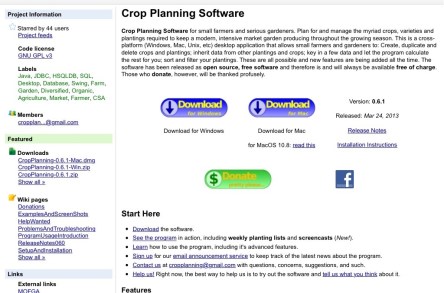
update This morning, I am sitting in a farmer workshop at Southern SSAWG conference listening to a 5th generation farmer talk about the open source free crop planning software system, sensors, and apps that he uses to run his direct marketing farm business; clearly, for some, the IoT is already here.

Coming Soon
Part 2 The minefield of analyzing Big Data
Part 3 Connecting farmers markets and food systems to Big Data
Part 4 Managing face to face and online communities in farmers markets
20150116-091953.jpg
Coming Soon
Part 2 The minefield of analyzing Big Data
Part 3 Connecting farmers markets and food systems to Big Data
Part 4 Managing face to face and online communities in farmers markets

Hall of Fame Market Leaders start their “farewell tour” year

IMG_2138.JPG

Back when I began working at Market Umbrella, our founder, Richard McCarthy gave me the names of a few people that he held in high esteem on market issues that I might check in with regularly. Interestingly, many of these folks led the “town square” phase of markets that Market Umbrella belongs with as well (eras that some of you have heard me talk about over the years.) Some of those names include:
Donita Anderson North Union Farmers Market, Cleveland OH
Chris Curtis, Seattle Neighborhood Farmers Markets, Seattle WA
Pam Roy (Farm to Table New Mexico)
Greenmarket NYC (many, many staff on that list. back then, Gabrielle Langholtz and Kelly Verel nee Williams, now of PPS, come to mind.)
NY leaders Diane Eggert and Bob Lewis
Massachusetts leader Jeff Cole
and two he always spoke of with great affection: Bernie Prince and Ann Yonkers at Fresh Farm in DC. I met Ann first at a Dallas TX farmers market meeting where we were both invited to speak. Ann was (and is) a woman of great style and well-formed opinions and those qualities along with her belief in markets and food systems led the energy in that room and, I am sure many others. Every time I came to DC, she and Bernie took the time out of their incredibly busy schedules to sit and talk with me. I remember once driving around MD and DC with Ann as she generously showed me her markets and we talked of mobile markets, organic farming and market logistics for most of the afternoon. In many ways, she always reminded me of Richard-both lead with their charisma and their strength of character but can also discourse on dozens of subjects easily. You leave their presence with clarity of purpose and gratitude to have leaders like this around.

On to Bernie…I didn’t know her as well in those early days, but then I began to talk more with her when she joined the Farmers Market Coalition board (and ultimately led it as its President) during its transition from its founding board and then the transition from its founding Executive Director through its present days of more staff and more advocacy. Slowly, I realized that she was a indefatigable worker and a champion strategist who would always take the time to share what she knew with her peers when asked. Whenever I visited her markets, she was picking up trash or chalking a kids game on the ground or most of the time, introducing people to a vendor through a very detailed and empathetic outline of their business history, both in and out of the market. Then, we’d often have a chat about plans she and Ann had to add markets or to raise funds or to build capacity and I’d leave sort of stunned by what they had and would continue to accomplish. I have had the privilege of hearing Bernie present more than a few times over the years and have always enjoyed basking in her energy and passion during the talk and then watching her afterwards with the newer market leaders who crowd around her, soaking up her advice and support. Her warmth and her great joy are so part of her regular personality that as soon as I just hear her voice, my mood is elevated.
As for FMC, I know how much she has personally given in time and talent and I always appreciated her constant support of the staff and the board. In my estimation, FMC owes its survival to two people more than any other: Stacy Miller and Bernie Prince, and their deep affection and respect for each other made that survival possible and set the tone for FMC as a whole. The story linked below promises that Bernie may very well stay on at FMC, which I fervently hope happens. (FYI-Sharon Yeago, Liz Comiskey and Jen O’Brien Cheek are sitting very close behind those two in credit due at FMC….)

Ann and Bernie have done so much with the food system and farmers markets in DC, Maryland and Virginia that (as I wrote on FMC’s Facebook page) it cannot be properly calculated. I will leave it to their peers at Fresh Farm and I assume civic and food leaders across the area who will take the time to honor them. I hope all of you will have the chance to meet these two giants before they hand over their market bell(s) and to thank them for all that they have given to us and will give to us in their next leadership role in our food and farming system.

WP story

What the Frack? Beginning Farmers’ Energy and Pollution Dilemma – Hobby Farms

An important post for markets to share with their farmers.
What the Frack? Beginning Farmers’ Energy and Pollution Dilemma – Hobby Farms.

Steep farmers market permit increases fought by market community

“The proposed increase for 2015 was submitted by the Department of Environmental Health Services (EHS) at Public Health – Seattle and King County to the Board of Health back in September in 2014.
Costs for market coordinators will rise from $502 to $1,162 and individual vendor costs will rise from $281 to $400 per market.

According to the King County Health Services website, the fees have not changed since 2012 and they no longer cover the cost of providing the regulatory and educational services that “protect the public’s health.”

The Board of Health is currently determining what the new fees will be through the use of the following determination: fee = hourly rate x time. The hourly rate refers to the cost per hour for doing plan reviews, inspections, processing permit applications in addition to supervision and department and county overhead. Time references the time each activity takes for each permit category which EHS tracks in actual time spent. “For some permit categories, the proposed fees are much higher for this reason,” writes EHS on the King County Health Services website.

(January 2015 Update. Information gathered from within the market community):
King County Council told Public Health to give their fee structure a rethink, and the Board of Health postponed voting on the proposed fee hikes until their January meeting, at least. In the meantime, markets and vendors are being advised to renew their permits under existing fee rates now for 2015, to sidestep any potential fee hikes.The public and local media has been extremely supportive.

UPDATE The board of health’s fee subcommittee proposed Thursday, Jan. 15, farmers market and temporary event fees remain flat this year to allow the inspection program to be redesigned to include less services to bring the cost down while maintaining adequate food safety. The board is expected to vote on this proposal in February…