A 2012 webinar that I did for FMC on mission statement development. As we move into deeper design of the Farmers Market Metrics Program, having markets that have their mission written and shared is extremely helpful when embarking on any in-depth evaluation system. Thought it might be helpful to repost.
Where’s Dar now?
Mississippi: the last stop of the spring season
The thing about being a market consultant is it has a very specific schedule each year: the spring is packed with calls and invitations to conferences and workshops. Lots of discussion about grant opportunities and best practices.
The summer is spent at at the desk, writing or researching on behalf of those who hire us.
The fall starts to bring more travel, usually more for large-scale (non-market) conferences as well as a scramble for assistance on projects that got sidelined or tangled over the summer.
The winter is when the big ideas are usually discussed, with colleagues asking for an ear or agreeing to read something. Some of those big ideas roll right into spring grant-writing season and the year begins again.
This year my spring travel started in Alabama, then to Oregon and Washington, March in Vermont, two spots in Illinois and this last spring trip was in the Magnolia State, right in my own backyard.
I live part of the time about 40 or so miles from the Mississippi line and of course, as a past manager of a set of markets in the biggest city in the region, I had farmers from Mississippi and from Alabama that came to vend, so I am quite familiar with what is happening there and have some ideas as to what could happen there.
When I was asked to speak again this year by MS Department of Agriculture and Commerce (MDAC), I said yes immediately. Partly because I like the folks at MDAC and partly because in order to have a real food system in my place, it must be regionally organized (which means MS too of course) and we are far from that reality. And of course, because as a national market advocate, I need to see and talk to as many markets as I can. Let me say that MDAC does an amazing job supporting every actor in the food system and any criticism I give about the lack of support should not be construed as being directed at MDAC. They do more with less than most other states I know. And that MDAC is a state agency devoted to the many, not the few; market organizers and community food system initiative leaders need their own champions too.
MDAC asked me to talk about EBT outreach and about measuring markets for whatever number of the 70 or so markets listed in the state showed up. I agreed, even though I knew that the EBT outreach was probably a little too forward of what the group needed, based on the answers to the survey we sent out.
The MS markets are a strange and wonderful hybrid-they have no independent state association of markets, which is typical of most the other Southern states.
The state does have an emerging sustainable ag network, thanks to some local people (Daniel Doyle for one) and the Wallace Center which offered early funding to create the entity.
The state has offered both farmers and markets free SNAP-only machines for the last few years, predating the new FNS marketlink.org farmer terminal system. Many of you know that I am not a fan of these systems being handed off to farmers quite yet, so I do view these hybrid systems with a jaundiced eye.
Some of their markets have a closer relationship to Main Street initiatives than many other states’s markets which means that they are included in larger municipal ideas of revitalization, which can be good and bad for a market. The Main Street movement is more viable in rural communities, using its energy on facade or street improvements and some event planning. So what I find among MS managers are great event planners and city/civic leaders, with a genuine interest in assisting their vendors, but with few ideas how to do just that. The newest trend there is for public health partnerships (of course) with funding increasing there tremendously since MS is usually at the lowest rung of most health stats, with Louisiana constantly battling it for last place. Even so, since many of the markets are quite entrepreneurial and “downtown-focused,” these public health partnerships have not yet found their sweet spot.
And since most of these markets are operating with such low capacity, and no one is advocating for them full-time, they have very little data on what they do well and little experience in analyzing how they did something well. EBT and FMNP for instance-what do they want from these programs? How do markets of 5 to 20 vendors build in capacity to offer a robust benefit program system without any resources or support? Interestingly, a workshop with information about market link and on becoming a SNAP retailer was held in a room at the other end of the center for MS farmers at the exact same time as the managers were in this room. I wish this had not been the case for many reasons, but most of all I have not found that creating silos of information within a system very useful.
As we were in the room, we heard about the successful FINI proposals, one of which is substantial and will involve MS markets. There was excitement, but there was also trepidation among the market organizers. Most of them do not run central EBT systems and so have very little contact with their benefit program shoppers and almost no idea where to find these folks or how to get them to come to their markets.
Adding cash incentives is great, but there has to also be money to build the systems at market and state level to change perceptions of local food and to lift the existing barriers or that money will just act as it was pushed through a sieve.
As I stood inside and outside after my talks, I was peppered with questions, most of which showed the lack of support these markets have:
Where do I find these USDA grants?
How do I get FMNP coupons at my market?
What amount should I raise for an incentive and how should I use it?
Who offers funds for staffing a market?
What is market link?
How do I get funds to advertise?
How do I get more local goods to more people as an organizer?
The agency directors (that serve benefit program shoppers) won’t even talk to me about my market- what should I do?
How can I measure my economic impact?
and this round of questions didn’t even bring up the whole set of issues present everywhere- how do get enough farmers and producers doing well enough to keep this system moving forward? How do we do this with other initiatives breathing down our neck, competing for funding and attention?
The number of new faces at this meeting is similar to many of the other states that I visit regularly and is an indication that we have yet to find a way to offer professional jobs as market managers, instead using the typical revolving door of entry-level work that exhausts producers and means that initiatives never fully engage or sustain; markets are full of pilots but few have moved those pilots to replicable programs with funding streams, experienced staff and policy changes arising from those lessons.
The beautiful thing is that the willingness and enthusiasm among these organizers is always high, even with the many closed doors and the lack of support available to them.
So, I finish my spring conference travel right where I started it: with markets feeling the pressures from partners to offer new programs, with internal communities asking for sustainable growth, with organizers managing this work while they are paid not at all or paid a pittance or doing the equivalent of 2-3 peoples workload. But I also finish it having heard loads of great ideas from organizers and with stories of successful pilots from the last few years that will be expanded or tested again.
So let’s hope that this year that we can move the dial a little bit over the summer and fall with a successful market season and then together can start to build the system we need come winter and spring.

Porch at the auditorium for the mkt meeting at the MS Ag and Forestry Museum
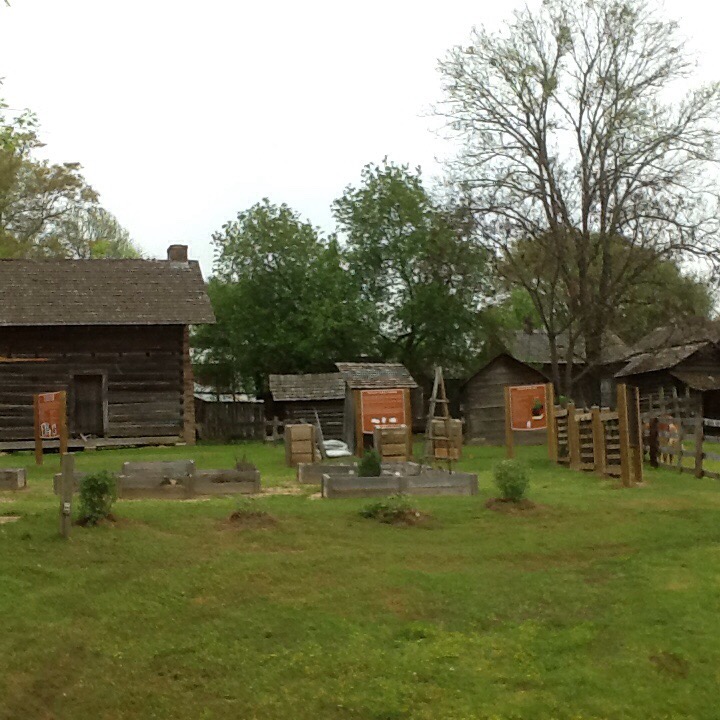
View of MS Sustainable Ag Network’s Victory Garden demonstration at the MS Ag Museum
Still time to register for the Southern Sustainable Agriculture Working Group meeting in Mobile AL, January 14 – 17 2015
 Early bird registration for the Southern Sustainable Agriculture Working Group is still open for a little bit longer (2 more days) through December 21st. Register online, or download a registration form and get it postmarked no later than Dec 21st for the lowest conference rates. They accept, via mail, checks made payable to Southern SAWG. They accept, via mail and online, VISA, Master Card, American Express and Discover credit cards. Pre-registration continues through midnight on January 7th. After that, registration will be on location in Mobile.
I will be leading two workshops and also moderating an open discussion (information exchange) this year. Find me here:
Information Exchange:
Friday, 10:45 a.m. – Noon
Using EBT, “Double Coupon” and Other Programs at Farmers Markets – Does your market employ the EBT, FMNP, Food Insecurity Nutrition Incentive Program (FINIP) or WIC programs? Do you have a double coupon incentive program for SNAP, WIC or SFNMP? Discuss technology issues and share best practices for implementing these programs at markets.
Workshops:
Saturday, 10:30 a.m. – 12:00 noon
Why Farmers Markets? Learn to Communicate Their Value to Your Community – Making the case for farmers markets to farmers, shoppers and community leaders is crucial for continued community support, yet most markets struggle with this task. Learn how to capture and communicate meaningful measures of your market’s success. Using exercises and worksheets from the Farmers Market Metrics project, this session will give you practical examples of simple and effective data collection techniques that you can use for your market. Darlene Wolnik, Helping Public Markets Grow (LA) and Sarah Blacklin, NC Choices (NC).
Saturday 3:30-5:00 pm
Farmers Markets as Business Incubators: How Market Managers Can Help Improve Their Vendors’ Businesses – Increasingly competitive market outlets for local food means that the top farmers often jump from market to market. This session will offer practical strategies for market managers and board members on identifying and understanding their anchor vendors and their needs, as well as addressing the challenges of retaining new vendors. Darlene Wolnik, Helping Public Markets Grow (LA) and Sarah Blacklin, NC Choices (NC).
2015 Conference Program — Southern Sustainable Agriculture Working Group.
TNOC Roundtable: The sky is the limit for urban agriculture. Or is it?
I am honored to be a member of this roundtable, and to be a new contributor to The Nature of Cities site. This topic is a bit difficult for me as I believe in cities and in their need to expand every type of good health and wealth creation – which certainly includes agriculture – but I worry about the obsession with what is called urban agriculture. In my city, talking about the corner garden or the delivery system for food into “food swamps” often takes every bit of the conversation and efforts of many urban food organizations, and so as a result, I find that few of them understand the challenges and successes of farming and harvesting past the city limits.
I believe that farmers markets missions are often about connecting the rural and the urban, and that was certainly true in the founding markets of our city, the Crescent City Farmers Markets. And so the fact that my city has not seen a large increase in the number of markets or in farmer/vendors bringing goods in tells me that this gap is growing, rather than shrinking. Rather, the city advocates for food have focused almost entirely on “demand” solutions that do not spend any time on linking new urban growers with the experienced rural farmer, or in curating any new or ongoing conversations about price, seasonality and sustainability.
And having said all of that, I also see innovation happening in many areas of urban food and believe that those activists can positively influence rural growers delaying a push to resilient, sustainable agriculture. My only question is, who will start the conversation?
The Nature of Cities Roundtable
Growing for Market
The link to the excellent Growing For Markets site. In the January 2014 issue, I have an article where I share the latest news on SNAP at farmers markets. GFM is a great magazine for news and tips for market farmers and organizers. You can subscribe at different levels for print or online (which can include their excellent archives) or you can simply purchase a single issue.
Better Eats for All | Belt Magazine | Dispatches From The Rust Belt
A commentary from yours truly on the food system found in my first hometown of Cleveland Ohio. Whenever I return to it, I am struck by the unusual underpinnings of their food work, being as it is deeply embedded within the community organizing/social justice strategy that is alive and well in many of their neighborhoods, as well as in the larger reality of figuring out what to do with their post-industrial inner core. Combine that with enthusiastic corporate greening, municipal support and the awareness of the need to combat the foreclosure crisis with innovative small business and residential reclamations and you get a dynamic little system coming to maturation there.
Better Eats for All | Belt Magazine | Dispatches From The Rust Belt.
LUMA Institute | We Equip People to Accelerate Innovation
I was just at their 2-day workshop (in lovely Pittsburgh-really!) and learned a great deal about human-centered design options. That group of concepts is uniquely equipped to help food system organizers with their short and long-term planning and if you have no way to raise the money to get to their workshop, I would still encourage you to look at their resources (their book is very useful) and purchase those to help you implement new collaborative ways to design your best world.
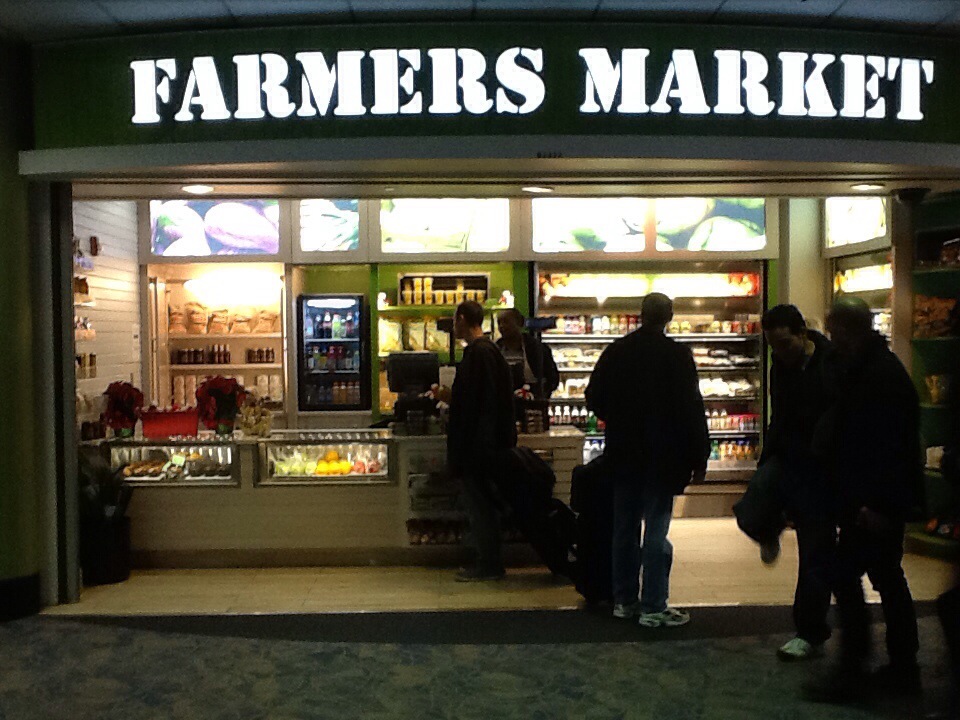
Egads.
This picture is for anyone that believes that we have effectively gotten our message of how farmers markets stand for local and direct across to the other 97% of America. Clearly, we need to keep on defining our message so as not to be co-opted completely. This, by the way, is the Charlotte, NC airport.
Carolina Farm Stewardship Association 2013 Conference
The Carolina Farm Stewardship Association (CFSA) is a farmer-driven, membership-based 501(c)(3) non-profit organization that helps people in the Carolinas grow and eat local, organic foods by advocating for fair farm and food policies, building the systems family farms need to thrive, and educating communities about local, organic agriculture.
Our key program areas are:
Education
Advocacy
Food Systems
Farm Services
Founded in 1979, we are the oldest and largest sustainable agriculture organization in the Southeast. For over three decades, we have successfully united farmers, consumers and businesses to build a just, healthy food and farming future.
North Market, Columbus OH
This market is one of my favorites as, while it was being renovated, I was a poor community organizer in the 1980s in Columbus and I would walk from my office to the market to get healthy food and to soak in the lovely vibe. The renovated site also hosts an outdoor farmers market on Saturdays and sits within a revitalized area that encourages visits to this previously barren area. The value of being able to sit in a sunny, bustling place for a leisurely lunch and recharge one’s batteries is something market halls especially can offer their neighbors and they should be celebrated for that.

Front of the North Market on Saturday

Buckeye Fan

Petting area at North Market

Brochures at North Market

One of the permanent vendors within the North Market

Polish food vendor at North Market


pierogies

Brochures on individual permanent vendors, North Market

Music at North Market

Apple display, Columbus OH

transportation kiosk, North Market, Columbus OH
2013 Sustainable Cleveland Summit
As a food system organizer and researcher, I try to find events to attend that draw together many different sectors and initiatives. Last year, this sustainability conference focused on Local Foods and was held in conjunction with the Projects For Public Spaces International Public Market Conference. I attended the PPS conference and as a result, saw a few of Cleveland’s excellent food initiatives and met the local folks working on the same things that many PPS attendees are working on in their areas. This year, I am going back to follow up on what I saw in that food system work in Northeast Ohio and also to sit and work with the folks who are at this conference to hear about their 2013 focus: their renewable energy and climate change work.
Cleveland’s “conscious capitalism” and renewable industries strategy is impressive and needs a deeper look. As someone who did consumer and environmental campaigns in that area in the 1980s and early 1990s, I want to see what has changed since my organizing days and how the food system work really fits in.
Summit 2013
Together, We’re Building a Thriving Green City on a Blue Lake

The 5th Annual Sustainable Cleveland 2019 Summit will be October 3-4 at Cleveland Public Auditorium in Downtown Cleveland. As we approach the halfway milestone of this ten-year initiative, we are charged with taking stock of our accomplishments and outcomes, gauging our progress, honoring the work of many, and charting the course for the next five years.
Summit Focus:
Summit 2013 will focus on the Year of Advanced and Renewable Energy and implementing Cleveland’s Climate Action Plan.
Keynote Speakers: The City of Cleveland is pleased to announce two dynamic keynote presenters during the Summit on the topics of Advanced and Renewable Energy, Climate Change and Conscious Capitalism.
 John Montgomery, Author of Great from the Start, is a frequent speaker on sustainable business, benefit corporations and venture capital at such forums as the Future Salon, TEDx, and Stanford University’s Graduate School of Business. John transforms public and private corporations for success in the new economic paradigm where corporations not only optimize profits for shareholders but also provide a material positive impact on society and the environment.
 Chuck Kutscher, National Renewable Energy Lab, is a Principal Engineer and Group Manager in the Center for Electricity, Resources, and Building Systems Integration. His projects have included the design and construction of a solar cooling test laboratory; production of NREL’s solar industrial process heat design handbook; modeling of advanced power cycles and cooling systems for geothermal power plants; and development of transpired solar air collectors, which won an R&D 100 Award and a Popular Science “Best of What’s New” award. He is editor of the 200-page ASES report, Tackling Climate Change in the U.S., and writes a monthly column on climate change for SOLAR TODAY magazine. He recently received the 2008 Colorado Governor’s Excellence in Renewable Energy Individual Award.
2013 Sustainable Cleveland Summit Tickets, Cleveland – Eventbrite.
Vermont Feasibility Report
Very proud to release the Vermont Feasibility Market Currency Report this week. I was contracted last fall to do this work by Vermont Agency of Agriculture, Food and Marketing (VAAFM) in partnership with Northeast Organic Farming Association of Vermont (NOFA-VT).
The focus was whether there were opportunities to merge the coupon (FMNP and incentives) and SNAP programs into a universal currency for all of Vermont’s farmers markets (and also ultimately assist CSAs and other direct marketing outlets) in order to streamline the systems now being used.
The final report covers technology issues, market capacity, costs and outreach for the Vermont farmers markets and offers recommendations for streamlining through pilots and policy and further analysis.
This link takes you to my website where the report is listed.
I am happy to talk about the report or to answer any questions.
Dar
Simple online customer survey
Recently did a quick survey for Long Beach Farmers Market in Mississippi as their organizer mulls a decision to move the market to a green space with more parking and some shade, but away from the coffee-house and asphalt.This sort of decision, as many organizers have discovered, sounds like an easy decision but never is!
Mississippi Gulf Coast markets continue to manage the after effects of Katrina (where the damage was most severe) with their cities often just now finishing rebuilding their downtowns and green spaces.
Those spaces often come last after city halls, schools and roads so the markets have been the hosts for the few vibrant public spaces along the Gulf over the last 7 years.
The amount of work that it has taken to bring back these small towns that are vital for the state and region’s economic feasibility is mostly undocumented and much of it has been driven by individuals and volunteers. Markets too can take a bow.
Here are the results of the survey:
Sing-along at the IFMA
Old friends and multiple-movement-colleagues Ken Meter and Karen Lehman lead a cooperative sing along at the Illinois Farmers Market Association with a song found in a attic of a woman organizer from the 1930s, song to the tune of Auld Lang Syne called Cooperate. A sweet moment.

 Helping Farmers Markets Grow