Beard Foundation Presents Leadership Awards

From the NYT:
“Ben Burkett is still farming a parcel of land in Mississippi that his great-grandfather homesteaded in 1889, about two decades after slavery ended. He grows 16 vegetables, including okra and soybeans, on 320 acres, but he is also active in several organizations that promote local food production for local consumption.“Our work is to bring awareness to the plight of the true family farm,” Mr. Burkett, 62, said over the phone from his farm in Petal, in Southern Mississippi. Mr. Burkett is one of five winners of the James Beard Leadership Awards, which recognize visionaries in the world of food politics and sustainable agriculture.”

Ben Burkett-farmer and activist

Ben Burkett-farmer and activist

Great news. I have learned a great deal from working with the folks at Indian Springs, the Mississippi Association of Cooperatives and truly, from Ben himself (and for the last few years, his daughter Darnella too.) This past Saturday, he accepted congratulations from his peers and shoppers at the New Orleans farmers market where he showed up to sell his products, just as he has every season since 1995 even with the grueling schedule he keeps assisting with initiatives near and far to expand local wealth and health for communities. No one deserved this award more this year.

and congrats to his fellow winners, all of whom also richly deserve the honor:
“… include Karen Washington, the former president of the New York City Community Garden Coalition and an urban farmer; Michael Pollan, the writer and journalist who has written extensively about food and food politics; Navina Khanna, a fellow at the Movement Strategy Center who has worked to create awareness and action around food justice issues; and Mark Bittman, an author and food writer for The New York Times.”

Beard Foundation Presents Leadership Awards – NYTimes.com.

Farmers Market Metrics Prototype Released

The story about the completion of the FMC Prototype Report project done from January to June with 8 markets can be found here:

FMM Prototype story

A new Wisconsin NPR story about the AFRI-funded research for the Farmers Market Metrics work:

NPR story

Great infographic

20140709-152410.jpg

Can your organization become a B Corp?

When food and civic organizations start to think about how they might incorporate, they often stop as soon as they get their company registered in their state which for many, may be enough protection and structure.
Some also immediately apply for a 501 (c) federal tax status, some to specifically to get 501(c) 3 status, knowing it will become more likely to be a foundation-funded organization and to offer tax-deductible donation options. On listserves, there are many stories of farmers markets and organizations being denied a 501 (c) 3 status. My impression is that people think there is a “moratorium” on new 501 (c) 3 awards or that the IRS has redlined farmers markets which, based on the amount that continue to get that status, seems unlikely. I think instead that many organizations expect that the embedded “educational” benefits of markets make 501 (c)3 status likely when really, a much higher rate of proactive educational activities must be offered to achieve it and maintain it! Many other markets have successfully received 501(c) 6 status, (as articulated in the comments section by Oregon market leader Rebecca Landis.)
From the IRS website:
To be tax-exempt under section 501(c)(3) of the Internal Revenue Code, an organization must be organized and operated exclusively for exempt purposes set forth in section 501(c)(3), and none of its earnings may inure to any private shareholder or individual. In addition, it may not be an action organization, i.e., it may not attempt to influence legislation as a substantial part of its activities and it may not participate in any campaign activity for or against political candidates. Organizations described in section 501(c)(3) are commonly referred to as charitable organizations.
The organization must not be organized or operated for the benefit of private interests, and no part of a section 501(c)(3) organization’s net earnings may inure to the benefit of any private shareholder or individual. If the organization engages in an excess benefit transaction with a person having substantial influence over the organization, an excise tax may be imposed on the person and any organization managers agreeing to the transaction. Section 501(c)(3) organizations are restricted in how much political and legislative (lobbying) activities they may conduct. For a detailed discussion, see Political and Lobbying Activities. For more information about lobbying activities by charities, see the article Lobbying Issues; for more information about political activities of charities, see the FY-2002 CPE topic Election Year Issues.

So, I won’t advocate for or against any particular incorporation (especially since I am not equipped to offer legal or financial services) but will just say that all markets should do their due diligence to find the appropriate level of protection and status needed for their situation. However each organization gets there, it’s just important that the officers of the company have some cover from personal liability and that the status chosen is not too time consuming or complicated to manage. And when doing their research, to look at new incorporation methods and added layers of social good designation that may help clarify and safeguard the future. B Corp is one of those designations, but be careful-it can be confusing. The value of the B Corp certification is access to resources and an added level of clarity about the company or organization’s mission in regards to social good.

This is from the B Lab website:

Benefit Corporations and Certified B Corporations are often, and understandably, confused. Both are sometimes called B Corps. They share much in common and have a few important differences.

Certified B Corporation is a certification conferred by the nonprofit B Lab. Benefit corporation is a legal status administered by the state.

Benefit corporations do NOT need to be certified. Certified B Corporations have been certified as having met a high standard of overall social and environmental performance, and as a result have access to a portfolio of services and support from B Lab that benefit corporations do not.

The value of meeting the legal requirement for B Corp certification is that it bakes sustainability into the DNA of your company as it grows, brings in outside capital, or plans succession, ensuring that your mission can better survive new management, new investors, or even new ownership.

The benefits of the B Corp legal requirement:

1. Give legal protection to directors and officers to consider the interests of all stakeholders, not just shareholders, when making decisions

2. Create additional rights for shareholders to hold directors and officers accountable to consider these interests

3. Limit these expanded rights to shareholders exclusively

B corp site

Here is an example of a market organization that has been listed as certified as a B Corp: Down to earth markets

And a story about how the process can be assessed as to the public good offered by that company: students use b impact assessment

The Internal Revenue Service today introduced a new, shorter application form to help small charities apply for 501(c)(3) tax-exempt status more easily.
“This is a common-sense approach that will help reduce lengthy processing delays for small tax-exempt groups and ultimately larger organizations as well,” said IRS Commissioner John Koskinen. “The change cuts paperwork for these charitable groups and speeds application processing so they can focus on their important work.”
The new Form 1023-EZ, available today on IRS.gov, is three pages long, compared with the standard 26-page Form 1023. Most small organizations, including as many as 70 percent of all applicants, qualify to use the new streamlined form. Most organizations with gross receipts of $50,000 or less and assets of $250,000 or less are eligible.

Instructions for new form

Grocery shopping in 2014: diversified and fragmented, says FMI

Thanks to Wayne Roberts for bringing this report to our attention, which shows that shoppers are moving back to the multiple outlet shopping experience and away from supercenters; 9% of those surveyed do not even identify a primary store where they do their shopping. That may not seem like much, but that number seems to be climbing and is statistically significant for our purposes of encouraging shoppers to add farmers market to that multiple outlet list.
I think there are a few other important points in this study such as that shoppers seek out tandem claims. In other words, if they search for low calories, they look also for low sugar. Those that look for high fiber foods also seek out whole grains.
And here’s an exciting number: 90% of those surveyed said they buy local at least occasionally and that they believe that those goods are better quality and 61% think they offer better taste.
40% of the substantial grocery shopping is now done by men.
The details of how millennials shop is also useful:
•25% of twenty somethings’ meals included items purchased that same day.
•they create their shopping lists right before leaving, which will help those markets that use Facebook, Twitter and email campaigns.

2116 people were surveyed between the ages of 18-74 and supplemented by data from the US Census and the USDA and from 2013/2014 Hartman Group ethnographic research into eating and shopping.
—————–

By Maggie Hennessy, 17-Jun-2014
Not only are today’s consumers less likely to rely on a primary store for food shopping, but they’re sharing shopping duties and planning for specific meals rather than stocking up on food, according to the Food Marketing Institute (FMI)’s annual analysis of U.S. Grocery Shopper Trends, done in collaboration with the Hartman Group.
Link to story

High Performers vs. Workaholics

“I’m a recovering workaholic,” admits Jullien Gordon, a nationally recognized speaker and founding partner of New Higher, in a recent LinkedIn post.

Workaholism, he says, looks similar to high performance on the outside — but they’re actually nothing alike.

Gordon has spent the last year doing research and conducting experiments on himself to understand the difference between workaholism and high performance. He found that while they both look like hard work, “the big difference is how the individual feels on the inside about who they are in relationships to their work,” he explains.

A high performer works hard in “healthy sustainable ways and feels happy and inspired,” he says. Meanwhile, a workaholic “works hard in unhealthy unsustainable ways and feels unhappy and burned out.”

The No. 1 goal of a workaholic is to be busy at all times — as they believe that the busier they are (or appear), the more important they must be.

“Workaholics fill any space in time with busy work because they feel insecure doing nothing,” Gordon explains. “The insecurity comes from not knowing their value.”
entire LinkedIn post

Growing the Farm – Feeding Mississippi by Beaverdam Fresh Farms — Kickstarter

When I read quotes like this from a farmer, I know that the community food revolution is in full swing and in good hands:

We hope that our building of this processing facility, moving forward with obtaining a permit, and completing inspections will create a replicable model for others and will increase the number of small pasture rotation farms in the South. We know that this next step is a big one, not only for us, but for the future of sustainable farming in Mississippi and the health of its families.

Community food system farmers are not simply working to revive the old way of business but cooperating and communicating on so many levels with their shoppers, peers and policy makers. Show your support if you can for these Mississippi farmers leading the way in sustainability.

Growing the Farm – Feeding Mississippi by Beaverdam Fresh Farms — Kickstarter.

The Goldring Center for Culinary Medicine-New Orleans

One of the most exciting developments in food and health is happening in my own town of New Orleans and right in my neighborhood. Very proud of this work being done by “Dr. Gourmet” (who happens to be my mom’s doctor), Tulane University and the good people of Broad Community Connections.

The Goldring Center for Culinary Medicine is a first-of-its kind center dedicated to comprehensively integrating nutrition and dietary intervention strategies into medical school curriculum,” said Dr. Benjamin Sachs, senior vice president and dean of Tulane University School of Medicine. “The goal is to train doctors not only how food choices affect health and disease progression but also how to translate this information in practical ways that empower patients to lead healthier lives.”

Inside Tulane Med.

Louisiana Eats on seafood issues

Slow Food maven, radio host and author Poppy Tooker did a great show on seafood on Louisiana Eats: Gerard Maras (a giant among chefs in New Orleans) shared his boiling technique, Tenney Flynn who is still the best seafood chef in the French Quarter, talked about fish handling and finally Poppy and her guests discussed the ecological issues facing the harvesting community. Seafood is something Poppy knows a great deal about-she is a fisherwoman herself and one of the champions of fishing families in Louisiana and across North America.

Can you remember to mark “listen to Louisiana Eats” to your Saturday calendar? I’d recommend it.

The Ebb And Flow Of Louisiana Seafood | WWNO.

Welcome Midsummer’s Eve

What kind of public market author would I be if I didn’t mention midsummer? I wish more food organizations would use the old holidays to remind us all of the ebb and flow of life ruled by the sun and the plant…
In 2008, back when we were designing the new iteration of Market Umbrella, the E.D. and I attempted to add two holidays to the employees schedule that represented farming and justice: Harvest Day and May Day. Unfortunately, the staff did not agree since they had to give up two other holidays that their family and friends celebrated, Labor Day and MLK Day; silly us-we thought community organizers might want to work on MLK Day to honor him!
We should have celebrated another way, possibly with a special lunch or an educational outing. In any case, I hope everyone celebrates June 21 with their own outing to a farmers market and a special lunch….

From the Encyclopaedia Britannica:


Midsummer’s Eve, Swedish Midsommar, Finnish Juhannus, Danish Sankt Hans Aften, NorwegianSankhansaften,  holiday celebrating the longest day of the year in the Northern Hemisphere, thesummer solstice (June 21). Midsummer’s Eve is observed in several countries. It is a national holiday in Sweden and Finland, and the official holiday is typically observed on the third Friday in June to allow a three-day weekend. During this time many Scandinavians travel to rural parts of the country. Midsummer’s Eve activities in Sweden include gathering around a flower-festooned maypole(majstång) to sing and dance, an ancient custom probably related to fertility rites. Before the holiday Scandinavians thoroughly clean their houses and decorate them with flowers and other greenery. In Denmark holiday traditions include singing “Vi elsker vort land” (“We Love Our Land”) and building a bonfire where a symbolic straw witch is sacrificed in remembrance of church-sanctioned witch burnings in the 16th and 17th centuries. Traditional foods, such as pickled herring, smoked fish, new potatoes, and strawberries, are served, along with beer and schnapps.

The celebration predates Christianity and is likely related to ancient fertility practices and ceremonies performed to ensure a successful harvest. The holiday was later rededicated to honour St. John the Baptist in Christian times. Although the meaning of the holiday has changed, some pagan customs still persist, such as the bonfires, which originally were believed to ward off evil spirits, and the focus on nature, which harkens back to when plants and water were thought to have magical healing powers on Midsummer’s Eve.


from Orion magazine:


“no such event is complete without aquavit, herring, or Små grodorna, a dancing game in which people sing this about frogs while dancing around the Midsummer pole:

The little frogs, the little frogs are funny to observe.
No ears, no ears, no tails do they possess.

Kou ack ack ack, kou ack ack ack,
kou ack ack ack ack kaa.”

Monsanto Visits Local School for 47 Minute Propaganda Presentation

“Monsanto told children at his school that they created jobs for people and that they helped to feed the world…
Monsanto also told a fable to children about how one farmer tried to get rid of Monsanto seed and the stuff they spray on their crops and that it caused him great trouble. Additionally, the company warned against saving heirloom, organic seed, though this particular term wasn’t used.
When this child’s parent tried to contact the school about the uncanny way in which the Monsanto Corporation was trying to brainwash his child, he was referred to his child’s handbook. It turns out that the school’s principal was actually the one who set up permission for Monsanto to speak to the children.”

Monsanto Visits Local School for 47 Minute Propaganda Presentation | NationofChange.

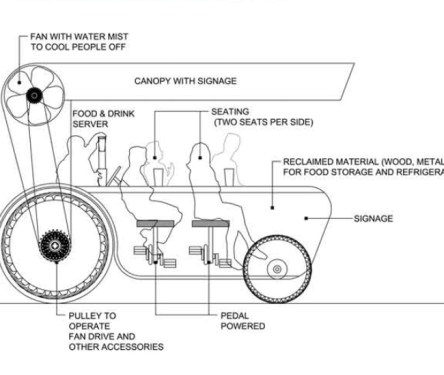
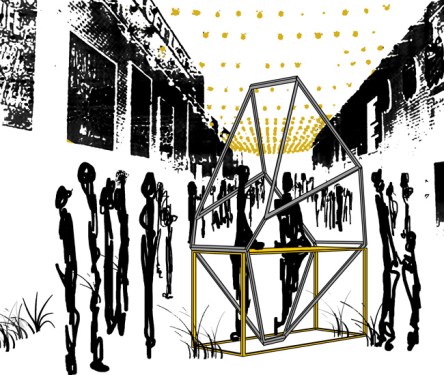
Designlines judges food cart design at The Stop’s Night Market

Toronto: More than a charitable event for gourmands, the Night Market is a true mesh of the design and food communities: each of the chef’s carts is crafted from upcycled materials by a mix of established and burgeoning designers. So impressive are these carts that The Stop invited Designlines to judge them for design excellence, creativity and effective representation of The Stop’s mission.

Pumped

Lemon

Falco

HokPinata

Deconstruct

BikeSauce

What Ruins A Performance Review?

As a human resources manager in a previous work life, I can tell you that this post linked below has some excellent points to consider. As more and more markets add staff (and I mean staff and not independent contractors!), those organizations must add the skills necessary to manage that staff; if the organization is run entirely by a volunteer board, then a handbook on staff management or completing a short course should be required for the Executive Committee or at least the president of each term. If there is a paid director, then certainly basic human resources training available online or possibly through local community colleges or non-profit training centers should be required.
Over and over, I hear from market managers that most of them don’t get an annual review at all or if they do, don’t feel the review is in-depth enough or fair or designed to allow for improvement; they often report that the review contains criticism of issues that were beyond their control or their work is measured in ways that is news to the staff person. All of those are no-nos.
It does seem odd that people management skills are often lacking in non-profits and community initiatives, since that is exactly what they rely on to get the job done.

What Ruins A Performance Review? | LinkedIn.

Connecting Students and Farmers—Still Trying | FoodAnthropology

This campaign (just down the road from me) has already done amazing work to get the conversation and the organizing started for regional products to be used in the Southeastern Louisiana University campus purchasing process; FYI-this university sits within a very active farming community and many of its farmers sell to nearby New Orleans outlets. The campus student group Reconnect and their academic advisor Dr. David Burley continue to offer as much information and to open as many communication channels as they can to assist Aramark in understanding what the campus wants, but to no avail. In response Aramark has deliberately undermined their efforts with their embargo against meetings and their”food giveaway” tactic! Using markets as organizing wedges can be the best way to keep the pressure on head-in-the-sand institutions; big props to the Reconnect students and to Dr. Burley for keeping these efforts going year after year. If you have any resources or ideas to assist their efforts to put pressure on Aramark, feel free to email them.

Connecting Students and Farmers—Still Trying | FoodAnthropology.