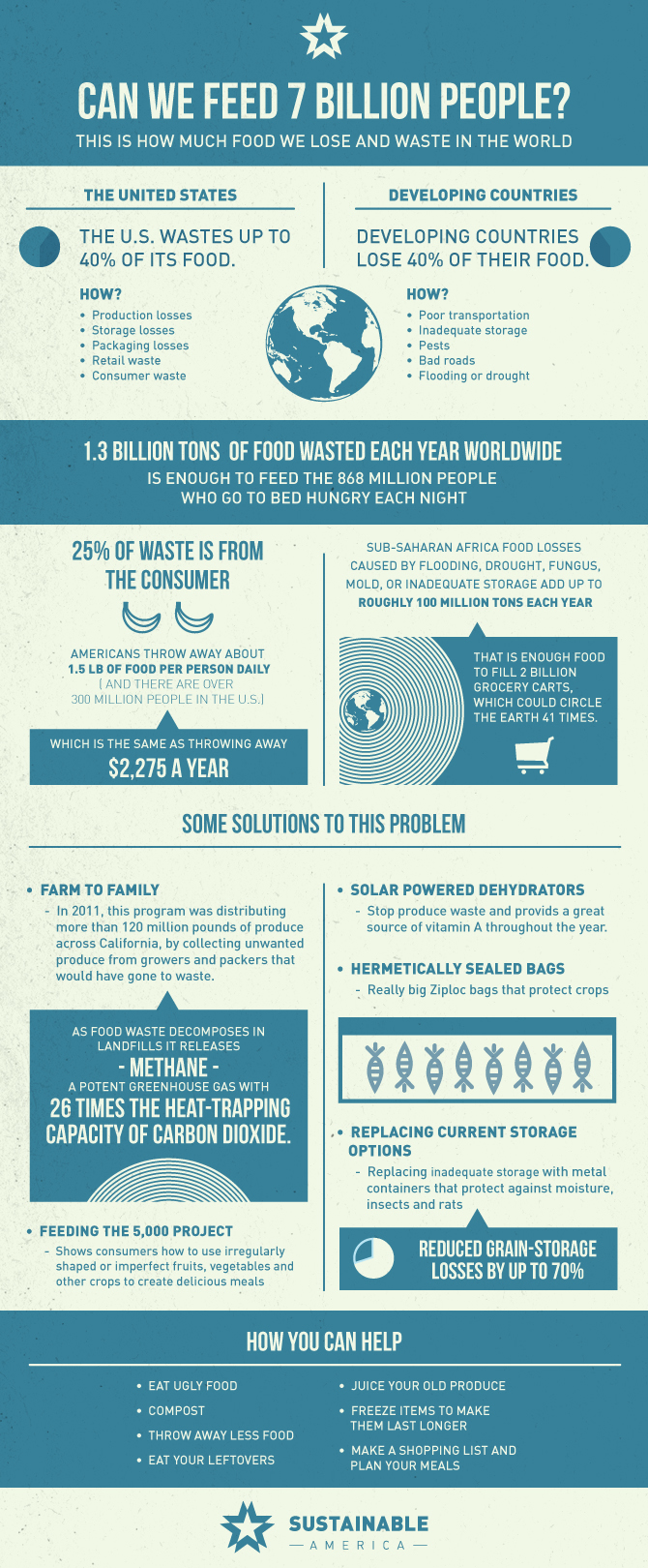
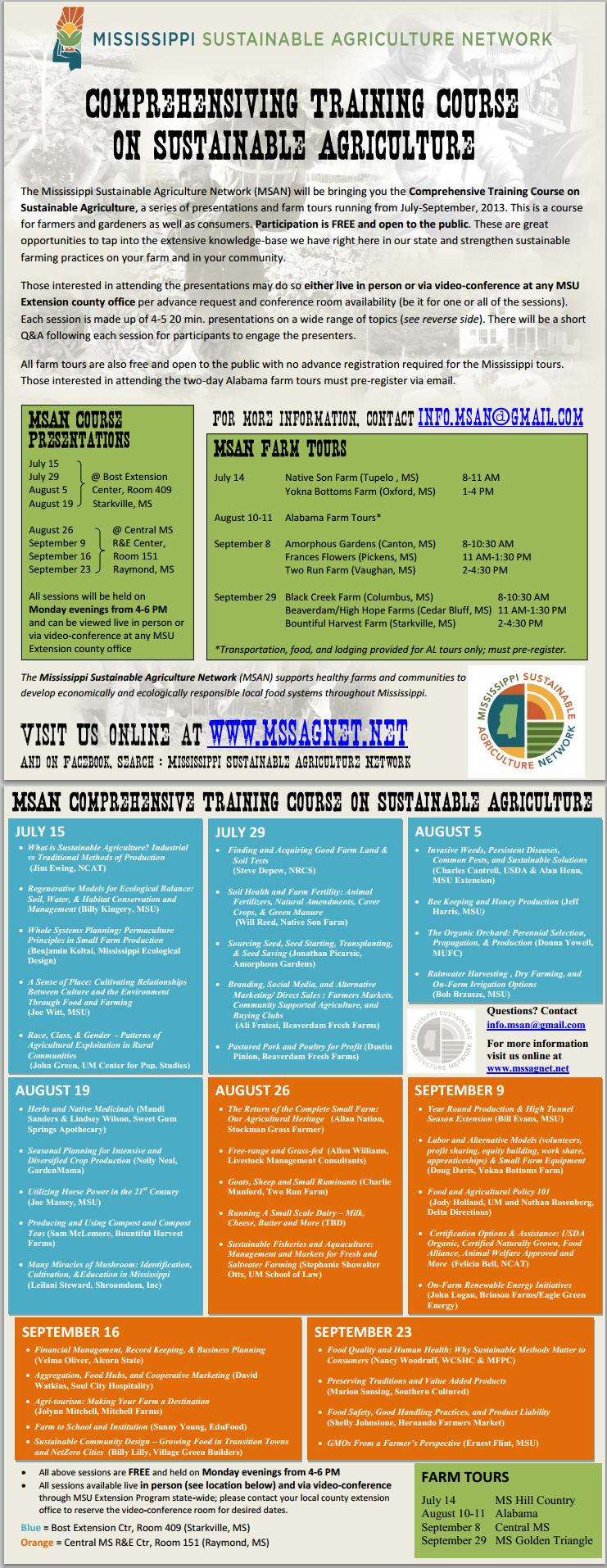
40% of our food is wasted; 25% is wasted by the consumer. Great points to share with your community.
Authored by Michigan State University Center for Regional Food Systems & The Wallace Center at Winrock International
From the Executive Summary:
Findings from the survey showed that food hubs across the country are growing to broaden the distribution infrastructure for local food. From the survey, 62% of food hubs began operations within the last five years, 31% of food hubs had $1,000,000 or more in annual revenue and the majority of food hubs were supporting their businesses with little or no grant assistance—including food hubs that identified as nonprofits. Financially, the most successful food hubs tended to be for-profit and cooperative in structure, in operation for more than 10 years and working with a relatively large number of producers. The values-based nature of food hubs makes it hard to judge many of them solely on their level of financial success.
The survey also revealed a number of persistent challenges and barriers to growth that even the most financially successful food hubs faced.
For example, many food hubs indicated their needs for assistance in managing growth and identifying appropriate staffing levels for their hubs. They also often pointed to their need for capital and other resources to increase their trucking and warehousing capacity.
A fascinating interview with Richard McCarthy, one of the founders and the first Executive Director of Market Umbrella and therefore of the Crescent City Farmers Market, Festivus (the fair trade holiday market), Market Match, Marketshare and so many other initiatives devised and run by this disciplined little NGO in New Orleans. This interview was done as McCarthy was leaving for Brooklyn for his new job as Executive Director of Slow Food USA and so is important as a record of the people and ideas that were in place when he devised the groundbreaking work that many of us proudly did under his direction.
Poppy Tooker has been a deep supporter of the organization and as she says, remains a close friend of Richard’s. There is so much detail in this interview about the history of the organization in those days when we existed as a project of Loyola University’s social justice center Twomey Center.
To hear a market founder talk about the plans and dreams of his work and how it was put together seems useful to anyone embarking on their own version.
As a food system organizer and researcher, I try to find events to attend that draw together many different sectors and initiatives. Last year, this sustainability conference focused on Local Foods and was held in conjunction with the Projects For Public Spaces International Public Market Conference. I attended the PPS conference and as a result, saw a few of Cleveland’s excellent food initiatives and met the local folks working on the same things that many PPS attendees are working on in their areas. This year, I am going back to follow up on what I saw in that food system work in Northeast Ohio and also to sit and work with the folks who are at this conference to hear about their 2013 focus: their renewable energy and climate change work.
Cleveland’s “conscious capitalism” and renewable industries strategy is impressive and needs a deeper look. As someone who did consumer and environmental campaigns in that area in the 1980s and early 1990s, I want to see what has changed since my organizing days and how the food system work really fits in.
Summit 2013
Together, We’re Building a Thriving Green City on a Blue Lake

The 5th Annual Sustainable Cleveland 2019 Summit will be October 3-4 at Cleveland Public Auditorium in Downtown Cleveland. As we approach the halfway milestone of this ten-year initiative, we are charged with taking stock of our accomplishments and outcomes, gauging our progress, honoring the work of many, and charting the course for the next five years.
Summit Focus:
Summit 2013 will focus on the Year of Advanced and Renewable Energy and implementing Cleveland’s Climate Action Plan.
Keynote Speakers: The City of Cleveland is pleased to announce two dynamic keynote presenters during the Summit on the topics of Advanced and Renewable Energy, Climate Change and Conscious Capitalism.
John Montgomery, Author of Great from the Start, is a frequent speaker on sustainable business, benefit corporations and venture capital at such forums as the Future Salon, TEDx, and Stanford University’s Graduate School of Business. John transforms public and private corporations for success in the new economic paradigm where corporations not only optimize profits for shareholders but also provide a material positive impact on society and the environment.
Chuck Kutscher, National Renewable Energy Lab, is a Principal Engineer and Group Manager in the Center for Electricity, Resources, and Building Systems Integration. His projects have included the design and construction of a solar cooling test laboratory; production of NREL’s solar industrial process heat design handbook; modeling of advanced power cycles and cooling systems for geothermal power plants; and development of transpired solar air collectors, which won an R&D 100 Award and a Popular Science “Best of What’s New” award. He is editor of the 200-page ASES report, Tackling Climate Change in the U.S., and writes a monthly column on climate change for SOLAR TODAY magazine. He recently received the 2008 Colorado Governor’s Excellence in Renewable Energy Individual Award.
2013 Sustainable Cleveland Summit Tickets, Cleveland – Eventbrite.
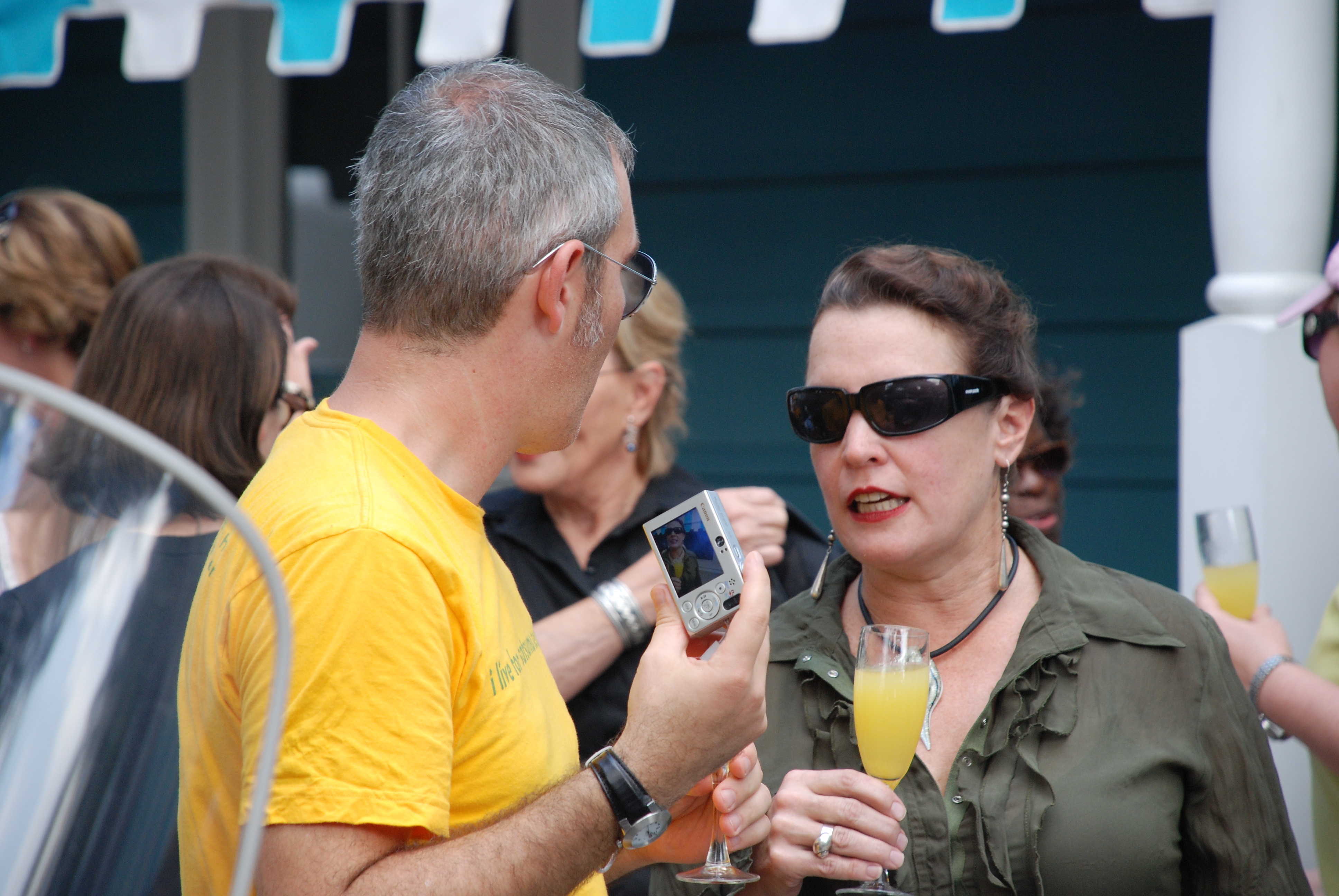
Full disclosure: Poppy is my pal. She is someone who calls me up and then shows up, with a gift, thoughtful questions and always hilarious stories.
What made me a fan of hers early on was her razor-sharp take on people and situations, sometimes devastatingly so. Yet she is enormously kind and open to those people who ring true. No one that receives her wrath is ever underserving. If they get it, they usually have made one of two unforgivable sins: either they underestimated HER or they underestimated her city, her state or her people.
Another disclosure: I believe Poppy deserves as much credit as anyone in my region for rebuilding the New Orleans food system after the federal levee breaks in 2005. Too many stories to tell here, but come on over and if you care, I’ll tell you some of them over a drink. Or two. There are a lot of them to tell. Some of them are funny, some are sweet, some even a bit crazy.
These two points are linked since her life’s work is to actively promote entrepreneurs and real ideas that will build (or rebuild when necessary) the culture of her place, Louisiana. In doing that work, she extended her range to all authentic food systems across the globe through her Slow Food International connection that meant that New Orleans gained the Slow Food vibe from the mid 1990s on.
Let me also say that most of the SFUSA folks understand her range, giving her much early credit for shaping the U.S. work that she built with others-that is, until she had to unleash her wrath on previous Slow Food leadership over the (mis) direction of a crucial program that she had helped shepherd. Luckily, she and SF made up.
Remember, I warned you that she is a fierce opponent when she feels it’s necessary.
When she started the Louisiana Eats show, she had already done a great deal of writing and television. Her talents really came to light when she began this show; her intense enjoyment and knowledge of the people and history of food and culture through one-on-one conversations on our local NPR station and now in this book. I remember a glorious Saturday morning on Louisiana Eats when she and Rien Fertel talked about praline sellers and another when she talked with Miss Linda Green, The Yakamein lady, and another when she talked with French bread baker John Gendusa among many others. Each time, I would stop what I was doing and literally stand there and listen intently to her intricate questions and always learn something. And her interaction with the dean of New Orleans Creole food, Leah Chase which is always touching and amazing since you get to hear two chefs with great respect for each other just banter and share stories. And when she has on young activists or farmers (like Nick Usner who is in the book), you can hear the hope in her voice for the new energy coming along…
So this book is a reminder of many lovely Saturdays and is indicative of the tone that I myself have adopted for much of my food activism: wild enthusiasm, critical assessment and a deep appreciation of the stories and background of those unique people that tell of our culture and food. Because of her, I know to seek them out, and maybe I’ll find some new folks from those Poppy has brought to us on her show and in this book. The book itself (lovely photos and recipes) is informative and a great companion to her show and I know that it will stand the test of time as a true record of some of the people that we have in our world. And of my pal who contributes so much to our place.
<a href=”http://www.goodreads.com/review/list/635646-blue-collar-mind”>View all my reviews</a>
This week, the USDA launched #MyFarmBill, a social media campaign emphasizing the importance of Farm Bill programs. As part of the campaign, USDA is asking people across the country to use their own voices and gadgets to make video selfies about what the Farm Bill means to them and why we need a comprehensive Food, Farms, and Jobs Bill.
Farmers can do it. Ranchers can do it. Market managers can do it. Grocery store buyers and shoppers can do it. Anyone who eats can do it. That means you.
There are lots of elements of the Farm Bill that affect you every day and the USDA and Wholesome Wave want to hear about it!
How can you participate? Grab your gadget and in 15 seconds or less tell the world what the Farm Bill means to you. Then post your video via Instagram, Vine, or Facebook. Don’t forget to use the #MyFarmBill hashtag so USDA won’t miss it and tag it @wholesomewave so we can see it too! USDA is posting incoming videos and comments on Storify and are even retweeting some of their favorites.
To see Agriculture Secretary Tom Vilsack’s video to kick off the campaign, click here.To see other people’s submissions, go to Twitter and search #MyFarmBill.
We all eat. We all have a voice. Most of us have gadgets. Please use yours and tell the world what the Farm Bill means to you.
Thank you!
The Wholesome Wave Policy Team
Sales are limited to $20,000 per year
Cottage food operations don’t need to get a license from their health department, but they do need to check with their county to see if any zoning requirements apply to them.
Operations do not need to collect any state sales tax, but they may need to collect local sales taxes (it is different for each city and county).
Only food items in these categories are allowed:
Cakes, Cookies, Honey, Jams & jellies -Preserves.
Unlike most states, Louisiana allows custard and cream-filled bakery products.
I think most if not all managers of markets understand that other markets have different rules than theirs, but do your shoppers know? And have you ever updated them, in cooperation with your vendors?
Nearby markets should share rules so that they do not make their farmers follow different sets of rules for little reason. It’s amazing how many markets don’t even attempt to compare rules which makes it quite hard for vendors to remember which of their markets has rules against packing up early or who allows foraged items and who doesn’t. One of the main areas of contention among farmers is the amount of liability insurance that they are required to carry (when a market requires it); a farmer told me about three different levels of insurance that he was asked to carry, all of the markets within a few miles of each other.
http://www.twincities.com/stpaul/ci_24036424/farmers-markets-not-all-follow-same-rules
Although this is a vital article on the breadth of the problems and issues that face the fight for the farm bill, I hesitate to wrap the entire alternative food and farming movement inside of a crisis, even one that is so monumental like public health.
In my mind, our work is powered by the most diverse set of ideas and goals captured by the simple exchange of food regionally grown, caught or made by hand. Rural, peri-urban and urban uses of land, water issues, transportation systems, safeguarding import-replacing production, creation and preservation of public space and stewardship of private land for farming and social activities, anti-hunger campaigns, appropriate technology, hands-on education for children, democratic distribution, encouraging multi-generational understanding, fighting corporate control of food, unique approaches to wealth creation, celebrating current culture and reviving food history, job creation, worker rights, immigrant issues, disaster mitigation, attacking institutional and individual racism, supporting personal health goals, sharing intellectual ideas without need of institutions to shepherd it, expanding civic activity, ….
In other words, remember that we are pirate ships and not an armada.
Original piece on the pirate ship metaphor here
I know that many will say that all or most of the items above can be encapsulated within public health, but to me, the diversity of how each of us approach this is our greatest strength.
I agree with Michael on the end goal, but I prefer to say it like this: we sail alone, but need to anchor together at times like this for this historic farm bill fight. So, when some or most of these good ideas can be brought into a single campaign by folks like the public health sector, we need to welcome them and maybe even let them lead for a while.
Can Public Health Unite the Good Food Movement? | Civil Eats.
An excellent piece on cities that are unsure of how to handle the explosion in the number of farmers markets, and by extension, small-scaled agriculture within city limits. There may be some correlation between cities that still operate markets themselves and how restrictive their rules are for other markets, but I’d hazard a guess that it has more to do with how they handle small business and open space as a whole. And how they view their relationship to the entire region.
In any case, it shows the need for markets and for all food organizers to realize early on that policy work is an essential part of their work. And for more legal and municipal templates for markets to be written and shared across the US. Lastly, and maybe most importantly, the need to gather information on a market’s economic, social, intellectual and natural benefits to be able to make the case to cities about the positive impact of markets.
“Dallas is one city that has historically owned its own farmers’ market,” Sarah Perry, founder of White Rock Local Market, writes in an email. “This is important because it makes Dallas’ interests in ‘farmers’ markets’ a bit different than other cities.”
At first, residents at private markets believed that as long as they kept sites clean and orderly, they had no reason to think they were doing anything wrong. That held true for a while, but once officials realized that some of these markets were a going concern, they started hassling market organizers about permits. Dallas had no provision for a farmers’ market permit, however, and general “special events” permits were expensive and required police presence.
…
Another issue in Durham is minimum parking requirements. For smaller farmers, there’s only a requirement if the farmer wishes to set up any sort of permanent structure from which to sell their goods. In that case, they need to have at least one parking space. Which, more often than not, is going to require a curb cut, an expense most small farmers can’t afford.
http://nextcity.org/daily/entry/whos-afraid-of-the-city-farmer
Below, is a link to an interview with a New Orleans chef who has embedded local purchasing into the very DNA of her kitchen.
The day I met Kristen was the day (2002? 2003?) that she interviewed to be our Crescent City Farmers Market (CCFM) Tuesday/Thursday market manager. She came to the interview with a slate of ideas and opinions backed up with a vitality that could not be denied. We were surprised that someone with her fine dining experience (and obvious ambition) wanted to work for our little organization, but she explained that she wanted to know all facets of the food system.
During her tenure, she can be credited with building our Green Plate Special program, which allows restaurants to come for a full month of Tuesdays to sell plate lunches to the shoppers at the CCFM and, of course, allows those chefs to understand the farmers and fishers better and to have long stretches to watch market vending in person.
As a chef, she came with a “shoot from the hip” framework and never stopped running the entire time she worked with us. Like anyone who has worked on the line at top restaurants, she was intimidating to some but we knew that she always led with what was in the best interest of our farmers and fishers. Through her, we understood the psyche of the chef better and started to realize that we should get to know the sous chefs and line cooks that were more often at the market and were on their way to the top position. Many of those have now become leaders of their own restaurant (why, like our friend Kristen Essig!) and almost all have become fierce supporters of those markets.
“As a line cook, you develop a relationship with vendors as they come in the back door, but actually working with the vendors at the market was a totally different thing. You’re working, really, with 20 small businesses, and they’re all trying to make certain quotas, and they all have certain amounts of product that they have to move. You develop strong relationships with these people—you learn that they have bills to pay, whose kid needs braces, etc.”
On Being a Boss: Kristen Essig Takes Over at Sainte Marie – Eater Interviews – Eater NOLA.
For those organizing networks this theory can be very helpful, to have a strategy that allows for both short and long term. Cooperation and communication must happen at the precise moment(s) that networks are ready to emerge and to grow. For organizers, that means practicing patience and fortitude.
From The Berkana Institute:
…the lifecycle of emergence: how living systems begin as networks, shift to intentional communities of practice, and evolve into powerful systems capable of global influence.
This system of influence possesses qualities and capacities that were unknown in the individuals. It isn’t that they were hidden; they simply don’t exist until the system emerges. They are properties of the system, not the individual, but once there, individuals possess them. And the system that emerges always possesses greater power and influence than is possible through planned, incremental change. Emergence is how Life creates radical change and takes things to scale.
the two loops visual is one that many of you have probably seen me try to draw (badly); here it is done well:
Farmers markets in low-income communities webinar August 29, 2013
Speaker 1: Mukethe Kawinzi, Project Coordinator, The Food Trust
Farmers markets are an effective means to bring fresh and healthy means to under served neighborhoods.
TFT operate 25 markets and support more.
Most important criteria in establishing markets in low-income areas:
1. Strategic site selection
Intersecting criteria: high traffic area, low access to fresh fruits and veg,
2. Community Partners
Wide selection of types, help with logistical and demographic support. Help with marketing.
3. Food Assistance Programs
Critical to success of FMs; half of farmers sales at times are benefit dollars
Their Huntington Park Farmers Market ( with 1 farmer) is a good example of organizing to ensure community involvement.
TFT surveys their shoppers every year and monitor sales, both in benefit sales and other sales.
Speaker 2:
Oren Hesterman – Fair Food Network
Double Up Food Bucks: Monetary incentive strategy
Purpose of DUFB is to demonstrate the feasibility and effectiveness of incentives, while supporting farmers and inform policy.
2009 Detroit first project was called Mobucks (Motown Bucks)
5 FMs, including Eastern Market
26,000 SNAP and 10,600 in MoBucks, Year one
Year 2 expanded beyond Detroit, changed the name to DUFB
Short FFN YouTube video about program available on FFN YouTube channel
In 2013: DUFB serving 100 FMs in MI and Northern OH
2012: Reached almost 2 million dollars in SNAP and DUFB sales at those markets
Good evaluation is key: check out the DUFB website
80% SNAP shoppers are buying more varieties
1200 farmers statewide participating: 83% are making more money because of the DUFB
FFN, MU, WW and RoC released a cluster analysis of incentives in 2013.
Speaker #3: Jen O’Brien FMC
SNAP: 16.6 million spent at FMs in 2011. But only .O2 % of SNAP sales
Only 3500 of 8000 FMs are SNAP authorized in 2012
2 main goals in regards to FMs:
That those with SNAP access are maximizing their program
Closing the gap: more markets need to be authorized
SNAP is not the only goal for a market in a low income community: market characteristics are often diverse when serving low income communities
Many funding opportunities for markets to expand access through USDA grants (as long as the Farm Bill is passed!)
Much innovative work has been done with FMPP funding ( see FMC report) and with specialty crop grants at state level. (Low income veterans are the subject of a specialty crop project in Bridgeport Connecticut)