Washington Ag Today talks about farmers markets

These are excellent audio snippets from Colleen Donovan, Washington Small Farms Program Research Coordinator at WSU about some benefits of farmers markets.

Community Impact of Farmers Markets

These are so well crafted that anyone could embed them into their website to show the impact of markets and market farmers, no matter where they are located.

What is most useful about Washington’s work is that it uses the context of organizational capacity to gauge if and how those multiple benefits are being forwarded to shoppers, farmers and the larger community. For reports that offer data without explaining that a volunteer-led effort managed it or that markets are often doing complex projects with part-time labor, I recommend to them that they consider adding it to any future analysis or funder report. The Farmers Market Metrics work we are doing at FMC and University of Wisconsin right now will add that piece into any resources or templates that we design, I promise you that!
In any case, associations in Washington and Michigan are truly the leaders right now in doing excellent analysis and resource development and then spending time sharing as well. (And if it was up to me, I’d give Illinois the rising new star award.)
Colleen did a webinar with FMC in fall of 2013 on the results of this report which is found on FMC’s YouTube site. Yes that is me (talking too low) introducing Colleen:
Link to YT recorded webinar

What Farm-to-Table Got Wrong – NYTimes.com

Thanks to Richard McCarthy, our Slow Food USA leader for sharing this opinion piece from Dan Barber, the chef and co-owner of Blue Hill at Stone Barns. Stone Barns Center just outside of NYC proper, is easily one of the most important sites we have for learning and piloting good agricultural stewardship in the US: Read more here about their work. In this piece, Chef Barber talks about buyers needing to be more aware of the possible when working with growers, rather than just aware of the obvious. His identification of labels like Farm to Table as being limiting (and maybe even industrial) seems right on to me.

…Diversifying our diet to include more local grains and legumes is a delicious first step to improving our food system. Millet and rye are an easy substitute for rice or pasta. But that addresses only the low-hanging fruit of Klaas’s farm. More challenging is to think about how to honor the other underutilized parts of his rotations — classic cover crops like cowpeas and mustard, which fertilize the soil to ensure healthy harvests in the future.

Today, the best farmers are tying up valuable real estate for long periods of time (in an agonizingly short growing season) simply to benefit their soil. Imagine if Macy’s reserved half of its shelf space at Christmas for charitable donations. A noble idea. But profitable? Not so much. By creating a market for these crops, we can provide more value for the farmer and for our own diets, while supporting the long-term health of the land.

In Klaas’s field, I bent down and ripped off a green shoot of Austrian winter peas. I took a bite. Inedible? No, delicious! Thirty acres of the most tender and sweet pea shoots I’d ever tasted. (Harvesting the leaves would somewhat reduce the amount plowed back into the soil, but the plant’s soil benefits would remain.) In the distance I could make out a field of mustards. Klaas plants Tilney mustard, similar to the spicy green you find in a mesclun mix. I realized I wasn’t just looking at a cover crop. I was looking at a salad bowl.

What Farm-to-Table Got Wrong – NYTimes.com.

Using mp3s to make the case

I own two very simple recording devices that I use in interviews and sometimes just to get a recording of the sounds of a market when visiting. In my own work, here are the two that I use:

10058487469363201123

yhst-22632556433566_2267_40716381

They are both very useful and not that expensive, but sometimes just using a site that records short mp3s is all that is needed. This came up again this week, as we are hoping to use this technology in reporting to a funder on a project that I am working on and wanted project partners from across the country to record short sound bites. As an example, check out my recording which took 4 minutes to record and upload to my website:
HPMG mp3

And here is the link to the free mp3 site that I used

Let’s be clear: Independent Contractor or Employee?

One of the projects on which I will be working (TBA soon) may help to address some of the employment issues that I see within food systems, especially markets. Here is one of those issues, how markets employ their market staff.
This is from the IRS website:

“You are not an independent contractor if you perform services that can be controlled by an employer (what will be done and how it will be done). This applies even if you are given freedom of action. What matters is that the employer has the legal right to control the details of how the services are performed.”
——————————–
The decision is based on three areas:

Behavioral: Does the company control or have the right to control what the worker does and how the worker does his or her job?
Financial: Are the business aspects of the worker’s job controlled by the payer? (these include things like how worker is paid, whether expenses are reimbursed, who provides tools/supplies, etc.)
Type of Relationship: Are there written contracts or employee type benefits (i.e. pension plan, insurance, vacation pay, etc.)? Will the relationship continue and is the work performed a key aspect of the business?

Independent Contractor (Self-Employed) or Employee?.

Four young farmers start Stone Soup Farm Co-op, on front of worker-owned farm trend | GazetteNet.com

As a supporter of the US Federation of Worker Cooperatives, I hope that the expansion of worker cooperatives is as wide as the marketing cooperatives were in an earlier time among farmers. I would like to see market organizations spend some of their time searching for funding to add new farmers and especially encourage new cooperatives. Cooperatives might be especially useful within certain types of markets, like food security markets.

“Each person manages a specific part of the farm. Barnett is in charge of the harvest and what gets included in the CSA shares, as well as some aspects of crop production such as irrigation. DiLorenzo does the bookkeeping, office work, and creates daily and weekly plans to make sure production is on track. Harro oversees the greenhouse production and seeding, and Man takes care of the chickens, maintains the equipment and oversees the apprentices.The four worker-owners, who all live in Hadley, receive equal monthly stipends as pay and if there are any profits at the end of the year, they will get dividends. They declined to say how much their stipends are.”

Four young farmers start Stone Soup Farm Co-op, on front of worker-owned farm trend | GazetteNet.com.

You Get What You Measure

I look forward to this measurement workshop, which I plan on attending. It is open to the public and the cost is very reasonable, so anyone in the Baltimore area might want to join or look at their other opportunities. I am currently involved in a few evaluation projects, at implementation (market) level and at the creation level-at least one with the Farmers Market Coalition. I hope to announce another of those projects soon on this blog (meaning as soon as the funder is ready to announce!). In the meantime, I hope many of you saw the announcement we made about the FMC/Knight Foundation Farmers Market Metrics Prototype project which is rolling merrily along:

Knight Foundation Prototype Grant

Yellow WoodYou Get What You Measure

Innovation through your people

Read a recent article on innovation, and I think the point about how to keep innovation alive, even with departing staff (or board) is crucial for market and food organizations to think about.

“Organizations really need to reexamine their management attitudes and practices within a new and more sophisticated framework of innovation. It is important that everyone actively seek out and support the human agents of innovation through, not only the best practices of good management, but also creative initiatives aimed toward innovation at all levels of the business. Assuming a degree of mutual trust and respect has been properly developed, when good people get ready to leave, organizations need to step up their efforts to maintain some sort of ongoing relationship.

A much broader, more human-centered framework for innovation may take on many forms, but could include a range of opportunities to have departing talent on the hook as speakers or mentors within a group. There should also be incentives to build joint ventures with the most entrepreneurial of the bunch, including seed money for new enterprises that feed into market niches of the organization’s endeavors.”

And if you missed this free workshop offer in an earlier post, here it is again:

https://darlenewolnik.com/2014/03/10/free-human-centered-design-workshop-offered/

Childhood hunger

Link to a NBC news story about kids who only eat in school; this is an epidemic problem within the industrial food system that those of us working to build an alternative system must address in our initiatives. We can assist those working on school food issues by using our place and products to offer comfort and good food with just a little incentive…

How about markets offering a case of free fruit near the end of the day so kids have it for later in the day or offering a market incentive for high marks (think 5.00 token to the A students)? That token, along with bus tokens and all offered during SNAP incentive seasons could allow families to expand their time together and expand their meals.

http://www.nbcnews.com/nightly-news/invisible-problem-kids-who-only-eat-school-n55111

Be a sign up genius

Whenever I get to farmers market conferences, I learn a few new things: this time, I learned about signupgenius.com from Jaime Moore, Columbus area market manager, Ohio Farmers Market Management Network Board member AND “Central Ohio’s Agricultural Queen” with farm Wayward Seed.

Jaime uses it to manage her three area farmers markets volunteers and based on her to-do list, she needs it…
It looks like a great tool to use (and is free) for market organizations of many sizes and types.

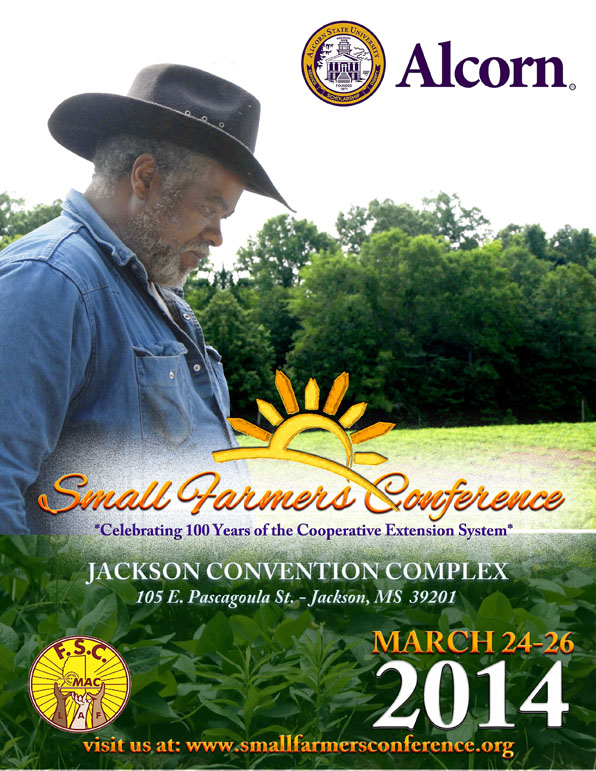
2014 Small Farmers Conference in Jackson MS

The 23rd annual Alcorn State University Extension Program (ASUEP) Small Farmers Conference, slated for March 24-26, 2014, will be held at the Jackson Convention Complex, 105 E. Pascagoula St., Jackson, Miss.
“Using Smarter Innovations to Strengthen Agriculture” is this year’s conference theme. The event is co-sponsored by ASUEP and the Mississippi Association of Cooperatives (MAC).
2014 SFC Web Registration

Free Human-Centered Design Workshop Offered

IDEO.org is happy to announce the second iteration of Human-Centered Design for Social Innovation, a course that we’ve created in conjunction with Acumen. This seven-week course will get you started using the human-centered design process to create innovative, effective, and sustainable solutions for social change in your community. Last year, we had over 13,000 people sign up for this course. They formed over 4,200 design teams bringing human-centered design to 134 countries. Want to learn more? Watch this short video.

How does the course work? This course is designed with a group-guided learning structure. This means that in order to participate, you’ll need to form a team of between two and six people. Once you have your team, you’ll meet each week to learn the human-centered design process via the readings and workshop materials that we’ve created for you. Along the way, you’ll also tackle a social sector design challenge in your own community.

How much does the course cost? The course is free. 

When does the course start and how long does it last? The course begins on March 31, 2014 and is designed to be conducted over a minimum of seven weeks. However, you can also choose to do the course over a longer period of time if a different pace is right for your team.  

Do I need to be a designer to sign-up for the course? This course is open to all and does NOT require any prior design experience.

What if I’ve taken the course already? We’ve created a bonus chapter for those who want to scope their own design challenge. Even if you learned with us last summer, please consider furthering your knowledge of human-centered design by joining us again!

Who else is taking the course? You’ll join teams from around the world taking this course as part of the leadership classes offered by Acumen. Last year, many participants found it valuable to take the course with their coworkers and explore how human-centered design can add new perspectives to their work–whether it be applied to nonprofits, social enterprises, educational institutions, or international aid organizations. In addition, you’ll have the opportunity to share your learnings, ask questions, and get to know other course participants from around the world via an online Google+ community.

Interested in signing up? Register by March 30th at: http://plusacumen.org/courses/hcd-for-social-innovation/

More information? +Acumen course ambassadors are holding precourse Meetups in cities around the world. Attend a Meetup to learn more and to meet other human-centered designers interested in taking the course. More questions? Email HCDCourse@IDEO.org