How are you doing?

During the decade in which I was overseeing farmers markets, we had many hurricanes, the Katrina levee breaks, the BP Oil spill, lots of location changes, vendor changes (including a good number passing) and a crisis with our host organization that forced us to go out on our own as a 501 c3 after more than a decade as a university program. Our team grew more adept at weathering these changes, but we definitely had more staff turnover, less time for reflection and planning, and less resiliency financially and emotionally.

When I left to become a consultant at the national level and to support FMC, I was very sad to go but also relieved that I had made it through without breaking.

So I think of you, dear market operators, network leaders and anchor vendors, wondering about how you are faring with this never-ending set of civic breaks, panics, governmental snubs to local food systems, governmental overreach over farmers markets, lack of funding, obfuscation of the goals of farmers markets because of entities that use the name willy-nilly, brutal weather swings and so on.

Also I wonder about this because at Farmers Market Coalition we have made a conscious effort in the last few years to highlight the role of the market manager. We do that because it is one of the least understood things about markets and makes it hard to make the case for markets without the audience knowing the intentional nature and structure of the modern farmers market.

To that end, FMC has a communication plan with a goal of 1/3 of our comms output to focus on markets and their operators.

But I gotta say; its hard to do that, because so few of you share info about your work. The social media I see overwhelmingly paints a beautiful picture of market day, with all of the tents up and flags fluttering, vendors at the alert, ready to bag.

Which is great. It’s joyful and it’s inviting. I get it. I did it too. And we should continue those posts and updates.

But we are also a movement of over 9,000 sites, of many types and sizes, with shared stresses both internal and external. Many of you have huge system change goals for your 4-hour a week market, and work diligently over most days of the week to make them happen. A bit of that shared with your community can help them understand why the market remains outside in a vacant lot after many years, why there are rules against anyone just joining as a vendor, why your local municipality should be supportive, why funders who share the same goals should seek you out.

So once in a while, tell us how you are doing, amid your gorgeous pics of produce and smiling vendors. Talk about your staff and volunteers. Talk about your dreams for the market.

And if you have the urge, take a second and let me know how you are doing.

ICE and farmers markets

Many many thanks to Maine Federation of Farmers Markets for organizing Tuesday’s “Preparing for ICE Actions at Farmers Markets” webinar with Legal Food Hub at the Conservation Law Foundation. So very informative.

The presenters did not want the webinar recorded or the ppt shared so I am using my notes from the webinar below. I do not have any more information than this to share or any expertise to expand on these notes and am not an attorney so none of this information should be construed as legal advice.

So much of market management is about preparation and logistics which obviously is key to your market’s response to an ICE audit or raid.

As discussed in previous posts, for any crisis, focusing on de-escalation techniques are always helpful for the market management to be aware and trained on using.

Make sure you know the status of your market space (privately or publicly owned) and how even a privately owned space CAN be construed as public space see this section of the FM Legal Toolkit under Risks, Section II here.

Many important ideas were covered on the webinar, including knowing individual rights, know if your police force(s) are participating with ICE “287(g) agreements,” knowing your immigration status liability with independent contractors, collecting a list of sites in your state that offer assistance for immigrants to share with vendors and shoppers, knowing how to be a witness to any ICE actions that you are unable to stop,

-No warrant is required in public areas, meaning little to no restrictions on an enforcement action there

Current entities

• Department of Homeland Security

– U.S. Citizenship and Immigration Services (USCIS)

– U.S. Customs and Border Protection (CBP)

– U.S. Immigration and Customs Enforcement (ICE)

• Department of Justice

– Immigrant and Employee Rights (IER) Section

– Executive Office for Immigration Review (EOIR)

•Department of Labor

 -PERM Labor Certification, H-2A, H-1B, etc. compliance

What should markets know?

– Public Space: no judicial warrant needed

– Do not interfere, hide or remove target individual (harboring)

Take proactive steps by:

– Ensuring employer compliance

– Not knowingly bringing unauthorized individual(s) to the market

– Partnering with local organizations regarding Know Your Rights (KYR)

– Partnering with local law enforcement to ensure a safe and inviting location

– Read and understand INA Sec. 287(g): https://www.ice.gov/identify-and-arrest/287g

Resources:

https://www.aclu.org/know-your-rights/immigrants-rights

https://www.ilrc.org/red-cards-tarjetas-rojas

PAIR Project: https://www.pairproject.org/

• RIAN Immigrant Center: https://www.riancenter.org/

• Refugee and Immigration Assistance Center (RIAC):

• American Immigration Lawyers Association: https://www.aila.org/

ALIEN REGISTRATION REQUIREMENT:

• A 1940 law, known as the Alien Registration Act, requires every foreign national, age 14 year or older who will be in the U.S. for 30 days or longer, must be registered and fingerprinted.

• Foreign nationals 18 years and older also required to carry proof of registration.

• Failure to carry proof of registration can result in a misdemeanor, including fines and/or imprisonment.

• Undocumented foreign nationals are required to register, but registering does not grant legal status and may result in detention and removal proceedings.

• Should consult with independent immigration counsel.


Week of action April 22-29

This is from FMC’s advocacy network NSAC. There is a link below to the entire toolkit to find templates, calls to action, and hashtags.

Our food system and farmers are under attack, and we won’t stand by as Congress and USDA dismantle the essential programs and resources that we all depend on. Amidst all of the chaos and uncertainty, we are working together to both protect farmers and people from further harm and win positive policy change that will build a better food system for all. 

We have a shared vision of a world where farmers, workers, and communities sustain a thriving food and farm system that nourishes people, stewards our environment, and builds strong economies regardless of what the future brings.

Join us between Earth Day and President Trump’s 100th day in office to uplift the important advocacy efforts to safeguard and improve our nation’s food and farm system. Each day will have a different call to action, responding to a direct threat from the Executive Branch. We are calling on organizations to mobilize individuals in their network across the week of April 22-29. 

Each day focuses on a different threat our movement is facing. You know your audience best, please choose which days you want to participate in based on your capacity and your network’s appetite for action. It is okay if you cannot leverage these materials this week, they will be available for us to you whenever. 

 Tuesday, April 22nd – Earth Day, Agricultural Resilience Act (ARA).  

  • Defending: Climate protections for farmers and investments in climate mitigation
  • Advancing: The introduction of the Agricultural Resilience Act
  • Call to Action: Ask your Member of Congress to co-sponsor ARA 


Agricultural Resilience Act

Issue Overview 

In the last few months, we’ve seen brazen attacks on climate and environmental stewardship programs despite their clear benefits for farmers and communities. 

The reality is that not only are farmers on the front lines of volatile weather events, they are also among the most significant stewards of our nation’s water, soil, and air quality. To ensure our ability to grow food into the future, we need to resource farmers with the knowledge and support they need to weather any storm. That’s why we support the introduction of the Agriculture Resilience Act (ARA) – a farmer-centered bill that incentivizes and supports the work family farmers are doing to build soil health, improve water quality, build robust and resilient businesses, and feed our communities. 

This bill offers straightforward, incentive-based strategies for giving farmers the freedom to voluntarily improve the long-term health and resilience of their farms while supporting farmer livelihoods, and with enough support, it can become part of the farm bill. As lawmakers prepare to write the next farm bill, we need to make sure they are listening to farmers and advocating for their needs.

Toolkit

Rest of the week:

Wednesday, April 23rd – Restore Funding for Local Food Purchases

  • Call to Action: Ask Members of Congress to fully fund a permanent local food purchase program in the Farm Bill and/or post on social media about the impact LFPA cuts had on your community & tag Rollins 

Thursday, April 24th – Comprehensive Disaster Assistance for Farmers

  • Call to Action: Farmers sign on to a letter calling for disaster assistance 
  • Important Note: This farmer-only sign-on letter is open now until 4/28. Please use our mini toolkit beginning today to share with your farmers and help us reach our goal of 500 farmer signatures. Then, on 4/24, consider sharing a reminder to farmers in your community.

Friday, April 25th – Celebrate and Protect Federal Employees

  • Call to Action: Send a thank you note to your local NRCS/USDA staffers, and/or ask your Member of Congress to urge USDA Sec. Rollins to re-hire all USDA federal employees and fully staff local offices. 

Monday, April 28th – Hold Congress & USDA Accountable for Unlawful Action

  • Call to Action: Calling for the immediate release of all funding, for all signed contracts to be honored, and for Members of Congress to co-sponsor the Honor Farmers Contracts Act 

Tuesday April 29th – Trump’s 100th Day in Office Congressional Briefing

  • Call to Action: Join briefing and call on Members of Congress to co-sponsor the Honor Farmer Contracts Act

Another day, 5 years later

A beloved neighborhood bakery in New Orleans posted a beautiful piece today on their experience trying to save their business as COVID became the reality for us all. (It’s Bywater Bakery; if you are ever in our city, do yourself a favor and check it out. And read Chaya’s beautiful piece on their FB page.)

It sent me down the same path of memory, although before I read that this morning, I did have to test for the virus once again. I heard from a friend who has miraculously escaped from contracting it over the previous years and finally got it last week, and after traveling 1200 miles across 6 states, I felt a little under the weather and decided to see if I was positive for the virus. This time, I was not, but like her, I also still expect my first positive test at some point….

I remember well the early news stories about the virus, especially as New Orleans had just had a huge Mardi Gras celebration even with the early reports of this virus. (One may remember that the federal response was not clear nor robust.) During MG, I had been on the streets with friends and strangers, but less than some others. That was partly because I had also been very sick with similar symptoms over the holidays, and a pal who was a nurse suggested during Carnival that maybe I was an early victim and asked me to test for it. Although negative, she warned me to be extra careful even in those early days and so I heeded her advice.

I was also extremely lucky to already have a remote job at FMC, and so was inside on my own a lot of the time.

So I spent loads of time on news sites from the beginning, and in reading markets updates and answering emails from leaders, and so I have a unique vantage point to the magnificent way that markets handled this crisis.

I will share that I remember that year mostly in a fog from exhaustion not only because (like so many of you) I worked every day until finally taking a day off in late November, but also because my elderly mother became gravely ill with an infection and had to be hospitalized for 3 months that summer. I’d rise early, attend to emails and FMC business, and then I’d head to her house to feed her cats and then to calls with doctors and caregivers and trying to unpack the medical tangle in conference with my sister who was a thousand miles away, and thankfully a master at deciphering medical and legal technical information. After that, I’d be back to the laptop to do more with markets and local leaders and national partners into late into the night.

I tell you that not to gain sympathy for what was a very typical situation thousands of families had to face, but to share the regular pride and jubilation I felt first thing and then at the end of the day on hearing how state associations and markets were winning the bureaucracy battles, how they made sure to include MORE vendors and MORE initiatives in their makeshift drive through, or one-way, or timed entry markets (remember those words??) and how I had an inkling as to how exhausted everyone was*.

But as a result of that incredible pivot (another word to remember!) during the worldwide emergency, markets gained a lot of respect and trust from some who may have only ever watched us with one eyebrow raised, or without any idea of why we showed up rain or shine, week in and week out.

FMC was asked to join a multi-year, multi sector USDA initiative to catalogue the innovation and challenges of this emergency response. I tell you all, that to a person, every leader congratulated us on how well U.S. markets responded, and noted their brilliant design changes and deep care to make sure that no one was left out. We accepted that on behalf of you all, and did our best to transmit it back to the thousands of leaders doing the actual work.

Here is the link to the hundreds of resources gathered and created to tell the story of local food systems response: https://lfscovid.localfoodeconomics.com/

This is important to remember not only because of this anniversary of COVID, but also because we find ourselves in another national crisis. This time, millions of dollars in funding promised or already underway has been withdrawn with little or no information as to why it is gone or if it will return. Farmers and sector leaders find themselves with costs incurred, promises made, and carefully made plans, now out on their own.

So just as before, I know market leaders will pivot, look for other sponsors or grants for their programs, rework their plans to make it without the promised funding, and ensure that week in and week out, the farmers and makers have a space to collect, share their talents, and make enough to come back another day. Coming back another day is a lot of the battle; the rest is how we treat ourselves and each other during all of the another days after that. I promise, just as during COVID, I’ll be here, doing my best to help but also being nourished by the community built by each of you and by all of you.

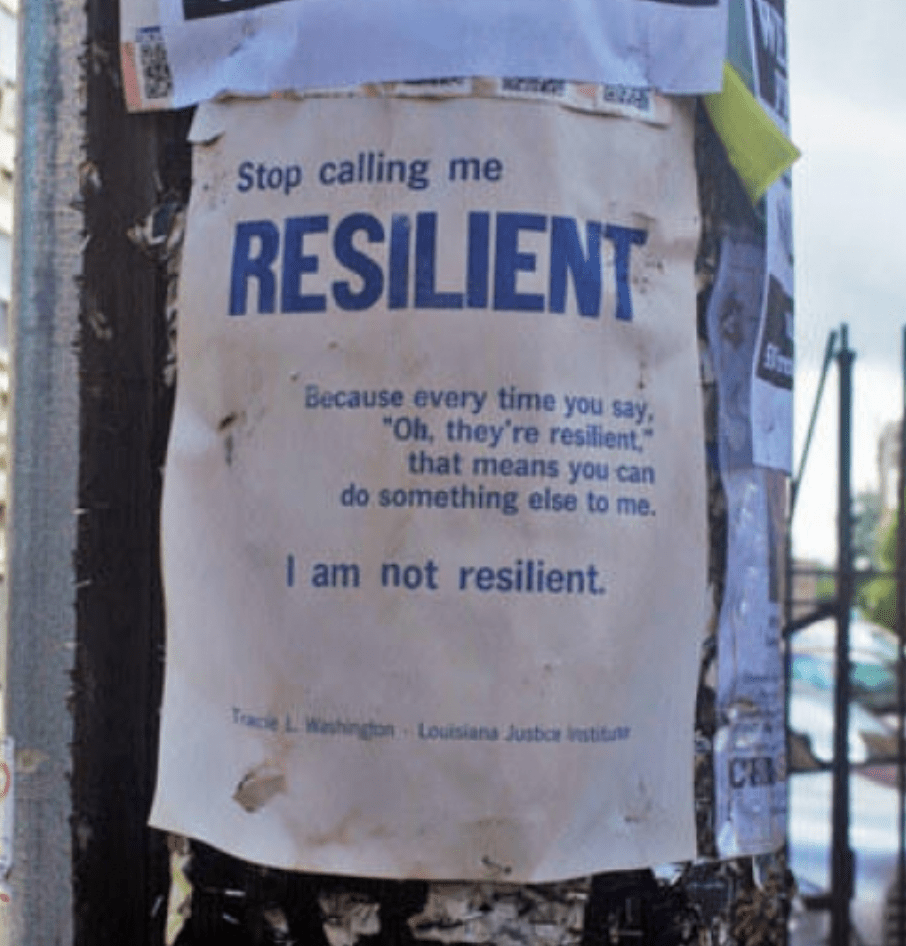
*As usual I want to firmly state how talk of “resilience” and resilient systems in that year or the next was very misguided. Resilience is later; what markets (and others did) did that year was pure survival, spending down every asset and bit of energy, hoping to refill it later on. Some were able to do that; others were not. Over the last 3 years, we saw and heard anecdotal reports of even greater staff turnover and many markets struggling to regain their pre-COVID energy. NOW is when to measure resiliency from that emergency; now is when you also note that the emergencies keep coming and formal responses are beginning to lessen, forcing individuals into permanent recovery mode.

Safeguard your community

Farmers markets will become even more important in this chaotic time; consider how to make sure they continue.

Market day should be the priority. That doesn’t mean your programs are not vital (they are!) but if the market doesn’t open none of those can happen.

Some suggestions:

Confirm that your market space will continue to be available. That may be an issue if you only have a handshake agreement with an entity that may not be understand all that the market provides or in some cases, you may just be finding out they may be in opposition to some of the things markets provide. So check, get a signed agreement for a few seasons in place and look for a possible back up spot if needed.

Ensure your budget is not completely tied to federal grant programs. Some folks think that because they get money from a city or a state that it means it will continue, but those monies may originate from federal grants. Check. And start to look for local and regional foundations that support democratic civic activities. Put the word out on social and with your email list that your market has programs that need funding partners. If you haven’t yet partnered with like minded businesses as sponsors, consider this. Tent Talk has LOTS of episodes on partners and fundraising locally.

Revisit your budget to reduce spending anywhere you can. Make sure that the market day budget (meaning the costs for staffing and hosting the actual space) is finalized and separately managed from any other initiative or program budget.

Talk to your vendors. Find out what they are planning, what they are worried about for 2025. So far, it does seem that food producers will be in great demand; encourage them to talk to you about opportunities they are approached about and if you can, help them sort through those. I wish I could tell all of you to not get angry with vendors who pull out of markets (esp at the last minute) but I know we are human and that their absence could be a problem for your market; still I can tell you it won’t help and will make others less likely to tell you if they are getting offers.

If you are approachable, respectful and open to listening to their needs you may see some decide to stay because of that, and if nothing else, by being a good listener, you may know earlier. And because…empathy goes both ways.

Talk to your shoppers. See above.

Do more than use social media; revamp the newsletter, have a simple website, put flyers up, design kitchen magnets with website and phone number, give dedicated shoppers materials to hand out.

Be visible at market.

At market, let’s stay away from shame and blame, and focus on connection and inclusion.

FMC

As many of you have heard, your national market support entity, Farmers Market Coalition, the organization that I have been attached to for the last decade as a staff person, and a half decade before that as a market leader supporting its development, is rethinking its role and structure.

Part of that rethinking means the elected board made a recent decision to put all staff on temporary furlough for at least January 2025, leaving just our Interim Director working to catch up on invoicing and administrative changes.

As painful as it can be to be open about the issues we are dealing with, FMC needs to do what we urge markets to do, which is to be transparent about development plans and challenges.

I have heard from enough markets and network partners that they believe FMC is essential to the field, and vow to be patient for its journey to find the right admin and funding structure, all of which make the idea of being laid off a little less awful.

Still, pulling off a rework is a HUGE task. I hope we can. I do think we can.

While I am off work at FMC, I am focusing on the Market Eras article and then prospectus for a book.

Here is also my Substack about that process:

https://open.substack.com/pub/darlenewolnik/p/farmers-markets-have-i-found-the?r=20i3x&utm_medium=ios

Here is an earlier post about it:

https://darlenewolnik.com/2024/01/02/market-eras-part-1/

Expect to see more here about that and my own consulting for markets in the next few months but I promise to also share whatever FMC builds for its future when I am able to speak on its behalf again.

Charisse, (too) briefly.

https://farmersmarketcoalition.org/with-profound-sadness-we-announce-the-sudden-passing-of-fmc-executive-director-charisse-mcgill/

When Charisse was hired as FMC’s E.D. earlier this year, I was intrigued both by her background and her plan to take that big job on, AND to continue to oversee her wildly successful company Lokal Artisan Foods with its French Toast Bites brand. As someone who had also alternated between for-profit entrepreneurial work and community organizing, I was very excited to experience this type of energy from our new leader.

And what energy it was. Charisse never seemed to meet a situation in which she didn’t have the confidence to address, never lacked a joke or self deprecating aside to lessen any awkwardness, and always made sure that folks felt seen and heard, richly using their names and building a special communication with each person. I marveled at all of it. I told her so and hope that I told her so in a way that she accepted it.

She was a constant learner, which I knew had made already her kin among our market leaders, since that is the energy they also bring. I often told her that market managers were gonna love having someone like her in this role and I felt she knew exactly what I meant. Of course one of her first public outputs as our E.D. was establishing a new vendor fund because she had lived that concern, both as a PA market manager and as an entrepreneur.

I was grateful to see how much time she spent on the World FMC Academy calls, attending almost all of them (choosing the early am option of the 2 they offer, in order to make time for them before her long work day started), listening in and sending me dozens of questions and comments during and after those calls.

She jokingly reminded the FMC team on almost every call how recently she had arrived, sharing what day number she was on as FMC’s ED. (She began on June 20, so she was with us for one week shy of 7 months.)

I was humbled by her willingness to use her energy, her enormous social capital, and intellectual bank to assist FMC. To lead an overwhelmingly white staff and white culture to its hoped for future as a leader in the new anti-racist, entrepreneurial, and joyous food system for which farmers markets should lead.

I met her in person only twice, as it was normal for our staff to only meet up once or twice a year in our little remote-officed NGO with staff working at home from coast to coast to coast across the US. I was happy that our East Coast Deputy Director Willa had more face time with Charisse, as did our Philly-based admin/membership person, Meghan. It was great seeing that team begin to form. I was sorry for those staff who never had the pleasure to meet her in person.

I looked forward to seeing her much more in person in 2024.

I’m stunned at this loss.

Not only for FMC, but for her own community and family, and the loss of such promise.

I’m also angry with our world for not taking better care of black and brown (especially female) leaders. I take that indictment as my own future work as well, and promise to do better to support and honor these women.

Here’s to you, Charisse McGill. Rest In POWER.

Part of the FMc team: Willa, Meghan, me, Charisse and Bec in NYC in June at World FMC event

Off to Rome for US farmers markets

Yes, I hear you chuckling as to my poor poor life, traveling twice in one year to Rome to work with the World Farmers Market Coalition. Accepted.

Still, I have a few butterflies and some anxiety about this trip because the stakes keep raising in terms of how to have an impact on those that WFMC amasses for us, including trade ministers, ag leaders, FAO, USDA, US Embassy staff, funders, among many many others. (And then, once back, how to share the global excitement around farmers markets with US stakeholders?)

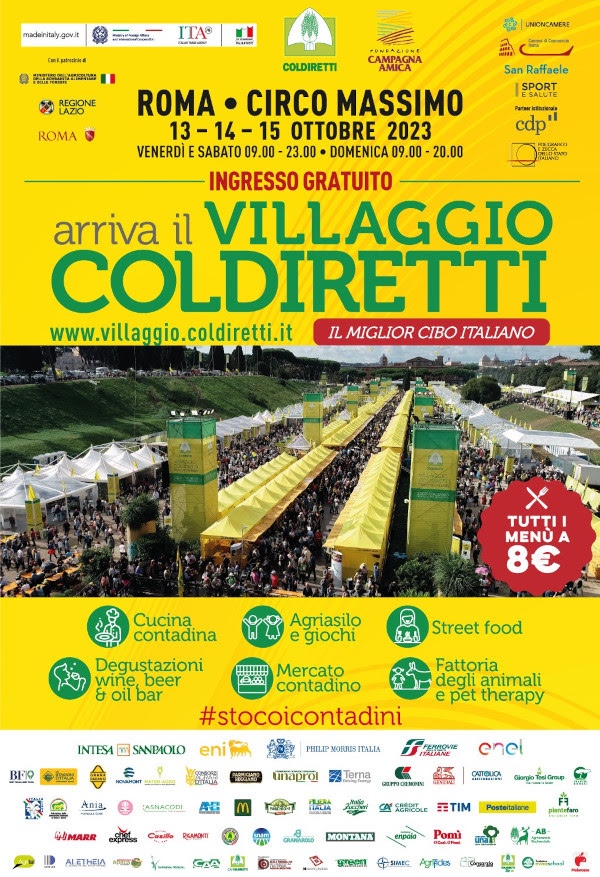
The exciting news is that this trip will be held at the Villaggio Coldiretti, a 3-day farmers market educational event held at the Circus Maximus, which on our last trip, Bruce Springsteen was using as his concert hall. (We were able to hear the sound check and see the crowds build for that event because the WFMC events were nearby at the gorgeous Circo Massimo farmers market operated by our Italian WFMC partner Campagna Amica.)

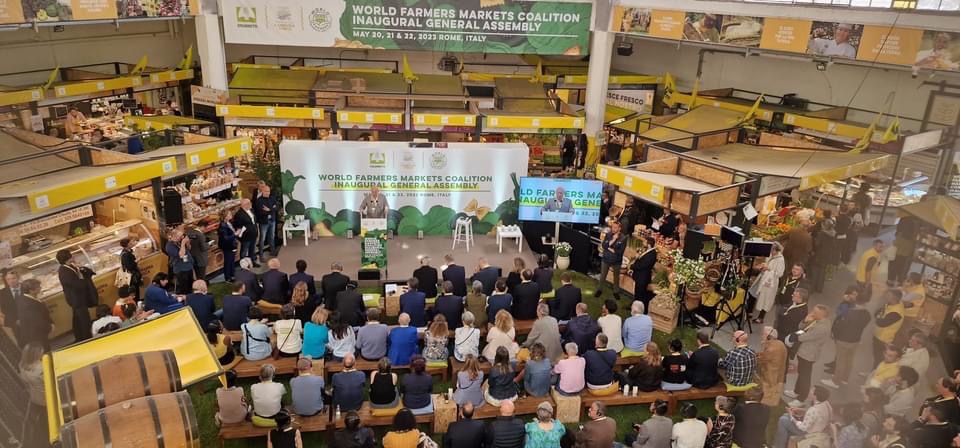
WFMC Member Assembly May 2023

I’ll be cramming facts and figures and stories into my head especially around nutrition incentive programs as this is one US pilot that our fellow market leaders are eager to hear about. Please reply to this with any that you think I should share, and I’ll do my best to report back here and on FMC’s social media.