Market Benefit and Incentives PPT-Vermont 2013 – Helping Public Markets Grow

Since I’m back in Vermont for the 2014 Direct Marketing Conference, I decided to upload the Power Point from the 2013 Wholesome Wave convening that Erin Buckwalter of NOFA-VT and I gave about the 2013 Vermont Market Currency Report. I’ll add notes for each slide sometime in the next month or two but the data will still be helpful to many.

Market Benefit and Incentives PPT-Vermont 2013 – Helping Public Markets Grow.

How the Bitcoin protocol actually works and what that means for us

Complementary currencies fascinate me and recently, the crypto currency bitcoin especially. Its an example of a decentralized example designed to reduce  inflation (although maybe not deflation) and the need to have a central authority. I agree with many that the bitcoin seems unlikely to be a replacement for fiat currency (government-decreed legal currency) and I also agree with the concern over the ultimate role of this currency that has a limit to how much can be “mined.” Still, important to remember that gold has very close to the same values and limits and has flourished as a protection against only using a national currency.

The reason why this should be so important to food system organizers-especially to direct marketing outlets-is that many of these outlets are operating what is essentially a debiting system with tokens,  yet doing it without the robust and transparent nature of a currency system, or without a fair and openly discussed exchange rate that asks everyone possible to share the costs. In other words, we have built systems that allow people to begin to depend on the market to supply a debiting system so as not to have to stop and get cash before coming to market, or from vendors from having their own machine and costs, yet are not extending the reach of that system to find ways to pay and find support for it. What seems to be the goal for most involved is to dream of the day that we can hand these systems off to the farmers to run themselves. I would say that for many reasons this is unlikely in any near future as these systems will remain unwieldy to manage.
Those reasons for the delay or impossibility of the vendor hand off happening include (but are not limited to):
-the lack of easy-to-manage back office systems
-the wide variations of card fees and systems needed to swipe cards
-the costs for each vendor to purchase and maintain these systems. Add to that the very nature of pop up markets without access to good wifi or mobile phone signals, the low number of transactions per vendor and complication of a high number of customer transactions on any one day with many small businesses that will confuse and alert card processors.
To me, what comes first is solving these problems and extending this system’s reach to savings and loans pilots. What about allowing restaurants that source locally to accept the tokens during slow months? Or working with banks to help provide some accounting or backing? What about establishing micro loans to encourage more people to use this as a sticky currency working through a local food system? The Berkshares system in Great Barrington area is an uniquely designed currency that is experimenting with these ideas and more and has added hundreds of outlets at which their currency can be used; it is surely one that should be studied closely by our field, if nothing else.
There are examples of different token pilots at markets, such as MarketUmbrella’s Crescent Fund and Massachusetts’ pilot of electronic wallet (an example here of an electronic wallet) but these pilots are still so limited and information is not widely available. I would love to see some deep analysis of the impact of these systems and some prototyping of entire systems, especially with the emergence of these popular electronic currency such as bitcoins and vibrant complementary currencies such as the Berkshares.

How the Bitcoin protocol actually works | DDI.

Overstock says they’ll take Bitcoin

VT Currency Report wins a 2013 American Graphic Design Award

Our Vermont Market Currency Report won a national design award, thanks to our amazing and patient designer Matt Hannigan, now working with GoodThree Design. I heartily recommend working with them on your next report.

American Graphic Design Awards 2013.

VT Market Currency

Better Eats for All | Belt Magazine | Dispatches From The Rust Belt

A commentary from yours truly on the food system found in my first hometown of Cleveland Ohio. Whenever I return to it, I am struck by the unusual underpinnings of their food work, being as it is deeply embedded within the community organizing/social justice strategy that is alive and well in many of their neighborhoods, as well as in the larger reality of figuring out what to do with their post-industrial inner core. Combine that with enthusiastic corporate greening, municipal support and the awareness of the need to combat the foreclosure crisis with innovative small business and residential reclamations and you get a dynamic little system coming to maturation there.

Better Eats for All | Belt Magazine | Dispatches From The Rust Belt.

Nashville’s beloved farmers market faces some tough rows to hoe | City Limits | Nashville Scene

This article is from the beginning of the year:

“The idea of bringing in a private company to run the operation comes less than a year after a review from Metro’s finance department that was critical of the market’s finances and management. Then-market director Jeff Themm stepped down from the role in June of last year, shortly after the review, and Nancy Whittemore, director of Metro General Services, has been serving as interim director ever since.

Comer says the market board has worked with General Services to address most of the issues brought up in the report, including better enforcement and compliance with civil service rules, and more thorough housekeeping and maintenance. She says they’re still working through the report, and part of that means looking at “all possible options” when it comes to making the market financially sustainable.”

Between an ongoing deficit and privatization talk, Nashville's beloved farmer's market faces some tough rows to hoe | City Limits | Nashville Scene.

I have not heard or seen any updates to this since this article and RFP were published.

North Market, Columbus OH

This market is one of my favorites as, while it was being renovated, I was a poor community organizer in the 1980s in Columbus and I would walk from my office to the market to get healthy food and to soak in the lovely vibe. The renovated site also hosts an outdoor farmers market on Saturdays and sits within a revitalized area that encourages visits to this previously barren area. The value of being able to sit in a sunny, bustling place for a leisurely lunch and recharge one’s batteries is something market halls especially can offer their neighbors and they should be celebrated for that.

North Market

Findlay Market pictures

The first of three public markets that I will be visiting this week across Ohio.http://www.findlaymarket.org/

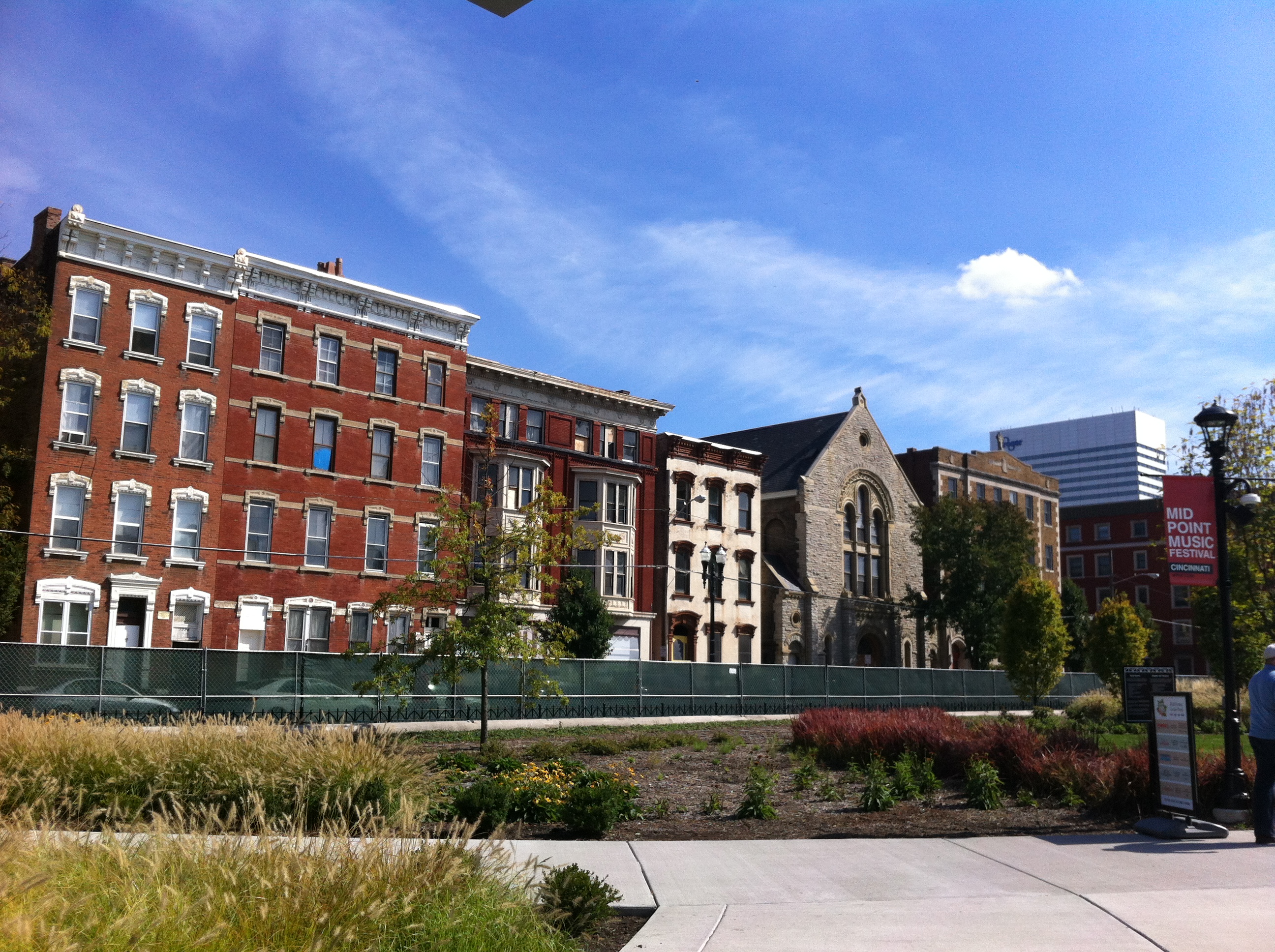
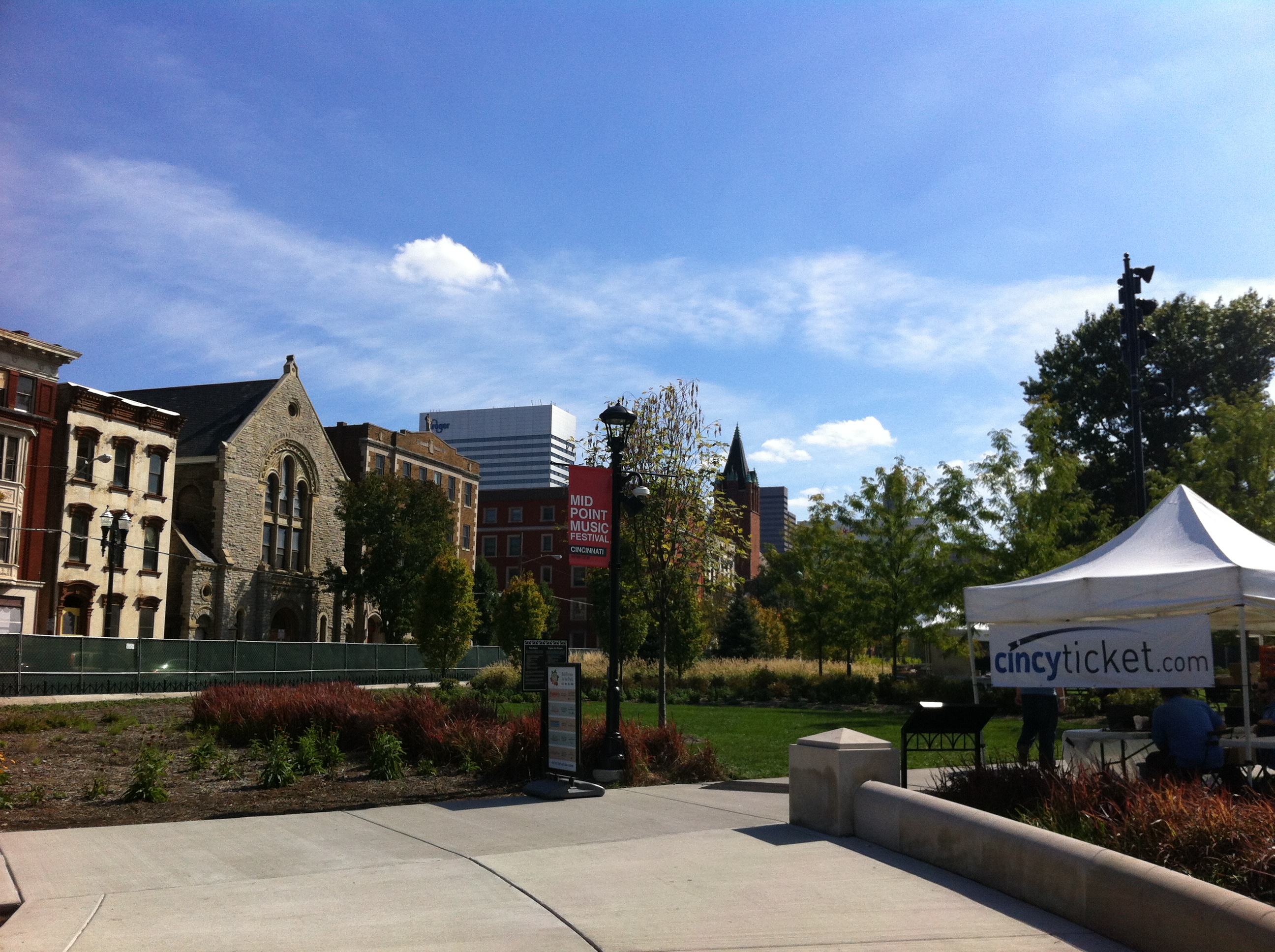
Lovely Over-the-Rhine neighborhood in Cincinnati, the largest collection of Italianate buildings in the US.

Lovely Over-the-Rhine neighborhood in Cincinnati, the largest collection of Italianate buildings in the US.

Belgian brunch restaurant in O-t-R neighborhood, close to the Findlay Market.

brunch restaurant in Over-the-Rhine neighborhood, close to Findlay Market.

O-t-R
Seating at Findlay Market

Seating at Findlay Market

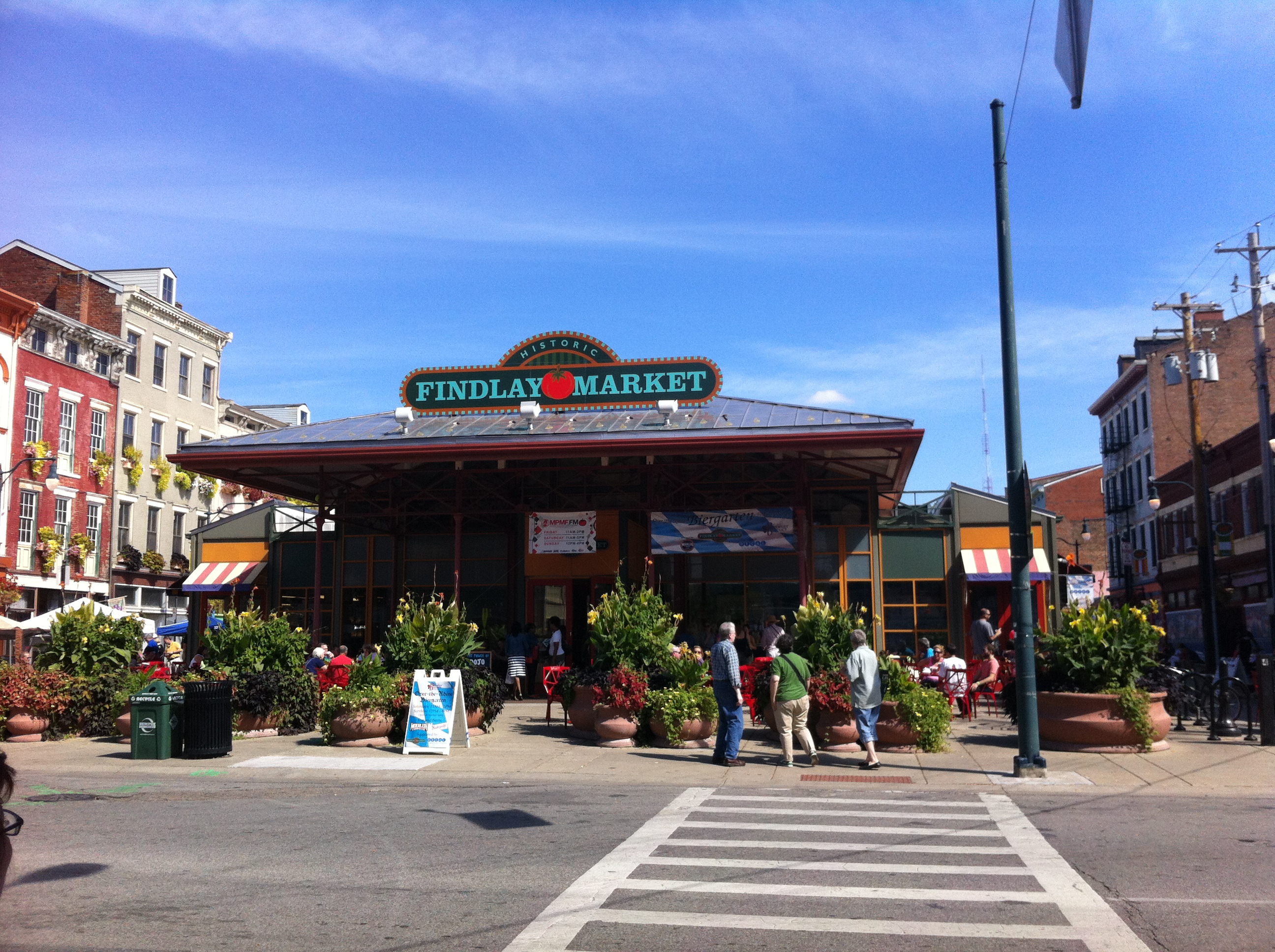
Welcome to Findlay, Ohio's oldest public market.

Welcome to Findlay, Ohio’s oldest public market.

Around the corner from the Findlay Market, Cincinnati's Public Market

Around the corner from the market


Mural at the Findlay Market

Mural at the Market

Market Metrics: Measuring and Communicating the Health Impacts of Farmers Markets

Show some support to Farmers Market Coalition and this necessary project:

America’s 8,000 farmers markets are bringing huge health benefits to their communities, often with little cost, structure, or support. Collecting accurate data on these grassroots organizations is imperative if we’re to maximize their impacts.

News Challenge

National 2013 Food Hub Survey-NFGN

Authored by Michigan State University Center for Regional Food Systems & The Wallace Center at Winrock International
From the Executive Summary:

Findings from the survey showed that food hubs across the country are growing to broaden the distribution infrastructure for local food. From the survey, 62% of food hubs began operations within the last five years, 31% of food hubs had $1,000,000 or more in annual revenue and the majority of food hubs were supporting their businesses with little or no grant assistance—including food hubs that identified as nonprofits. Financially, the most successful food hubs tended to be for-profit and cooperative in structure, in operation for more than 10 years and working with a relatively large number of producers. The values-based nature of food hubs makes it hard to judge many of them solely on their level of financial success.
The survey also revealed a number of persistent challenges and barriers to growth that even the most financially successful food hubs faced.
For example, many food hubs indicated their needs for assistance in managing growth and identifying appropriate staffing levels for their hubs. They also often pointed to their need for capital and other resources to increase their trucking and warehousing capacity.

NFGN Report

Rules are varied

I think most if not all managers of markets understand that other markets have different rules than theirs, but do your shoppers know? And have you ever updated them, in cooperation with your vendors?
Nearby markets should share rules so that they do not make their farmers follow different sets of rules for little reason. It’s amazing how many markets don’t even attempt to compare rules which makes it quite hard for vendors to remember which of their markets has rules against packing up early or who allows foraged items and who doesn’t. One of the main areas of contention among farmers is the amount of liability insurance that they are required to carry (when a market requires it); a farmer told me about three different levels of insurance that he was asked to carry, all of the markets within a few miles of each other.

http://www.twincities.com/stpaul/ci_24036424/farmers-markets-not-all-follow-same-rules

As some of you know, I believe that the era of mission-driven farmers markets has just begun and that how we view our work needs to expand to help the farmers and buyers that we work with. In that mindset, we should begin to examine the idea of public markets entirely devoted to restaurant/grocer (then wholesale) sales of local goods, curated with the same intention and mission by those of us that currently manage retail farmers markets.
In order to do that, we should learn from wholesale terminals such as this one in Canada. I found a couple of things within this article about the Ontario Terminal fascinating. My notes are in italics.

In less than 40 seconds, DiLiso has placed his order: cabbage, cipollini onions, bean sprouts and bok choy. Na enters the data on a hand-held digital device then, with a mutual nod, moves on to another client, leaving DiLiso to gather up his vegetables.
That’s how deals are done at The Ontario Food Terminal, the giant U-shaped building on 16 hectares off the Queensway in west Toronto: friendly, no-nonsense, fast.

(Notice the ability to enter sales on a hand held device?)

———————————–

DiLiso and his small crew criss-cross the market to find sellers they trust who have the best deals on vegetables.
“It’s all about relationships,” DiLiso says.

(I dunno- it sounds like it is as much about price?)

Ontario Terminal story

The Dallas Farmers Market is no longer controlled by the city. What happens now?

The Dallas Farmers Market is an interesting version of a public market. Almost a decade ago, I was invited to Dallas for a set of public meetings (along with DC/Fresh Farm founder Ann Yonkers) to help the chefs, farmers and food entrepreneurs get to the next step in reorganizing this market.It seemed then that a lot of competing ideas were on the table and that to get it moving, they would need both deep design options and mission development. This news may signal that they have taken the necessary next step.

The Dallas Farmers Market is no longer controlled by the city. What happens now? (And what becomes of Pecan Lodge?) | City Hall Blog.