Another Fresh Food Initiative grocery store recipient may close in New Orleans

The owners received a $1 million loan from the city’s Fresh Food Retailer Initiative, a program aimed at increasing residents’ access to fresh food. According to reports at the time, $500,000 of the loan was forgivable.


Seems to be a tragic confluence of bad-faith investments, management disorder, new disruptive businesses taking away some of the sales, and the lack of resilience in the city around its increasing environmental challenges. Still, I’d like to see what else this fund ended up supporting and what those places are doing now.

Some relevant quotes from Ian’s story linked below:

One of lenders that funded the store’s reopening was First NBC Bank, the local financial institution that collapsed last spring and continues to send ripples through the New Orleans business community. Boudreaux said his loan was acquired by another financial institution which has been more aggressive.

“We opened with the finances upside down to begin with, and it got worse,” he said.

The city also provided a $100,000 Economic Development Fund grant, and the Louisiana Office of Community Development provided a loan for $1 million. The store also received $2.2 million in historic tax credit equity and $2.2 million in new market tax credit equity.


Meanwhile, Boudreaux has accused some relatives of stealing money from the family-run business.


While these issues have been ongoing, Boudreaux pointed to the August 2017 flood as perhaps the last straw for the business. That disaster, spurred by a summer downpour that revealed widespread problems with the city’s drainage systems, swamped the store and knocked out much of its food-storage equipment.

Here’s my post on the first store closure that had been a recipient.

I mention Circle Food in this piece on another public market site:

The Advocate story


Citizens should lead

A link to my reviews of 3 new books that may inspire some to get thee to city hall or at least remind us of the possibilities of better design of urban places.

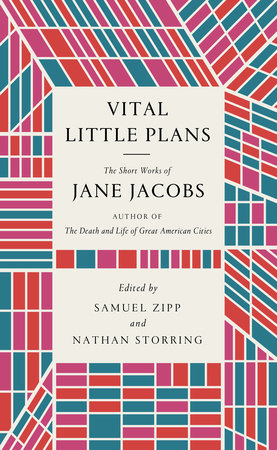
On a related note, I think every food system organizer (really, every organizer) needs to know Jane Jacobs.  One new book that I am still working my way through may help those of you not interested in reading about her life story or diving into her classic The Death and Life of Great American Cities. Vital Little Plans is a collection of many of her shorter pieces and her talks, including some of what she wrote on her way to publishing Death and Life. One of the editors (Storring) works at Projects For Public Spaces (PPS),  a consulting firm well known for its market technical assistance, Placemaking tools, and workshops. (Exciting news: They should be announcing their 2018 Public Market Conference location very soon too.)

9780399589607.jpg

Readers will find classics here, including Jacobs’s breakout article “Downtown Is for People,” as well as lesser-known gems like her speech at the inaugural Earth Day and a host of other rare or previously unavailable essays, articles, speeches, interviews, and lectures. Some pieces shed light on the development of her most famous insights, while others explore topics rarely dissected in her major works, from globalization to feminism to universal health care.

Buy it near you at an independent bookstore.

Emerging City Champions to lead innovative food projects – Knight Foundation

I highlight the food choices, but really all 20 of them should be approached to have a partnership with their farmers markets. Here is the list so you can see what else is being proposed.

Macon, Georgia
Morgan Wright: A new community garden planted on an abandoned lot will serve community members and feature weekly farmers markets.

Miami
Danielle Bender: Public Hives will provide beehives in public places, with a protective fence surrounded by native wildflowers and fruiting trees, to ensure residents can remain a safe distance away. Programming will encourage discussions about pollinators.

Tallahassee, Florida
Jacqueline Porter: “Thrive Tallahassee” will be a series of neighborhood meals hosted in underused, historically significant spaces.

Source: <a href=”https://knightfoundation.org/articles/20-emerging-city-champions-chosen-to-lead-innovative-urban-projects”Knight Foundation

Bring your food waste to the library for composting

Food waste collection programs are being phased in at New Orleans public libraries.

I’m glad they also mention Greenmarket and their innovative compost collection program. What is significant about the NYC market program is that Greenmarket does not occupy their market spaces constantly, so managing programs like composting require added logistics for the staff.

In data collection terms for markets, this program can be measured for its ecological, economic, social and intellectual capital benefits.

Bring your food waste to the library for composting: Yes, really | NOLA.com

Dominion wants to put a pipeline through farmland designated for conservation

On Thursday, the Southern Environmental Law Center filed a motion with the Federal Energy Regulatory Commission (FERC), asking the body to reject Dominion Virginia Power’s permit application for the Atlantic Coast Pipeline, a 600-mile natural gas pipeline from West Virginia to North Carolina.
According to the motion, Dominion’s proposed route goes through at least 10 properties that owners have placed into a Virginia conservation program intended to prevent future development.

“Dominion has proposed the largest conversion of conservation easement land ever undertaken in Virginia,” the motion says. “If allowed, it would seriously undermine public trust in the state’s conservation easement program and jeopardize the continued vitality of this critically important tool for open-space land protection.”

Source: Dominion

Louisiana Update #9: A post-flood visit with a market farmer

Spent Wednesday morning tagging along with Copper Alvarez on her BREADA Small Farm Fund site visit to Lucy Capdeboscq’s home and farm near Amite. Copper has been crisscrossing the state seeing farmers who are reporting losses from this month’s floods. It’s important to note that BREADA is not focused only on their market farmers needs, but doing their best to get funds to any market farmer across the state.  Although one of Lucy’s daughters had been one of Red Stick market vendors in the past, Lucy sells only at the Saturday Crescent City Farmers Markets down in New Orleans. As a result, she was surprised when Copper contacted her by phone, asked if she had damage and then offered an evaluation visit in case BREADA’s fund might be able to help.

IMG_1795.jpg

Of course, no decisions or promises are made during the visits about any support, but as Lucy commented, the contact and visit were very welcome. Crescent City Farmers Market is also reactivating their Crescent Fund and has already had Lucy fill out their short form to receive assistance. The Crescent Fund is hoping to raise enough money to handle the 8 or so CCFM market farmers who have indicated losses, by quickly offering up to $1,500 for their farm needs.

To get to Lucy’s place, one turns off the main road at the permanent sign indicating it is also the direction to the legendary Liuzza strawberry farm. Although their famous berries are still a few weeks from being planted, other products like cucumbers could be seen in some of their fields. When you know that Lucy is a Liuzza by birth , it is clear why she lives amid those fields, (just off Jack Liuzza Lane) on the land deeded her by her parents. She and her late husband Allen raised their children here and kept their land productive even when they took on other professional occupations.

Allen and Lucy joined the Crescent City Farmers Market shortly after it opened. The Caps (as their farm name is known) were a huge hit immediately due to  Lucy’s charming customer service and Allen’s practical sense for growing their traditional yet innovative items. Lucy’s arrangements of zinnias and lilies with her decorative okra, hibiscus buds and her legendary sunflowers have remained market favorites since those early days.  As Poppy Tooker wrote in the 2009 Crescent City Farmers Market cookbook: “Lucy and Al have built a reputation for forward thinking innovation. They were the first to try early harvested rapini and green garlic made so popular in California.”

IMG_1794 (1).jpg

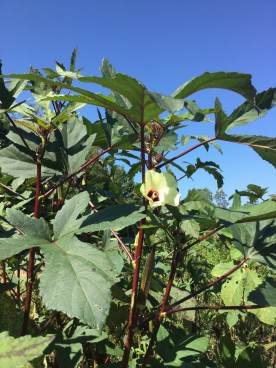
Lucy’s okra, used for her bouquets.

To me, the Caps are a quintessential market vendor type: growing traditional and newer South Louisiana products on a small piece of land behind their home within sight of other family members also still farming. As a matter of fact, on one of my visits to the farm years ago, Lucy told me how much she was looking forward to letting a shopper know that next Saturday that their favorite item had been planted that week and would soon be back at market. That deep awareness of specific customer likes seemed to me then (and still) to be the best illustration of the personal touch of direct marketing farming that I have come across in my site visits.

Continue reading

Louisiana Floods, Update #1

Sunday update from Copper Alvarez, BREADA Executive Director:

Checking in with our Red Stick farmers and Main Street Market folks today — A lot of fields under water but most homes are okay…Keeping Louisiana and the Baton Rouge region in our prayers! 

Support the farms of Louisiana by donating to the BREADA Small Farms Fund.

—————————————————————–

Sunday update from Hammond Farmers Market:
Hello all, from what we’ve heard all of our market family is safe and sound! We hope everyone else is faring well through this crazy time.

Our farmers are all safe, although fields, fences, and feed did not fare so well…If anyone is looking to help out, we are asking for livestock/chicken feed as one of our farms lost everything in the storm.

If you’re interested in donating feed to help our farmers out, please email us at hammondmarket@gmail.com or message us on or FB page.

Everything, no matter how small is appreciated.

-Ashton


—————————————–

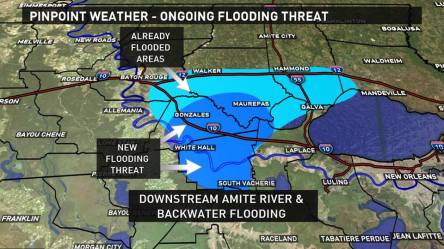
UPDATED: Darker blue shade shows areas that have a new flooding threat from back water off the Amite

14054113_10207271734854784_4775183861359430274_n.jpg


Dear Baton Rouge, New Orleans has your back


A Pissed-Off Tampa Chef Explains The “Farm To Fable” Controversy

Greg Baker, chef-owner of the Refinery in Tampa, Florida, is a 20-year kitchen veteran, having worked in Portland, Oregon, and Austin before opening his James Beard–nominated restaurant in 2010.

So does local matter? Yes, but that begs clarification. I buy produce from a variety of local farms, some certified organic, some with organic practices but not certified and some that are conventional but utilize best management practices. As different as they all are, I know that I am buying produce that is fresh and nutrient-dense because of the short trip from farm to my cooler, and grown in a manner that doesn’t harm the environment. This is where “sustainably grown” comes into play. Organic doesn’t mean a damn thing to me if it refers to a lemon that was organically grown in Israel and traveled halfway around the world to get to me. Nor do I give a rat’s ass if something is labeled organic but grown in a monoculture. I’ve toured Big Ag tomato farms a couple of hours south of me while visiting with the Coalition of Imokkalee Workers; the type that Barry Estabrook wrote about in Tomatoland. I found myself in what was essentially a desert of tomatoes — no border land, no birds in the sky to be seen. I asked the meaning of a segregated tomato desert and was told “that’s our organic section.” So local doesn’t necessarily imply sustainability. That doesn’t mean that sustainability doesn’t exist locally to you, but you’re probably not going to find it in Big Ag growing operations.

…So for anyone who is still with me, you’re probably wondering why I’m so fucking angry. It’s because there are real-world economic consequences to lying about sourcing. Not for the liars of course, who got caught lying and have lied more to cover their own asses. I’ve been scratching by for six years on very narrow margins, living up to what I claim, while others have rolled it in by lying to their customers. That’s one thing. But people saying that they’re okay with being lied to?

Source: A Pissed-Off Tampa Chef Explains The “Farm To Fable” Controversy – Food Republic

See an American town that’s about to be completely lost to climate change.

The Jean Charles band of Biloxi-Chitimacha-Choctaw lived in the same place for more than 200 years. But now it’s almost entirely washed away.

By the middle of the 20th century, there were nearly 400 people living on the island. At that point, the land was 11 miles long and five miles wide — providing this Biloxi-Chitimacha-Choctaw tribe with 55 square miles of lush, open land on which to hunt, farm, and thrive.

But all that’s left today is a half square mile of marshland — two miles long and a quarter-mile wide — with two dozen families struggling to survive. The island’s remaining residents still speak their own colloquial French-Cajun dialect and work as fishermen, oystermen, and fur trappers to survive. But ecological damage has made that work hard to come by too.


From 0 to 35 in MS

I have worked with markets and farmers in Mississippi for a dozen years and have found more barriers to getting regional food accepted than in most other areas of the US, yet also have met some of the most optimistic and capable people  working on it there.
What’s interesting is that in going from a deeply (still) entrenched commodity/plantation culture of farming directly to a new economy of small family farming for markets and restaurants can mean that some of the middle steps can be skipped, which is beneficial to innovative growers.

In other words, the situations is similar to what has happened in many non-industrialized or colonized countries in regards to technology; having skipped the landline era, the new users adapt much more quickly to the technology of mobility*.
I can see this leapfrogging in play for sustainable farming in the Gulf States with new farmers pushing the envelope with pesticide-free and heirloom varieties at markets and in CSAs, rather than  being influenced by the less inspiring midcentury distribution system that hardened growers’ experience into growing the hardiest and tasteless products to ship.
The area around Oxford MS is one that is ready for takeoff. The small farmer markets offer organic products at a higher rate than the New Orleans farmers markets for example, and the average age of the vendors seems markedly less than the US average, to my unscientific eye. The chef quoted in the article below is a pal of mine and had been the Board President of the New Orleans-based Market Umbrella before Katrina, and now is a leader in the regional food movement in Oxford. He offers his knowledge to the markets and farmers around the area as well supporting the leading agricultural advocates, Mississippi Sustainable Agriculture Network (MSAN), which was founded with Wallace Center support a few years back. Corbin and MSAN are good example of the quiet revolution happening up there.

Additionally, the folks in Hernando MS (north of Oxford, closer to Memphis TN) are leading the state in innovative healthy living strategies and thinking deeply about how to expand regional farming to support those strategies. Their weekly market is large enough to attract serious attention from regional funders and even policy makers, and I have hopes that they might soon attempt to create a year round market.

Continue reading