Helping Farmers Markets Grow

Skip to content
  • About

civic engagement

Market Winter

I sit in a toasty French Quarter apartment, having experienced the largest snowfall ever recorded in the city yesterday which is (unofficially) 9.5 inches in one day.

I know many of you see much higher accumulations in your area on a regular basis, but for little subtropical New Orleans, it was quite a day.

Of course because of my market work, I was thinking of our growers and producers out there, many of whom saw more snow just north and upriver of the city. The next market on Thursday will likely be called off (just as Tuesday was) with the snow turning to ice with temps not coming out of the 20s for a few days. That also means tarps and tunnels will not come off until Friday or Saturday when damages will be assessed and calculations from lost sales now a reality.

So many stories like this every season. The best we can do is to be their voice and tell our shoppers and partners to be patient, and to gently remind them of this event in a few weeks or so when they see lower amounts on the tables. In other words, our work is just beginning when the weather emergency is over.

Winter also means fewer markets and more conferences and meetings for growers and market operators. In most years, I attend 8-15 conferences for markets, although this year it will be only a few, between FMC’s staff furlough and projects that are not quite ready for dissemination.

Getting out is vital because sharing examples of replicable pilots and programs is the core work we (I) do. The longer I am away from actually managing markets and instead spending my time working to create, collect, and implement replicable resources by partnering with markets and academics, the more I see how to help markets build their operations sustainably can be a tricky business. I often talk about the 4 levels of competence with markets to illustrate how it is so difficult to move to the final stage which on the graph is called unconscious competence, but could also be called organizational competence. See an earlier post about it here:

https://darlenewolnik.com/2017/03/23/the-four-stages-of-market-management/

Winter is a perfect time to focus on organizational competence by attending to some of those long term projects that cannot be completed in the busy market months.

One version of this is a multi year project I am working on for NOFA-VT/VTFMA (doing this as my own consulting entity, Helping Markets Grow as this is not large enough for FMC-level work) around implementing the Legacy Folder that FMC, NOFA-VT and VLGS built out in the Farmers Market Legal Toolkit years back. The entire Legal Toolkit was a massive undertaking and we moved fast to create a significant number of resources with the grant funding we had, and then expected to work with state leaders to build implementation projects for each of the areas we had covered. That latter part has taken longer than expected (blame COVID, changes at each of our 3 organizations, more emerging risks needing to be covered in the Toolkit, state leaders’ priorities and so on) but now I find myself thinking more and more this year about how to help markets use this toolkit to implement organizational competence around risk management on market day. (And then after this one, on to an implementation plan for the 4-6 other toolkits FMC offers, see bulleted list below.)

The VT Legacy Folder* project is a perfect example of how it is difficult to move to organizational competence without a plan or without help. The NOFA-VT/VTFMA project is focusing on only this one resource, selecting a new cohort of market leaders each year, convening via Zoom over winter months. It has been rewarding to help markets collect their legacy documents, and think through how and where those are collected, stored, explained and shared. Even though it is focused on only this one resource, it helps market leaders also deal with their larger organizational weaknesses and strengths and also builds new networks around shared competencies. And even with this help, these hardworking market leaders struggle to get this done, often not completing everything they want to do to check off their Legacy Folder as done in one season.

I am hoping the next 4-5 years will offer lots more opportunity to provide direct support so we can help market leaders move from individual development to organizational competence in all of the areas we have tackled with major resources (all found on FMC’s still unwieldy website, either through links or housed on it directly:)

-Risk management

-Messaging

-Evaluation/Analysis

-Food Access

-Anti-Racism/System Change

-Disaster Recovery (still needs to be finished – any funders out there want to help FMC?)

-Appropriate Technology


(And maybe we have to build Human Resources Toolkit as the final one?)

So this is how I am digging deep over the winter. I hope to hear some of you have this work in your Winter Plan and have ideas as to how I can help and how FMC can as well.

*Legacy Binder was its pre-digital name which will be updated to Legacy Folder on the site soon

By the way, there will be a new case study on the development of this VT cohort published on the Legal Toolkit site later this winter. Check the Toolkit in the coming weeks or ask the VLGS (who manages the Toolkit) to let you know when it is up via the Toolkit’s contact page.

Share this:

  • Click to email a link to a friend (Opens in new window) Email
  • Click to print (Opens in new window) Print
  • Click to share on Reddit (Opens in new window) Reddit
  • Click to share on Facebook (Opens in new window) Facebook
  • Click to share on X (Opens in new window) X
  • Click to share on Pinterest (Opens in new window) Pinterest
  • Click to share on LinkedIn (Opens in new window) LinkedIn
  • Click to share on Pocket (Opens in new window) Pocket
  • Click to share on Tumblr (Opens in new window) Tumblr
Like Loading...
0 CommentsLeave a comment
01/22/2025
DW
case studies/research, civic engagement, climate change, diversity/racial justice, ecological capital, FMC, Where's Dar now?
Dar Wolnik, evaluation, farmers, farmers markets, FM Legal Toolkit, FMC, New Orleans

Los Angeles

Oh the fires. It’s terrifying to watch them unfold especially viewing from videos taken with hand-held phones with calm narration from the very folks who are seeing their place burn up.

There has been natural (and unnatural) disasters in my own place more than once and so I have a bit of an out of body sensation watching those videos, having made a few myself. Soon will come the overwhelming finality of knowing how many beings have been lost, how many have lost home, how long it will take just to not see or smell the destruction. (I remember driving through Montpelier VT after their devastating flood not that long ago, smelling the musty items out on the curb to be tossed in the trash, and how the years-old Katrina memories came rushing back.)

Once the people are back, there will be a period of exuberance when they are able to stand there, to see each other, and to talk it out. That period lasts for a few months while more come back, while they clean out their places…Then it’s on to other phases, some less pleasant, all of which last years and are much longer lasting than the attention from media or even the kind questions from folks from other places.

I must confess that I only realized a few years back that I have yet to “land” anywhere since the loss of my place in 2005, and have come to see that I cannot seem to trust in the idea of a constant home yet. Instead, I do my best to make that home in many places, and to find small comforts that travel with me.

And yes since this is a blog for market communities, I gratefully include those markets as spaces where I feel less alone, less “on the road.” But its not just the market spaces; it’s also the community of market people who call or email or meet up with me to spend a few minutes or longer, recounting recent experiences or pulling out a shared memory to laugh or to mourn over or ask for my update, listening attentively while I do.

That is the real magic of this work we do: that we create comfort and belonging which doesn’t always live in a physical space, but is carried by a shared belief that showing up, by seeing people as more valuable than just the sum of their transactional history, by pushing against the cynicism of faster and cheaper as better, by looking people in the eye to ask how they are and waiting for an answer, by including everyone, we belong to the comforting.

Our friends in Los Angeles will need that, just as friends everywhere who have lost already have needed that.

That is a huge part of why the work we do is constantly vital even when the markets are closed and market leaders are back to their planning, and our producers are back on the land, and in their kitchens with their recipes and in their fields with their animals…

Sustained community. That’s the magic.

Share this:

  • Click to email a link to a friend (Opens in new window) Email
  • Click to print (Opens in new window) Print
  • Click to share on Reddit (Opens in new window) Reddit
  • Click to share on Facebook (Opens in new window) Facebook
  • Click to share on X (Opens in new window) X
  • Click to share on Pinterest (Opens in new window) Pinterest
  • Click to share on LinkedIn (Opens in new window) LinkedIn
  • Click to share on Pocket (Opens in new window) Pocket
  • Click to share on Tumblr (Opens in new window) Tumblr
Like Loading...
1 CommentLeave a comment
01/10/2025
DW
civic engagement, climate change, disaster planning, environmental issues, farmers markets, social capital, social cohesion
disaster, farmers markets, Los Angeles, New Orleans

2025

Finishing up 2024 work this weekend, to then preparation for supporting organizers amid the bookends of community and chaos in 2025.

But do not expect a deep dive in this post about what may happen in the national political arena around food and farming- at least not yet. Still time to consider plans, still time to replenish….

But in the meantime, here is what I have been saying in the past few months to market organizers that I am in contact with:

Leave blame and shame to other arenas.

Markets need to be centered as places of belonging and connection.

New Orleans LA Crescent City Farmers Market
December 2024

Focus on big goals of system change by asking the market organization to consider:

How is the market moving the dial on farmland preservation? How is that work measured?

How is the market including marginalized people of color in its work- and not just as consumers, but as producers, as advisors, as mentors?

What about rural (if the entity is overtly urban focused), or urban (if overtly rural)?

What would that add to your work and to your market?

Does your team and community know the history of subjugation and of centering whiteness in your area?

Does your team and community even know the recent history of market culture (1970-) in your area? Why these markets were founded? Who founded them? How is the market still honoring that history and still intentional in its design?

What external pressures are limiting your work, and who and what processes might help you change those?

What internal structures are limiting your work, and who and what new processes might help you change those?

How are you preparing for interruptions to farming or markets, whether through civic or climate instability?

What is the big idea for your market that you would like to tackle in 2025?

What keeps getting moved off the to-do list every year?

How can we include more people in our work lives, to bring new voices into the work, but also to make sure we are being held accountable and supported.

Can the urge to wait for “perfect” be ignored in favor of what is possible and practical?

I am already asking myself all of these.

How about you?

Share this:

  • Click to email a link to a friend (Opens in new window) Email
  • Click to print (Opens in new window) Print
  • Click to share on Reddit (Opens in new window) Reddit
  • Click to share on Facebook (Opens in new window) Facebook
  • Click to share on X (Opens in new window) X
  • Click to share on Pinterest (Opens in new window) Pinterest
  • Click to share on LinkedIn (Opens in new window) LinkedIn
  • Click to share on Pocket (Opens in new window) Pocket
  • Click to share on Tumblr (Opens in new window) Tumblr
Like Loading...
0 CommentsLeave a comment
12/29/2024
DW
BIPOC Leaders, civic engagement, disaster planning, diversity/racial justice, ecological capital, farm bill, farmers markets, farmers/farming information, food history, human capital, immigrant issues, Main Street, market vendors, national food system work, New Orleans food, Organic movement, public health, public markets, racial equity, regional food, resiliency, social capital, social cohesion, technology, Typology of markets
alternative food systems, cooperatives, evaluation, farmers, farmers markets, food system work, local food systems, social capital, sustainability

Farmers markets and resiliency: Don’t get me started.

Hello leaders.

I’m out on my “summer tour” of the northeast part of the US leaving my beloved New Orleans simmering and hunkering down for hurricane season, one that is projected to be an extremely active one.

When I began to regularly (around 2009) to leave for weeks and then for the summer, I got a lot of raised eyebrows and jokes about it, but those have completely stopped in more recent years. My take on that is that all New Orleanians are now accepting of the fragility of our coast, and constantly preparing for interruptions that come with the loss of land and the rising temperatures of the Gulf. So now, leaving for a time is one of the new normals. No more friendly texts of “wimp” allowed.

What has also changed is the number of natural and civil interruptions happening in the other places that I visit.

In the areas that I was in just over the last series of months, we watched the Vermont and Kentucky floods, the Canadian wildfires, and many other localized disasters that elicited organizing from one or more market organizations.

That organizing was rarely to raise money or awareness for the market entity, but rather, focused on their role as conveners (using their site for recovery), as analysts of the local/regional food system for media or policy makers, and/or as pass-through entities to get resources to their vendors.

The very nature of open-air markets allowed these varied and immediate responses, since most are without infrastructure and therefore have no physical damage to their own organizational assets. I say that with consideration, because many had to move their location for a few months or even longer, which requires design and logistical planning, work even longer hours than before, and pay for new marketing and messaging to let everyone know what and where the new version was happening.

And for the markets that provide centralized payment processing, the damage to shopper or vendor homes and/or businesses can often mean more and higher average transactions because of increased government benefits and private philanthropy, which in turn – although very welcome – increases the costs of managing such a system, and does not come with appropriate administrative funding increases. (In fact, it seems appropriate to mention here that for most market organizations, ANY significant increased use of their centralized system does not increase their income at the same level, if at all. That is the opposite for brick and mortar stores since those entities own the items they are selling and more items sold mean more profit for the store.)

I point this all out because I have been in the position many times to hear funders and policymakers slide right past markets when discussing how to invest in regional food systems that have suffered losses or interruptions. It also raises a red flag when we use the word resiliency to congratulate those who make it through the recovery phase, even though there are a few other phases before and after.

After the 2005 Katrina Levee Breaks, we had artists sew some of these words into prayer flags for us: Return/Reconnect/Recovery/Reopen/Renew/Rebuild/Rejoice/Rest. What those of us in the Gulf Coast mix since 2005 know now is that resilience comes after all of those if it comes at all.

Recovery does not describe resiliency as one cannot “bounce back” while still in the emergency. Instead, during recovery, we watch markets and other local entities “spend down” their social, intellectual, economic savings, but almost always see the attention moving on when true resiliency should have been measured – meaning long after, and no ‘R” savings account replenishment offered.

As another example, during the COVID crisis, the word resilient was used for direct to consumer outlets opening during the restrictions and although that part WAS incredibly difficult, little research was done on the larger-than-normal turnover of market staff that by state and network leaders noted after the restrictions lifted and markets were allowed to return to previous operational structures.

Resiliency also does not take into account how institutional power brokers use the moment of an emergency to shift the burden of future emergencies away from the formal civic sector and on to informal and individual recovery efforts. Of course, local community leaders should always have a leadership role in recovery but they shouldn’t be expected to raise the majority of the funds, or to be the only local response visible to their neighbors, yet in multiple emergencies, this is increasingly typical. (How many local GoFundMe campaigns, can or clothing drives, and or free 24/7 power/charge stations are managed by corporations?)

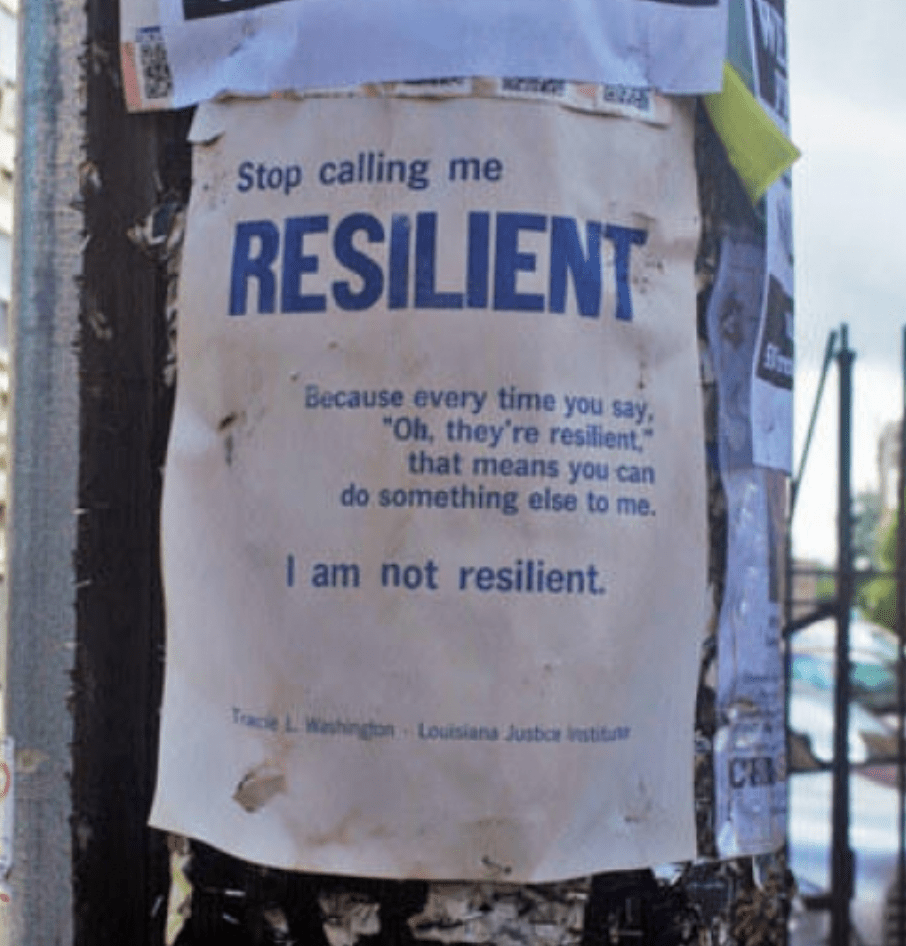
During the early days of recovery, a local activist in New Orleans famously refused the word:

So is it even possible to rescue the word to be meaningful to local activists and grassroots organizations, or is it (as Ms. Washington says in the poster above) a word one does not want applied?

How should market communities partner with the formal sector without ceding any local power?

And as importantly, how do we prepare for the injustices likely to be raining down on our communities because of civic and natural emergencies even as we take care of our own health and well-being?

Share this:

  • Click to email a link to a friend (Opens in new window) Email
  • Click to print (Opens in new window) Print
  • Click to share on Reddit (Opens in new window) Reddit
  • Click to share on Facebook (Opens in new window) Facebook
  • Click to share on X (Opens in new window) X
  • Click to share on Pinterest (Opens in new window) Pinterest
  • Click to share on LinkedIn (Opens in new window) LinkedIn
  • Click to share on Pocket (Opens in new window) Pocket
  • Click to share on Tumblr (Opens in new window) Tumblr
Like Loading...
0 CommentsLeave a comment
06/10/2024
DW
civic engagement, climate change, disaster planning, diversity/racial justice, ecological capital, ecological capital, economic development issues, environmental issues, farmers markets, fundraising, human capital, intellectual capital, Market organization resources, national food system work, outreach/marketing, Polls/Surveys, public health, racial equity, regional food, resiliency, social capital
alternative food systems, farmers, farmers markets, local food systems, market vendors, New Orleans, resilency, SNAP, social capital

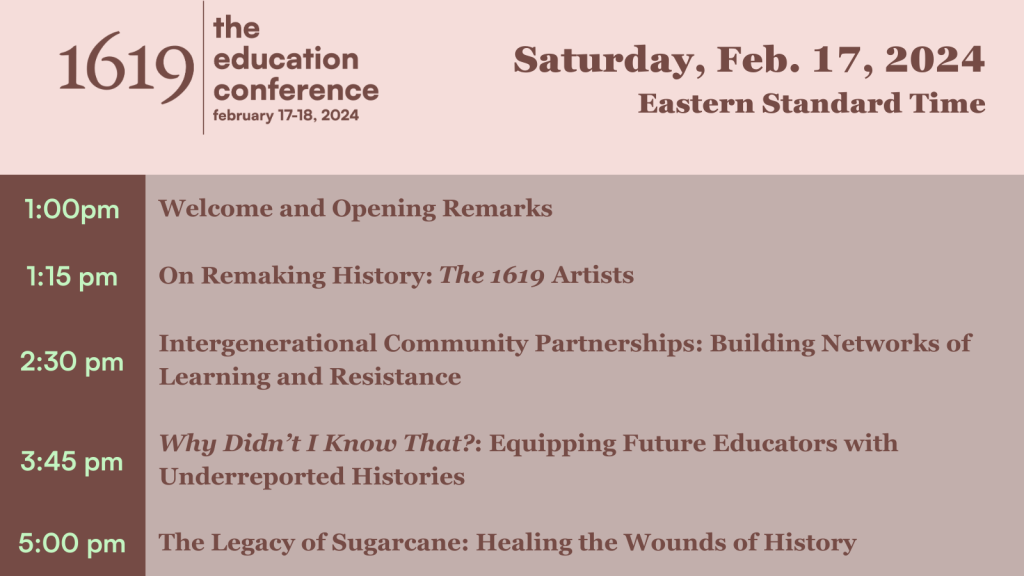
Education through the 1619 Project

This was an extraordinary set of panels, with the final hour sharing the current difficult situation for a Louisiana black family farm. Learn more and support this farm: http://www.provostfarmllc.com

Highly recommend the educational resources supplied by the Pulitzer Center in association with The 1619 Project. If we want to lead a new system of farming through our work, we need to envelop these experiences and lessons into our governance and business models.

https://pulitzercenter.org/sites/default/files/2024-02/1619%20Education%20Conference%20Audience%20Guide%20%282024%29_%20Day%201%20.pdf

Share this:

  • Click to email a link to a friend (Opens in new window) Email
  • Click to print (Opens in new window) Print
  • Click to share on Reddit (Opens in new window) Reddit
  • Click to share on Facebook (Opens in new window) Facebook
  • Click to share on X (Opens in new window) X
  • Click to share on Pinterest (Opens in new window) Pinterest
  • Click to share on LinkedIn (Opens in new window) LinkedIn
  • Click to share on Pocket (Opens in new window) Pocket
  • Click to share on Tumblr (Opens in new window) Tumblr
Like Loading...
0 CommentsLeave a comment
02/17/2024
DW
BIPOC Leaders, civic engagement, diversity/racial justice, entrepreneurs, farmers markets, food apartheid, market vendors, New Orleans food, racial equity
farmers markets, Louisiana, ProvostFarm, USDA

Market Eras, Part 1

I’m excited to finally be able to spend the time on writing the history of the modern era of farmers markets. Thanks to all who have filled out the survey form already, but if you haven’t yet, here it is again:

https://forms.gle/4c4Hp1zgQnLqoGDJ8

The purpose of this will likely be a series of articles for market leaders, policy leaders, and researchers to better understand the importance of the farmers market in the local food movement, with its flexibility in fulfilling market day and also system level impacts while remaining the public, informal face of the entire movement. There are many external challenges ahead, and my hope is this research will offer strategies for offering support to market organizations and to center farmers, foragers, ranchers, and harvesters who are the stewards of land and water and community leaders in every sense.

If the articles turn into a book, it will also be for those general readers who are interested in community and current history, who can learn how to support their local markets more fully .

A few books from my collection. Some of you may note that only one is really what we would define as a farmers market. Even though many of the books in the above pic do not focus on the modern farmers market, I’m sure we’d all agree that knowing what we had previously is vital to understanding the recent past and the present too.

Shout out to The Dane County Farmers Market book seen above which is a treasure trove of the type of primary data that is sooo helpful. Not only does it detail the entire history of what is one of the first of our kind (opening September 30, 1972) designed as a community-led, transparently governed, open-air farmers market, but I also love that the book arranges that history in chapters by its eras of market manager! (Of course I love that because as an FMC staffer, I follow the strategic plan which prioritizes our work in directly supporting market operators.) Kudos to authors Mary and Quentin Carpenter, with equal credit to Mary’s term as market manager.

So how many of you have published histories of your market? Feel free to leave links in the comments…

Share this:

  • Click to email a link to a friend (Opens in new window) Email
  • Click to print (Opens in new window) Print
  • Click to share on Reddit (Opens in new window) Reddit
  • Click to share on Facebook (Opens in new window) Facebook
  • Click to share on X (Opens in new window) X
  • Click to share on Pinterest (Opens in new window) Pinterest
  • Click to share on LinkedIn (Opens in new window) LinkedIn
  • Click to share on Pocket (Opens in new window) Pocket
  • Click to share on Tumblr (Opens in new window) Tumblr
Like Loading...
3 CommentsLeave a comment
01/02/2024
DW
books, case studies/research, civic engagement, climate change, diversity/racial justice, ecological capital, ecological capital, economic development issues, farmers markets, FMC. farmers markets, food history, Main Street, market vendors, national food system work, Organic movement, public health, public markets, retail anthropology/science of shopping, seafood, social capital, social determinants, Typology of markets, University/college initiatives, Where's Dar now?, Worker-owned, zoning for food
eras of farmers markets, farmers, farmers markets, FMC

Roads to Rome and to home

I’ve got a post on the FMC site about my recent travel mentioned in the last post but am adding a point of view on this blog too:

My October 2023 trip to work with Campagna Amica and World FMC was focused on U.S./Mediterranean team sharing around cash incentives and learning more about multi-functional ag. The global interest in cash incentives is obviously not aligned with the US SNAP model (as few have this sort of national program) but is about the other incentives we see at markets offered to certain segments of audiences to participate such as FMNP, Produce Prescription, children’s market clubs and others, as well as the matching programs of those coupons.

My FMC blog focuses on that subject so all that I’ll add here is that based on the dozens of recent conversations I’ve had within the US and now with leaders across the world, I believe it is beyond time for the US farmers market sector to reframe the purpose and goals of our farmers market incentive work.

The public health sector is a great partner especially around the SNAP & matching work with quite clear goals, but farm direct leaders must hold their own theory of change as to why THEY do these intensive programs. These might include increasing the number of recurring shoppers, assisting farmers to fairly earn enough and expand the type of regional products, improving health outcomes, reducing customer confusion and expanding education by having a single point of information at the market’s tent, using multiple incentives to expand civic engagement and local participation among partners and of course, building a sustainable program framework that doesn’t cripple low-capacity/high-efficiency farmers markets and direct to consumer farmers by matching its seasonality and type of messaging and measurement.

By doing that, farm direct outlets can be clear with Congress and with USDA about why some of the recent trends to prioritize farmer terminals over central terminals, or why restricting matches only to fruits and vegetables rather than allowing them to use their matches for any regionally produced item available at a well-curated farm direct outlet have not always been the appropriate model.

Always happy to talk more about these ideas both as a FMC staff member or as an independent consultant for markets. Contact me if that is helpful and check out the FMC blog post linked at the beginning of this post to find FMC resources.

Now on to multi-functional agriculture.

This is an approach that:

… “refers to the fact that agricultural activity, beyond its role of producing food and fibre, may also have several other functions such as renewable natural resources management, landscape and biodiversity conservation and contribution to the socio-economic viability of rural areas”….”the use of the concept can be traced back to the Food and Agriculture Organization (FAO)”

So in theory, it requires us to think of agriculture as a system of healthy support of land and of people and not just as production. In practice, it suggest that we need to tie our farm direct efforts to those projects that prioritize biodiversity, justice, health, and rural places.

Italy has adopted this approach within their massive farmer association Coldiretti, and it was on display during the Villaggio. Farmers, agritourism leaders among others with their Coldiretti yellow flags and hats in the hundreds sat for hours in the tents while national political leaders lined up to explain how their approach will offer results. Urban leaders on panels indicated their deep knowledge of the territorial market sphere, underlining their commitment to the fact that their city’s future is tied to their region’s future. Their national farmers market entity Campagna Amica used the occasion to showcase their development of the World FMC to discuss how to connect the concentration of urban farmers markets to the rural places those markets depend on across the globe.

So it was exciting to see and to hear about this approach even while it is undeniable that the issue in the US is there are few viable connections any longer between rural and urban and as a result, massive misunderstandings of the other among the denizens of each. Even the 10,000 of so farmers market sites we can brag about often promote urban ag over multi functional ag, may inadvertently disincentivize rural activities among market vendors, and often fail to measure rural outcomes of their work or only measure market day sales.

U.S. farmers markets could start to operationalize this approach through connecting CSA, farm stands, and agritourism to their efforts – and not just as a part of the market day:

Asking producers if they have those type of activities and how they can be promoted through the farmers market;

Offering two-way benefits for urban shoppers and rural farmers such as those outlined in Kuni;

Highlighting the role of land stewardship as alleviating rapid overdevelopment in the region and how the worst effects of climate change benefit from natural spaces protecting developed ones;

Promoting healthy outdoor activity with farms as the destinations as Vermont does.

If farm direct is to thrive, it will require seeing it as a pathway to creating better places, to building more closely knit communities, and to adding locally controlled “wealth” for urban and rural, which of course should mean land or knowledge wealth as often as usually means financial wealth.

Check out this list as one set of policies that would help all citizens and all places:

The Ten Pillars of PDA and RUBI’s 21st Century Rural New Deal:

1. Rebuild Farm, Forest and Food Economies

2. Reward Work and Ensure Livable Wages

3. Dismantle Monopolies, Empower and Support Local Business

4. Invest in Community and Regional Infrastructure

5. Re-Build Small Town Centers

6. Cultivate Self-Reliance and Resilience

7. Invest in Rural Healthcare

8. Fully Fund Rural Schools

9. Make Rural and Small Town Housing Affordable

10. Re-Localize Rural and Small Town Banks

I’m excited about sharing this international language and approach for farmers markets as IT will build capacity for their organizations while it draws their producer partners closer to them in a shared future.

My regional watershed which encompasses 2 major Louisiana cities, a bunch of rural parishes and even a few counties of neighboring state MS. Ive long suggested this is the size of the food system we should set as our goal. Www.pontchartrainnetwork.org

Share this:

  • Click to email a link to a friend (Opens in new window) Email
  • Click to print (Opens in new window) Print
  • Click to share on Reddit (Opens in new window) Reddit
  • Click to share on Facebook (Opens in new window) Facebook
  • Click to share on X (Opens in new window) X
  • Click to share on Pinterest (Opens in new window) Pinterest
  • Click to share on LinkedIn (Opens in new window) LinkedIn
  • Click to share on Pocket (Opens in new window) Pocket
  • Click to share on Tumblr (Opens in new window) Tumblr
Like Loading...
0 CommentsLeave a comment
11/02/2023
DW
agricultural tourism, civic engagement, climate change, cooperatives, disaster planning, diversity/racial justice, ecological capital, economic development issues, environmental issues, farmers/farming information, FMC, food sovereignty, food stamps (SNAP), foragers, global organizing, incentives, intellectual capital, international farmers market news, market data collection, market vendors, national food system work, public health, racial equity, regional food, social capital, social cohesion, Typology of markets, USDA, Vermont
multifunctional agriculture, territorial markets, WorldFMC

Farmers Markets Becoming More Visible

One of the messages that I use in my farmers market support work is to urge operators to make sure the programmatic and governance oversight is made more visible, so that the work can be better supported financially and through partnerships and policy.

“Don’t hide the hard work” is how I often say it.

One of the main reasons this is so necessary is because of the enormous success of the estimated 9,000 market sites in the US in increasing social cohesion, healthy food access, local economic activity, ecological stewardship, and other positive impacts of regional food systems.

But even though there are significant impacts, the pop up nature of many of our sites and the high-impact but low capacity staffing most employ can make it difficult to explain.

And often market leaders hear this talk of sharing the impacts and think despairingly of being required to undertake long data collection assignments and text heavy reports to communicate this.

Instead, the answer may be something as simple as a visual image or a quote that illustrates the relevance of this work to the larger civic community.

This map is one such example. It is of the national park in Ohio and includes the farmers market that is held in the park, as well as images of (just a few of many more) of the other farm sites along the path. It also places the market as part of this ecological system which is also a wonderful message.

Can you spot the market? (It’s helpful to pinch to zoom in to the map to look around)

And can you see how this is one great way to share a measurement of impacts?

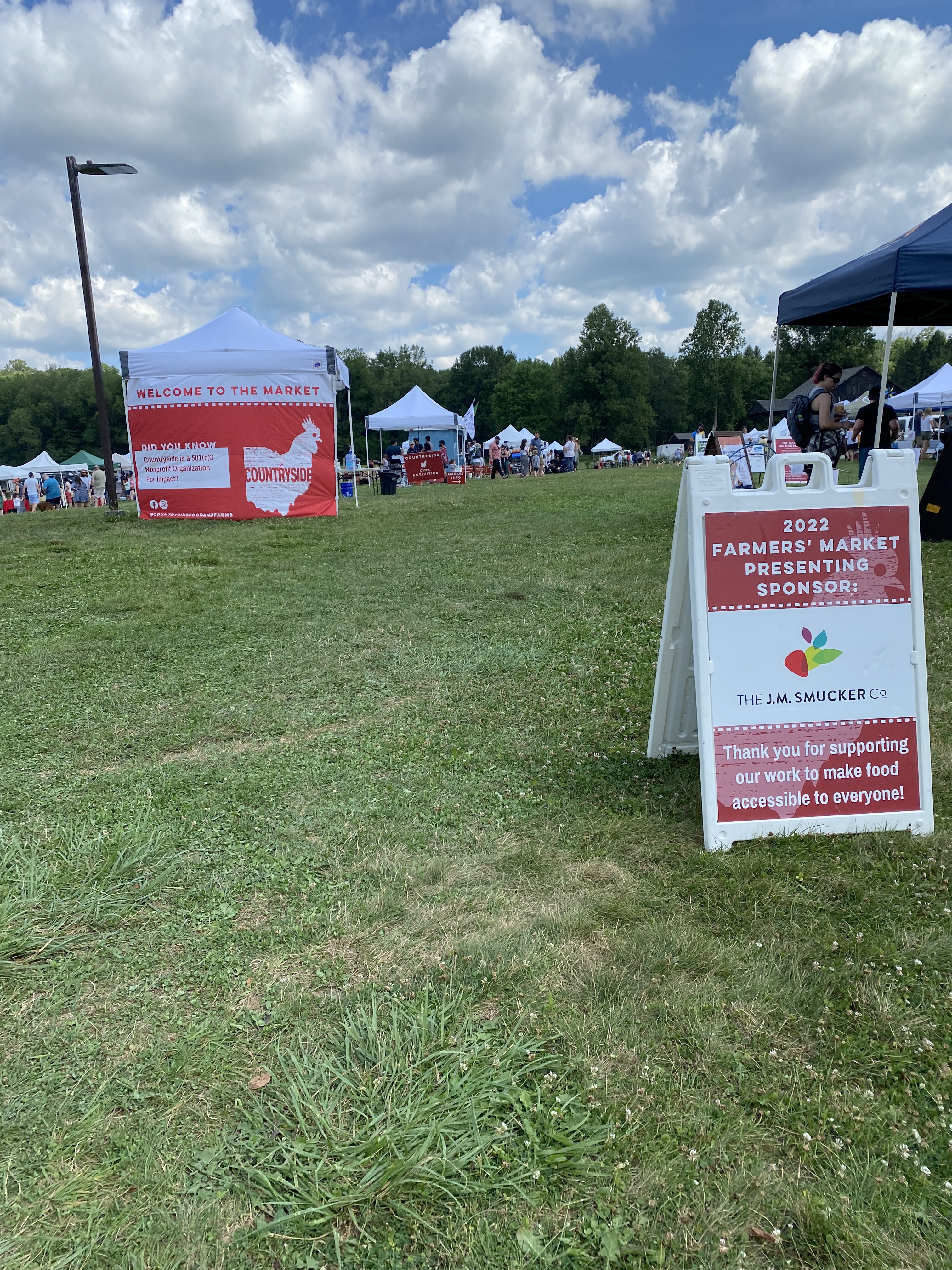
Pics of the market from 2022:

Share this:

  • Click to email a link to a friend (Opens in new window) Email
  • Click to print (Opens in new window) Print
  • Click to share on Reddit (Opens in new window) Reddit
  • Click to share on Facebook (Opens in new window) Facebook
  • Click to share on X (Opens in new window) X
  • Click to share on Pinterest (Opens in new window) Pinterest
  • Click to share on LinkedIn (Opens in new window) LinkedIn
  • Click to share on Pocket (Opens in new window) Pocket
  • Click to share on Tumblr (Opens in new window) Tumblr
Like Loading...
0 CommentsLeave a comment
10/06/2023
DW
civic engagement, ecological capital, economic development issues, environmental issues, farmers markets, intellectual capital, resiliency, zoning for food and farming
CVNA, farmers markets, Ohio

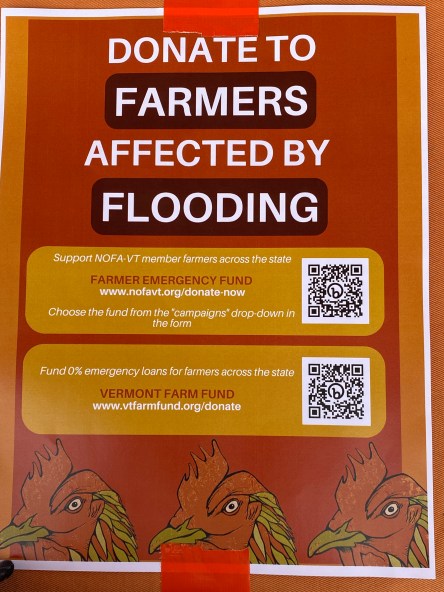
Flood of memories return even as a flood of support is on its way

Am in Vermont for the month of July, partly to continue my long association with farmers market organizers, NOFA-VT, and related partners around regional food systems. As a summer/fall climate refugee, albeit one who is very privileged to be able to easily move about the US— i also travel seeking a permanent home for the many summer/fall months when my own home is close to unlivable because of climate.

This trip I spent 2 weeks in South Burlington, moved to Royalton for 2, then will be in Montpelier for the last/first week of August before heading to Montreal for the day and then back to Midwest to work on projects in Ohio and PA.

As all readers can surmise, being here for the Vermont Floods last week was alarming, but also increases my respect for this tiny rural state. During the storm, I watched the news closely, stayed awake most of the night, checking social media updates and texting friends more in the path of the storms.

Once the storm passed, the recovery was immediate. That included a rapid declaration of disaster by the White House (at the clear request of the Republican governor) which triggers a great many resources to begin to flow. Radio, television and online sites shared ways to raise funds for those affected and where to find emergency services. Crews were out repairing roads bridges and train trestles the day after the storm. One farmer told me by text: “this is a much more catastrophic storm in comparison to Irene but everyone is organized and willing and able to help this time, it makes it seem so much less mentally daunting.”

The local news today suggested that the department of Ag, known in VT as the Agency of Agriculture, Food, and Markets (often shortened as the “Agency” ) is still waiting for clarity around the declaration of disaster specifically from the USDA to see what else they can offer producers, may of whom have already shared heartbreaking losses (what I have heard are stories such as one farm losing 900 birds, another saw all of their beehives swept away.) And according to a story posted by VT Digger reporter Hannah Cho, all of the new American families who farm at Intervale Center in Burlington and in Winooski lost everything: “For the majority of their 100 farmers, “this is not a hobby [nor] a business,” Laramee said. Most have full-time jobs as janitors, food workers and in hotels. The crops the farmers grow go towards feeding their households throughout the entire year.” (To donate to this effort: https://www.intervale.org/donate)

The state-based entities led NOFA-VT working together as always on regional food and farming are moving very quickly to collect and share resources that often arise from neighbors,Including local businesses.

So as Vermonters begin the phases of recovery (community care, priority assessment and property evaluation), most of it will likely happen with overwhelming stress, random fits of exuberance around community, with depression and fear mixed in – and that’s just to get to the rebuilding.

What is not clear yet is how this state will define resilience in the future; what we have learned in the Gulf Coast is that, as disasters come again, many of our systemic recovery phases now require extraordinary personal levels of resilience that are not matched by institutional levels of resilience, leaving more and more of this work up to informal groups of neighbors and resources. Let’s hope Vermont can do better using ours and others examples.

Share this:

  • Click to email a link to a friend (Opens in new window) Email
  • Click to print (Opens in new window) Print
  • Click to share on Reddit (Opens in new window) Reddit
  • Click to share on Facebook (Opens in new window) Facebook
  • Click to share on X (Opens in new window) X
  • Click to share on Pinterest (Opens in new window) Pinterest
  • Click to share on LinkedIn (Opens in new window) LinkedIn
  • Click to share on Pocket (Opens in new window) Pocket
  • Click to share on Tumblr (Opens in new window) Tumblr
Like Loading...
0 CommentsLeave a comment
07/19/2023
DW
civic engagement, climate change, disaster planning, ecological capital, farmers markets, Vermont, Where's Dar now?

What I am reading

I have a goal to write each week here; I hope this is helpful for all of you.

Wanted to share my current reading list in the hopes that it may spark a discussion of what you are reading:

The Brinkley book has been fascinating, not only because I’ve been a huge fan of Rachel Carson since the 1980s (who I believe has never received her due for exponentially increasing awareness of environmental extinctions and illness’ connections to unchecked pesticide use) but also because this author has a talent for creating a compelling story around the leaders of the environmental movement which is spurring my thinking around my farmers market book currently in draft form.

This Rome travel book is because I will be joining many of my fellow market peers and attending the World Farmers Market Coalition meeting in May.

Graeber’s incredible analysis into how direct action groups collect and organize is another keeper of his for me from this late great writer.

https://www.goodreads.com/book/show/2543048.Direct_Action

This book about my home state and one of its fishing community is a new one for my bookshelf after I saw and heard its thoughtful author at a recent literary festival in New Orleans. As someone who has worked closely with a few commercial fishers and so try to keep an ear and eye out to be always learning more about their future, I am expecting this to give me great insight on what that community is facing in our current political, ecological and cultural “spend-down” time.

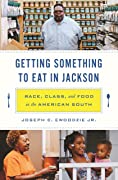
Jackson MS is a place that doesn’t get enough notice nor enough support from its state nor the feds for the challenges they face or enough credit for the innovative work happening there from many including from Cooperation Jackson. Also, anytime I can read in detail about food access within one community, I find it offers many lessons I can use in many places.

39.103118 -84.512020

Share this:

  • Click to email a link to a friend (Opens in new window) Email
  • Click to print (Opens in new window) Print
  • Click to share on Reddit (Opens in new window) Reddit
  • Click to share on Facebook (Opens in new window) Facebook
  • Click to share on X (Opens in new window) X
  • Click to share on Pinterest (Opens in new window) Pinterest
  • Click to share on LinkedIn (Opens in new window) LinkedIn
  • Click to share on Pocket (Opens in new window) Pocket
  • Click to share on Tumblr (Opens in new window) Tumblr
Like Loading...
0 CommentsLeave a comment
04/03/2023
DW
BIPOC Leaders, books, civic engagement, climate change, cooperatives, disaster planning, diversity/racial justice, EBT, ecological capital, environmental issues, evaluation, farmers markets, FMC, food deserts, food history, food policy, food stamps (SNAP), global organizing, human capital, incentives, Louisiana, metrics, New Orleans food, PPS, public health, public markets, regional food, social capital, social determinants, Typology of markets, Where's Dar now?

Mapping 2023

One thing I do each December is to think about my work year, what I wished I had accomplished and what I might do in the next year. I am sure this list is no surprise to any of the hardworking market operators and market partners that I wish I had done more for in 2022, but in these exhausting years of the COVID crisis, there has been a growing and mostly unmet need to offer organizational services such as grant writing assistance, board development and governance audits, staff Human Resources support, and product development for market vendors.

In 2023, I am determined to redouble my efforts to increase support for farmers market operators through more directed technical assistance and resource collection and creation, both in my staff role at Farmers Market Coalition and in my small role in my own time working as a consultant directly with markets across the US and with the newly emerging World Farmers Markets Coalition.

Here are some of my 2023 goals:

Continue connecting climate activists and funders to community food leaders so our work can be named, outlined, and funded in the climate mitigation work happening across the US and globe. This includes seeking funding for a disaster recovery toolkit for farmers markets;

Pick up new skills and tools including completing a course on mapping networks which I believe is an excellent tool for market leaders to know exactly where they need to deploy their limited resources for maximum effect;

I also have carried around a longer term goal to start too seek funding for an FM Anthology book; once secured, asking writers and activists to contribute pieces on the vision and history of the modern market movement that illustrate how it has contributed so much to localized health and wealth initiatives in thousands of places across the globe;

Working more on a regional effort here in New Orleans named the Pontchartrain Network to increase connections across the dozen or so Louisiana parishes and MS counties that rely on the lake watershed. That work will focus on educational efforts to all civic leaders about how to achieve increased production and consumption of food grown in the region;

At FMC, we will be seeking a new Executive Director in 2023, as Ben Feldman plans to step down after a successful run the last 3 + years (although I certainly hope he will remain as our policy person);

I expect to help the authors of the Anti Racist Farmers Market Toolkit with their goal of implementation of its strategies in markets by helping them secure funding for that work. If we get those efforts well underway, we can begin to seek leaders in the indigenous community to add their own content towards similar strategies so the modern market system can also be a more useful tool for tribal nations that are prioritizing culturally meaningful production and healthy options for their residents; to that same end, our work with USDA supporting a pilot of 1890 land-grant universities to add farmers markets to their campuses has already taught our team a great deal about how to help their efforts and we would hope to add more sites and 1994 land-grant universities and Hispanic-serving universities in future rounds of that work;

We will also be working on the new Regional Food Business Centers that USDA has added as a new level of support to regional food systems, and expecting to play a large role in the work with farmers markets across all of the centers;

Our food access team will seek to expand its funding to assist market organizations and states that are branching out past GusNIP funding for permanent incentive and benefit program support, as well as continue to support the large pool of GusNIP grantees whose work often becomes the realpolitik for food access decisions at USDA.

And with my decades of work on finding appropriate and relevant evaluation systems for community food system leaders to use (rather than funder or academic versions of what they think evaluation should mean), we will continue to create and support software and analog tools to conduct low-intensity evaluation of the many many impacts that markets have on their community, and in helping those with data turn them into infographics and analysis they can use to increase funding and awareness.

One other priority will remain: the development of FMC into serving a permanent role as the dynamic, stable, and effective go-to entity for the estimated 9,000 market communities in the US, as well as supporting our partners in similar sectors such as CSAs, farm stands, agritourism, and community gardening to be able to do the same. I am happy to report that that internal work is being ably managed by our Deputy Director Willa Sheikh and enthusiastically aided by our entire stellar FMC team which I am deeply proud to work alongside. Learn more about them here: https://farmersmarketcoalition.org/joinus/team/

So that’s my plan. I’d love to hear some of your plans around farmers market work and maybe even build a support network for those of us who do this work. If so, leave a comment.

Share this:

  • Click to email a link to a friend (Opens in new window) Email
  • Click to print (Opens in new window) Print
  • Click to share on Reddit (Opens in new window) Reddit
  • Click to share on Facebook (Opens in new window) Facebook
  • Click to share on X (Opens in new window) X
  • Click to share on Pinterest (Opens in new window) Pinterest
  • Click to share on LinkedIn (Opens in new window) LinkedIn
  • Click to share on Pocket (Opens in new window) Pocket
  • Click to share on Tumblr (Opens in new window) Tumblr
Like Loading...
1 CommentLeave a comment
01/01/2023
DW
civic engagement, climate change, community gardens, CSAs, disaster planning, diversity/racial justice, farmers markets
Farmers Market Metrics, farmers markets, FMC, Louisiana, New Orleans

Kuni: Building regional communities that are right-sized, connect rural and urban, and measurable

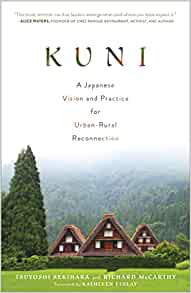
Over the weekend, I cracked open the eagerly awaited/just published “Kuni: A Japanese Vision and Practice for Urban-Rural Connection” authored by Tsuyoshi Sekihara and Richard McCarthy.

Sekihara is the founder and leader of the Japanese RMO (Regional Management Organization) Kamiechigo Yamagata Fan Club. This entity is tasked with creating kuni (community) in an estimated 25 villages in rural Japan, making its home in Nakanomota.

McCarthy is the founder of the regional organization Market Umbrella in New Orleans LA, and (while he and I worked there) had set its region as “Gator Alley” or “Gumbo Nation” along the Gulf Coast. In true U.S. fashion, neither description of our region was precise (or as Richard rightly describes it, “light and loose” versus Sekihara’s “grounded” region) but they came pretty close:

Food Regions of the US (Nabhan et al)

Mirror Images of Each Other

In its opening pages, McCarthy describes the opportune meeting with Sekihara that came via outside funders and leaders bringing he and others to Japan, and where the two recognized their common vision which can now be shared via this framework.

Yet kuni is not just another term for local or revitalization but is meant to create something that new.

Be compact but contain all of the elements needed for human life

Have the right scale

Balance between bridging and bonding activities

Choose pluralism over tribalism

Be close to nature

or as beautifully said in there: “To trade on assets adored by outsiders but curated by locals.”

Sekihara’s RMO is tasked with creating kuni’s preconditions and is partially funded by overseeing government projects as well as creating products that can be exported (although the raw materials must originate from within the RMO.) There are other RMOs in Japan, but none with the depth of the KYFC. (It may also be helpful to share that “fan clubs” are common in Japanese society for all types of organizations including corporations, many with their own mascots.)

By having McCarthy as the co-author, the application of Sekihara’s ideas can be shared through the hundreds of communities that McCarthy has worked or visited via his work with Market Umbrella, Slow Food US, Slow Food International, as president of the new World Farmers Market Coalition, or his own current global Think Like Pirates firm.

You’ll find the steps that Sekihara took to his own “J-Turn” to KYFC with descriptions of the conditions he found as well as the challenges, including the shocking level of disrepair, the challenge that he calls “the Beast,” and the many gatekeepers/dictators he encountered and their power hoarding — all of which any organizer should be able to recognize in their own communities and possibly even within their own organization.

The book is rich with lists of lessons and examples for any organizer including the brilliant Rice Covenant (which is more complex than you’d think), place polygamy, the concepts of equilibrium, circularity, and spirals, the 2 Loops theory, Richard’s pirate ship framework, examples of kuni-style organizing from around the world, and (a personal favorite of mine), explanations from both leaders as to why holding onto single proxies such as “local” or relying on national or global certifications can be entirely too limiting.

It is available everywhere with a U.S. tour by McCarthy imminent (email him through his site which is linked above) if you think you can create an event with him) to invite these visionary ideas into your work.

Share this:

  • Click to email a link to a friend (Opens in new window) Email
  • Click to print (Opens in new window) Print
  • Click to share on Reddit (Opens in new window) Reddit
  • Click to share on Facebook (Opens in new window) Facebook
  • Click to share on X (Opens in new window) X
  • Click to share on Pinterest (Opens in new window) Pinterest
  • Click to share on LinkedIn (Opens in new window) LinkedIn
  • Click to share on Pocket (Opens in new window) Pocket
  • Click to share on Tumblr (Opens in new window) Tumblr
Like Loading...
1 CommentLeave a comment
10/31/2022
DW
civic engagement, cooperatives, disaster planning, ecological capital, environmental issues, fair trade, farmers markets, global organizing, governments, human capital, intellectual capital, local food, migration, Organic movement, other sectors, place, resiliency
farmers markets, Japan, Kuni, Richard McCarthy, Tsuyoshi Sekihara

Kuni can help our markets

I am always scouring for new books that may help our markets to advance their system change work. One major lesson I work to keep in my front mind is how best to assist market operators in prioritizing working as networks rather than “silos.”

I have written on this subject, some of which can be found by searching in this blog under “networks”; for now, this is a good example : https://darlenewolnik.com/2021/12/20/local-resiliency-shouldnt-be-the-goal/

In many of those posts, I consider the effect of climate chaos and civil unrest on the still-fragile, but always-energetic pop up farmers market sector, and suggest that the success rate of reducing organizer and producer burnout and increasing engagement is almost entirely dependent on thinking regionally, or as you will hear later, territorially.

The idea of regionalism may seem already knit into the community food movement, but I see plenty of examples of food leaders misinterpreting true regionalism. One example is how few urban farmers market managers and volunteers visit their rural and exurban vendor farms regularly. Or, how few community food leaders speak up for regional planning issues which directly impact their farmers and other producers. And I talk to plenty of rural farmers market operators who bypass the replicable operational lessons that their urban sistren and brethren market operators have to share, or mistakenly feel they don’t need to focus on justice work.

And long before 2022, all organizers were struggling with the rapidly unfolding and difficult work of assessing and mitigating disruptions, either because they thought only hyper-locally or, didn’t define their region as expansively as it needs. For example, in 2005 when the federal levees broke after Hurricane Katrina ravaged LA and MS, my organization Market Umbrella struggled to find enough partners to rebuild our region – but not because we had not thought regionally previously, but because the region we HAD developed was entirely in the same situation. In other words, we had established a bioregion for our farmers markets (even going as far as defining our allowable vendor range as anywhere in the “American Alligator region” which spanned multiple states as the climate and agricultural products were shared with New Orleans) but in terms of truly creating organizational and community resilience, we would have benefited from deeper relationships north and west – and not just south and east – and in other sectors such as housing and transportation. (We also struggled because few other entities were able to work regionally which is part of what disaster exacerbates and why you have to have that approach before the bad day comes.) So I now know only so well that political, cultural, and even historic trade regions are as vital for food organizers to know for their own work. And while ensuring that racial justice is front and center in our work, simply ignoring those outside of our “blue” or “red” area will not serve our shared goals very well.

In terms of offering a global framework, the FAO report titled “Mapping of territorial markets; methodology and guidelines for participatory data collection” was recently recommended to me. The report essentially defines what the US calls “local” or “producer-only” markets (of course, neither of which are entirely precise) as territorial markets. From the report:
The Committee on World Food Security (CFS) defined these ‘embedded markets’ as ‘territorial markets’ (CFS, 2016a), characterized by the following criteria:
◗ They are directly linked to local, national and/or regional food systems (the vast majority of products, producers, retailers and consumers are from the given territory).
◗ They are more characterized than other markets by horizontal (i.e. non-hierarchical) relations among the various stakeholders.
◗ They are inclusive and diverse in terms of stakeholders and products.
◗ They have multiple economic, social, cultural and ecological functions within their respective territory, and are thus not limited to food supply.

◗They are the most remunerative for smallholder farmers (as compared to other kinds of market), as they offer the farmers greater bargaining power over prices.
◗ They contribute to structuring the territorial economy, creating wealth and redistributing it within the territory.
◗ They can be formal, informal or a hybrid of the two.
◗ They can be located at different levels within territories (local, national and cross-border).

What is especially instructive to me about this description is the work we have in front of us in the U.S. to ensure our farmer markets measure up to this and to other categorizations and our policy partners understand it too.

All of this chat about networks leads to a recommendation for a model encapsulated in a new book due out in October:

Kuni: A Japanese Vision and Practice for Urban-Rural Reconnection

In the book, Tsuyoshi Sekihara and Richard McCarthy take turns with descriptions and illustrations of what reimagining of the rural-urban relationship might look like and what results it could offer. Sekihara is the founder of the Kamiechigo Yamazato Fan Club, a community development organization focused on the holistic revival of Japan’s rural areas, while Richard was the founder and the longtime director of the U.S. based regional farmers market organization, Market Umbrella that I mentioned above.

“Kuni” is both a reimagining of the Japanese word for nation and an approach to reviving communities. It shows what happens when dedicated people band together and invest their hearts, minds, and souls back into a community, modeling a new way of living that actually works. A kuni can be created anywhere–even a hamlet on the verge of extinction–and embodies 7 key principles:

  • Everyone is equal in a kuni
  • Kuni is equipped with a regional management organization–a democratic organization that takes care of small public services
  • Kuni is a link between residents and repeat visitors
  • Life in a kuni is circular–consumption and production are in balance
  • Kuni embraces the whole person

I’ll add a bit of Wendell Berry here with how he suggested communities should also think through the appropriate scale for human centered regionalism:

“We must not outdistance local knowledge and affection, or the capacities of local persons to pay attention to details, to the “minute particulars” only by which, William Blake thought, we can do good to one another.”

Much of what Kuni (and Berry) are lifting up, we are seeing in some extraordinary US farmers markets and food work, most often led by Black, persons of color, and indigenous leaders. No surprise to me that what white-led and designed organizations are trying to figure out in the current work to become active anti-racist allies, our sisters and brothers knew already.

Chiefly among that is to eschew linear, hierarchal, purely capitalistic roles and structures for those that value the entire human, have a democratic center, and prioritize balance and inclusion. Once a community embraces that, the sky is the limit in terms of impact and organizational health. That will be the reward for listening to leaders who came to this work with system change as their goal and to those who are leading us with care and intention: that the food community thrives by establishing regional connections, valuing human-centered innovation and the realization of our shared future.

PreOrder Kuni: https://www.indiebound.org/book/9781623177317

Share this:

  • Click to email a link to a friend (Opens in new window) Email
  • Click to print (Opens in new window) Print
  • Click to share on Reddit (Opens in new window) Reddit
  • Click to share on Facebook (Opens in new window) Facebook
  • Click to share on X (Opens in new window) X
  • Click to share on Pinterest (Opens in new window) Pinterest
  • Click to share on LinkedIn (Opens in new window) LinkedIn
  • Click to share on Pocket (Opens in new window) Pocket
  • Click to share on Tumblr (Opens in new window) Tumblr
Like Loading...
0 CommentsLeave a comment
08/15/2022
DW
BIPOC Leaders, civic engagement, climate change, cooperatives, disaster planning, diversity/racial justice, ecological capital, ecological capital, farmers markets, food apartheid, food policy, global organizing, governments, human capital, immigrant issues, industrial food system, intellectual capital, international farmers market news, Market organization resources, market vendors, national food system work, New Orleans food, public markets, racial equity, regional food, resiliency, social capital, social cohesion
Crescent City Farmers Market, farmers markets, Kuni, New Orleans, Richard McCarthy, Tsuyoshi Sekihara

Disaster planning and markets

I assume my readers have correctly surmised that I live in the hurricane zone of New Orleans and that as a result, am always interested in talking with operators about and looking for ways to prepare for the inevitable interruption. How markets help in the recovery and rebuilding of current disasters and what we develop as a resistance to future disasters is something for which we can all prepare ourselves. Disasters that U.S. markets have had to handle just this half decade include damage to persons, home and food production because of climate chaos, infrastructure collapse, civil unrest, mass shootings, police actions, pandemic shutdowns and I’m sure there are more types that I forgot to cover.

As a New Orleans resident and as a part-time US market consultant, I am always thinking about how I can help my own area and others too.

At FMC too we think a lot about it, since we provide support to markets (through grants and contracts) by:

a) facilitating technical assistance or networking with peers or building communities of practice to solve an issue;

b) the development or dissemination of resources;

c) offering analysis of the sector, of programs or directly to a market;

d) assisting or leading in the development of low or high tech suitable for market operational needs.

…- so check in with me if you have ideas about how FMC can do that around disaster recovery. Here is some of what we have gathered and created so far. And we are also excited to be a founding member of the World Farmers Markets Coalition where we expect to learn much to bring back to US markets on this subject and others.

On their own, most market organizations will not be able to organize themselves out of a disaster because the long effort over many phases requires prior informal and formal relationships with local and regional governments, and some resources that are held outside of the impact zone. So the goal should be to have updated regional databases of farmers, value-added producers, production areas, agricultural experts, justice allies (cuz disaster is quite often a time when privilege and racist policies are the structure used to offer support and to restore communities), templates, data about the market sector around the disaster area, and the right connections already made with government entities and activists in and around the food system.

One reason that those local and regional governments will search for your organization after a disaster will be because of those databases and the shared lessons from other market communities you have but for it to be helpful to those entities, your preparation will need to be more than just about your market community. So organizing now around civic and agricultural partnerships- even if done lightly for now – will allow a faster recovery by keeping you at the table and in the loop. And when farmers and others see your ability to respond to a moment, you could even grow your market once recovery is over.

Share this:

  • Click to email a link to a friend (Opens in new window) Email
  • Click to print (Opens in new window) Print
  • Click to share on Reddit (Opens in new window) Reddit
  • Click to share on Facebook (Opens in new window) Facebook
  • Click to share on X (Opens in new window) X
  • Click to share on Pinterest (Opens in new window) Pinterest
  • Click to share on LinkedIn (Opens in new window) LinkedIn
  • Click to share on Pocket (Opens in new window) Pocket
  • Click to share on Tumblr (Opens in new window) Tumblr
Like Loading...
1 CommentLeave a comment
07/19/2022
DW
case studies/research, civic engagement, climate change, disaster planning, ecological capital, entrepreneurs, environmental issues, farmers markets, global organizing, market vendors, New Orleans food, philanthropy, resiliency, USDA AMS

Post navigation

Older posts

Search this blog

Tags

alternative food systems BALLE big data book reviews California Canada CCFM chefs Chicago Cleveland climate change conferences cooperatives cottage food laws Covington Crescent City Farmers Market Detroit EBT evaluation farm bill farmers Farmers market Farmers Market Coalition Farmers Market Metrics farmers markets farming farm to table FMC FMC Farmers Market Metrics FMPP FNS Food food hubs food systems food system work Food Tank healthy food incentives La Via Campesina local food local food systems Los Angeles Louisiana markets Market Umbrella market vendors Mississippi New Orleans NOFA-VT North Carolina NSAC NYT Ohio Oregon oysters Poppy Tooker Power of Produce (POP) PPS Richard McCarthy Slow Food SNAP social capital social media SSAWG St. Joseph's Day Stacy Miller sustainability technology Toronto USDA Vermont Wallace Center webinars wendell berry Wolnik webinars

Enter your email address to subscribe to this blog and receive notifications of new posts by email.

Join 598 other subscribers

Helping Public Markets Grow 2011-2021

Independent Researcher and Analyst list of contracts (In November 2019 began full-time role as FMC’s Program Director)

•AMS TA project: Mentor for national technical assistance project for current FMLFPP grantees led by the Northeast Regional Center for Rural Development at Penn State University.
•Brooklyn NYC: Assisted BDPHO with developing farmers market technical assistance programs.
•Report on BDPHO’s 5-year market capacity project.
•Farmers Market Coalition Senior Research Associate for Farmers Market Metrics project creation (2015-)

• Farmers Market Coalition’s Senior Advisor, focusing on technical assistance for markets and networks (2015-)
•Illinois: Worked with ILFMA on evaluation plan for integration and upgrade of statewide fms and DTC information on integrated platforms.
•Louisiana: Assisted students at Southeastern University in Hammond with food system research and farmers market strategy.
•Louisiana: Assisted ReFresh Market and Garden with evaluation plan (2017)
•Louisiana: Working with Ruston Farmers Market on outreach strategy for new location

• Helping to craft resources and training for 2019 Fresh Central Certified Institute for Central Louisiana markets and producers with CLEDA.

•Louisiana: Organized first statewide farmers market conference for LSU Ag Center archives found at: lafarmersmarkets dot blogspot dot com

•Maine: Researched farmers market job descriptions found at www.helpingpublicmarketsgrow.com

• Mississippi: Providing research and analysis for City of Hernando MS 3-year project to grow flagship market

•Mississippi: Assisted Gulf Coast markets with FMPP project on analyzing access to markets for Gulfport resident and farmers. 2014 Local Food Awareness Report for Gulfport MS, found at www.helpingpublicmarketsgrow.com

•Vermont: Providing analysis and resource development for NOFA-VT’s annual data on farmers markets.

•Supporting markets creating their Legacy Binders
•Vermont: Researched and wrote report on SNAP, FMNP technology and policy answers for VT farmers markets in collaboration with NOFA-VT and VAAFM, 2013 Vermont Market Currency Feasibility Report found at www.helpingpublicmarketsgrow.com
•Vermont: Working with Vermont Law School on legal resources for farmers and market organizations.

•Vermont: Assisting with 3 year project to build capacity for direct marketing farmers and outlets through DIY data collection and use.

Wallace Center: Moderator of FSLN, advisory to the 2020 NGFN Conference to be held in New Orleans in March of 2020

•Why Hunger: Created online toolkit for grassroots communities.

Feel free to contact me at my name at gmail dot com if I might be able to help your market or business.
Thanks
Dar Wolnik

Posts by category

Blog at WordPress.com.
Helping Farmers Markets Grow
Create a free website or blog at WordPress.com.
Privacy & Cookies: This site uses cookies. By continuing to use this website, you agree to their use.
To find out more, including how to control cookies, see here: Cookie Policy
  • Subscribe Subscribed
    • Helping Farmers Markets Grow
    • Join 246 other subscribers
    • Already have a WordPress.com account? Log in now.
    • Helping Farmers Markets Grow
    • Subscribe Subscribed
    • Sign up
    • Log in
    • Report this content
    • View site in Reader
    • Manage subscriptions
    • Collapse this bar
 

Loading Comments...
 

You must be logged in to post a comment.

    %d